
AOE provides specialised industrial solutions that allow regional furniture manufacturers to produce high-end, moisture-resistant cabinetry.
A PUR edge banding machine upgrades waterproof kitchen cabinet production in East Africa by establishing a permanent moisture barrier.
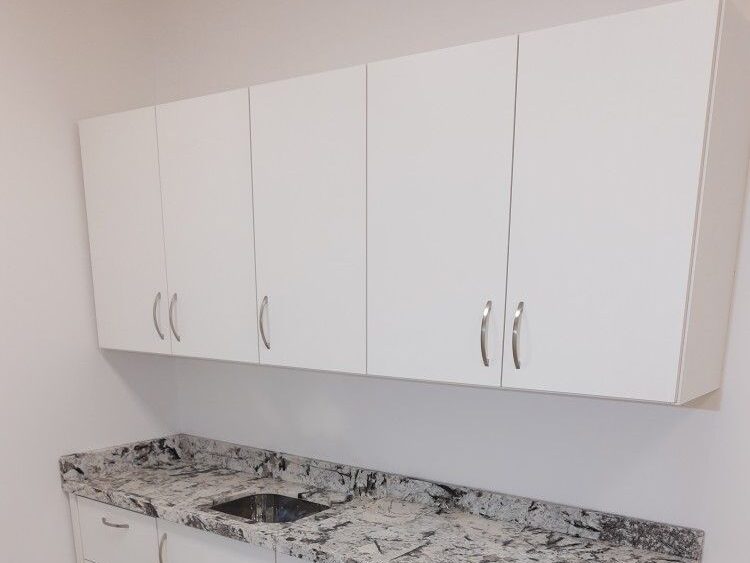
Production managers who invest in this technology eliminate costly delamination callbacks and drive higher margins on premium projects across the region.
| Production Factor | Traditional EVA System | PUR System (Nanxing NB671N) |
|---|---|---|
| Moisture Resistance | Low (Prone to swelling in humid zones) | Excellent (Cross-linked chemical barrier) |
| Glue Line Thickness | 0.2mm – 0.5mm (Visible) | Less than 0.1mm (Virtually invisible) |
| Heat Resistance | Softens at 65°C – 75°C | Stable up to 140°C |
| Adhesive Consumption | Higher volume per linear metre | Lower volume due to thin application |
| Changeover Speed | Slow (Requires thermal purging) | Fast (Integrated dual glue pot system) |
PUR Edge Banding Technical Principles for Moisture Resistant Bonds
Polyurethane Reactive (PUR) adhesives cure through an irreversible chemical cross-link when exposed to ambient moisture. This chemical reaction forms a rigid, waterproof bond between the core board and the edge tape.
This process differs from traditional EVA glues that merely harden through thermal cooling. Factory floors dealing with high-humidity coastal climates in cities like Mombasa or Dar es Salaam rely on this specific reaction to prevent panel swelling.
Thin glue lines enhance the aesthetic finish and provide superior resistance to heat and water.
Operational Efficiency of Dual Glue Pot Systems
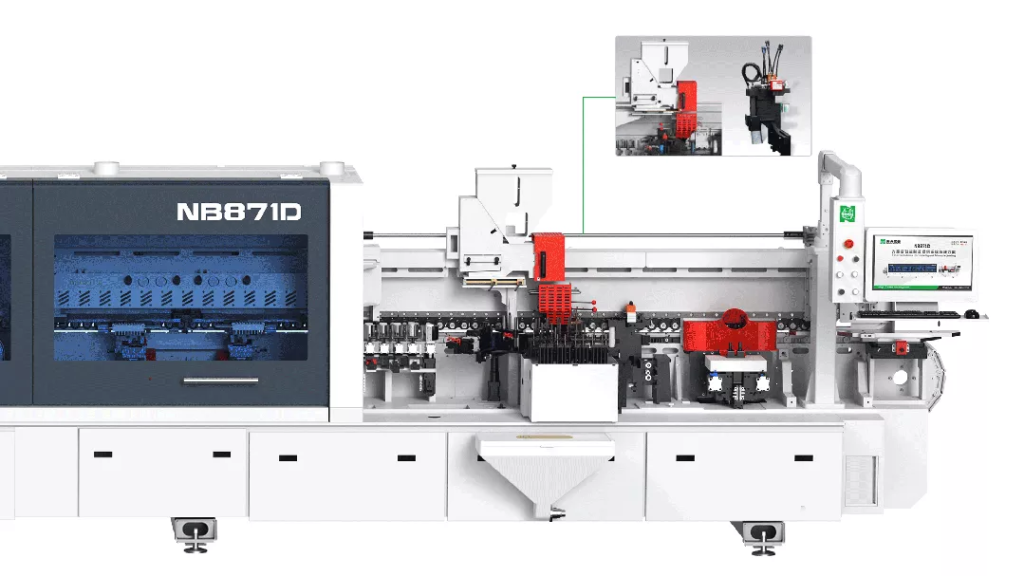
The Nanxing NB671N improves workshop efficiency through intelligent dual glue pot systems. Operators execute rapid changeovers between standard EVA for dry-area furniture and waterproof PUR for kitchen cabinetry.
This setup removes the need for lengthy cleaning cycles. Operational agility prevents production bottlenecks when processing mixed batch orders.
Workshop engineers maintain high daily output levels because the machinery eliminates the manual downtime typically associated with purging adhesive lines.
High-volume factories often pair these units with a panel saw to ensure clean, square cuts before the banding process begins.
Product Longevity and Market Positioning in the Regional Furniture Sector
Cabinetry bonded with PUR technology outlasts conventional furniture when exposed to steam, boiling spills, and daily kitchen wear. East African manufacturers use this process to position their brands as premium providers.
These products compete directly with high-end imported units from Europe. Eliminating edge peeling and core expansion reduces warranty claims and post-installation service costs.
Factory owners retain their profit margins by achieving correct results on the first production run. Many designers use furniture CAD CAM software to specify PUR bonding for high-traffic commercial projects.
Environmental Durability for Tropical and Coastal Climates
Urban developments across East Africa demand durable modular kitchens capable of withstanding distinct tropical and coastal humidity levels.
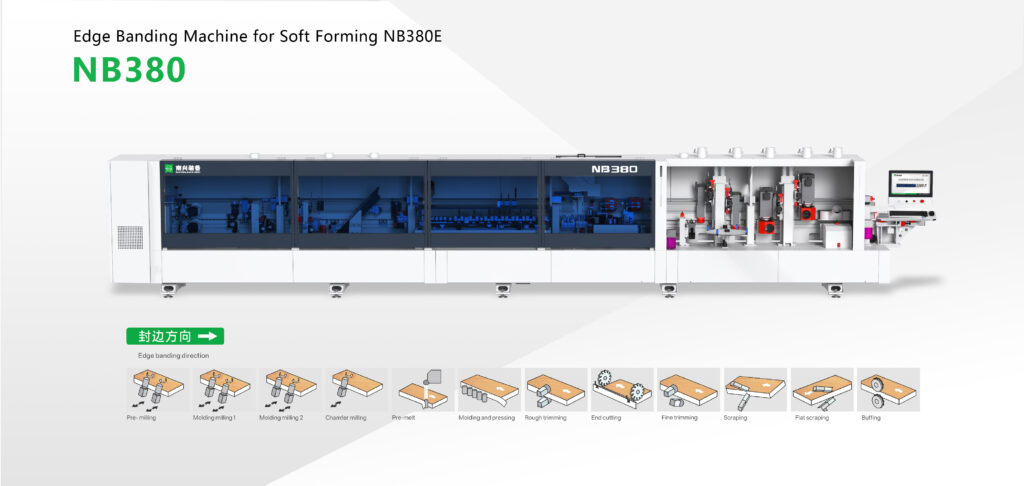
A PUR edge banding machine equips local workshops to meet these rigorous environmental specifications. Architects and property developers specify PUR-bonded cabinetry in local tenders to ensure long-term durability in residential projects.
Upgrading to this technology allows regional manufacturers to capture lucrative commercial contracts that require specific moisture-resistance certifications.
Technical Specifications for Optimised Panel Throughput
Selecting the correct machinery requires assessing core technical specifications that align with factory volume targets. Top-tier edge banders integrate precision milling, end trimming, and corner rounding to minimise manual finishing operations.
Heavy-duty frames absorb operational vibrations. This stability ensures accurate tape tracking and consistent adhesive application across entire production shifts.
Integrating a CNC nesting router upstream ensures that every panel arrives at the edge bander with perfect dimensional accuracy.
Cycle Efficiency and Industrial Feed Speeds
Industrial PUR edge banders operate at feed speeds ranging from 16 to 24 metres per minute. These speeds keep pace with automated panel dividing saws and CNC machinery.
High-frequency motors execute corner rounding and profile scraping instantly. This speed prevents queue build-up on the conveyor.
Fast warm-up times and automated temperature controls ensure the glue remains at the optimal viscosity. Operators maintain continuous feeding without waiting for thermal recovery between panels.
Compatibility with Diverse Edge Materials
Production lines handle diverse materials including edge tapes from 0.4mm to 3mm thickness and panel heights up to 60mm.
Automatic thickness adjustment mechanisms reduce setup times when switching from standard carcasses to thick worktops. These units process PVC, ABS, acrylic, and wood veneer tapes with equal precision. Pneumatic pressure rollers guarantee tight adhesion across different tape rigidities.
This pressure prevents microscopic gaps where moisture could penetrate the substrate. For high-precision finishing, manufacturers utilise KWS tooling to maintain sharp edges on all trimming units.
Cost Benefit Analysis and Investment Return
Evaluating the capital expenditure of a PUR edge banding machine reveals rapid payback periods through material savings and reduced labour overheads.
The thin glue line application consumes less adhesive per metre compared to EVA. This efficiency lowers raw material costs over high-volume runs.
Factories avoiding replacement costs for blown cabinet doors recover their initial machinery investment within 12 to 18 months.
Total cost of ownership remains low when the machine is part of an integrated line including a furniture drilling machine for rapid assembly.
Integration with Modern Production Workflows
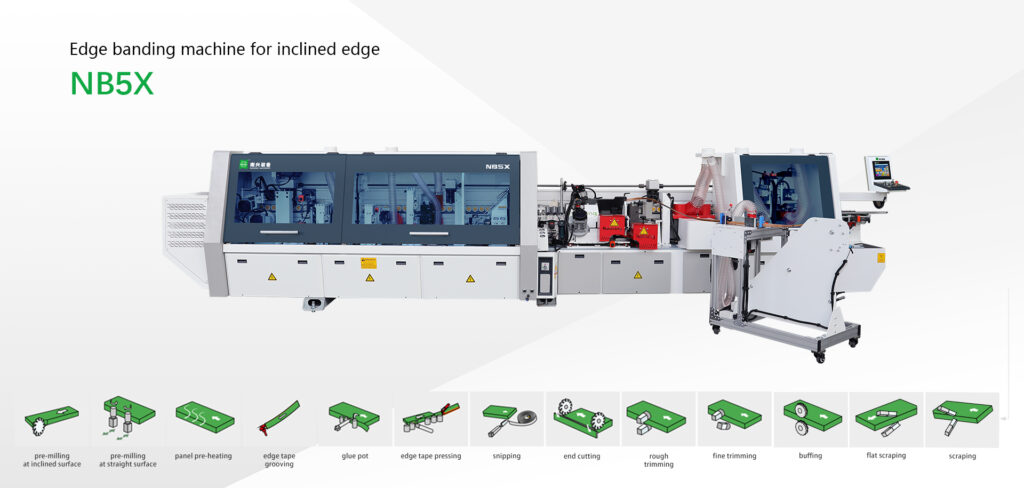
Integrating advanced edge banding technology into a current workshop layout requires minimal disruption. Conveyor systems and automated return units connect to the machine outfeed.
This connection reduces the physical handling required by factory staff. Digital control interfaces communicate with design software. Barcode scanners automatically adjust machine settings per panel.
This connectivity ensures production flows without manual data entry bottlenecks. Manufacturers can find more information on manufacturing trends to see how digital integration is changing the regional landscape.
Installation Training and Regional Technical Support
AOE technicians calibrate each installation to address local shopfloor voltage variability and dust control requirements.
Comprehensive operator training ensures the production team manages PUR adhesive storage and routine maintenance correctly. Immediate access to local spare parts prevents production halts.
Expert engineering support ensures factories maintain peak operational efficiency long after the initial commissioning phase. This commitment makes AOE a leading machinery supplier in the region.
AOE Engineering Recommendation
Transitioning to PUR technology is a necessary upgrade for East African manufacturers targeting the premium kitchen sector.
The reduction in rework and the ability to guarantee waterproof cabinetry provide a definitive competitive edge.
Interested factory owners can request demo sessions to see the NB671N in operation and evaluate the bonding strength firsthand.