
Evaluating a beam saw versus a sliding table saw for cutting multiple melamine boards accurately involves eliminating manual pushing force to achieve consistent 0.1mm tolerances across high-volume batches.
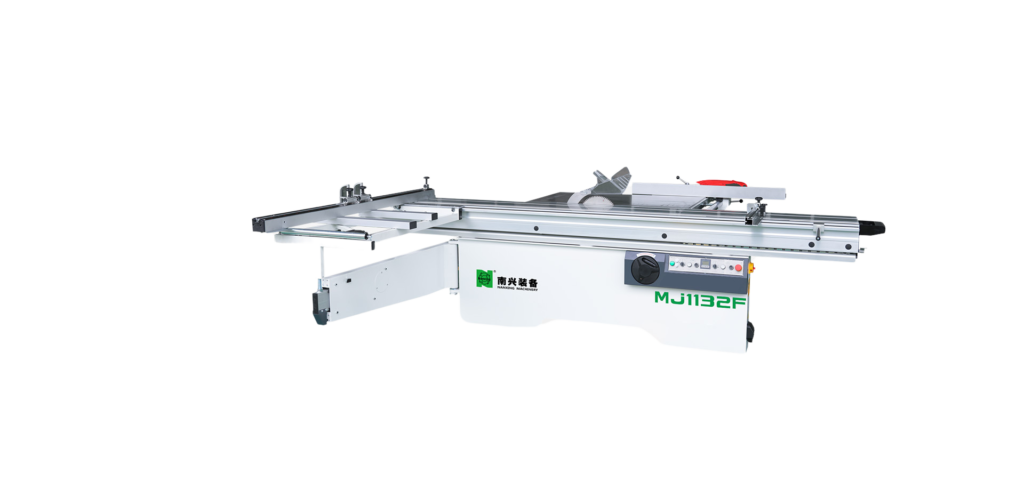
East African furniture factories upgrading to an automated panel saw in Kenya bypass human fatigue errors. This transition directly lowers melamine chipping rates and protects material profit margins by ensuring every cut is square and precise.
Technical Specifications for Precision Cutting with Industrial Panel Saws
| Machinery Type | Cut Accuracy | Human Force Required | Stack Capacity (18mm) | Typical ROI (High Volume) |
|---|---|---|---|---|
| Standard Sliding Table Saw | +/- 0.5mm | High (Manual Feed) | 1-2 Boards Max | 24+ Months |
| CNC Beam Saw (NPC330S) | +/- 0.1mm | Zero (Servo Driven) | 4-5 Boards (Up to 90mm) | 14-18 Months |
Sliding table saws rely on human pushing force. This reliance leads to fatigue errors and micro-vibrations during long production shifts.
A beam saw such as the NPC330S uses a heavy-duty pressure beam and servo-driven carriage to guarantee 0.1mm accuracy across 3-metre cuts. This mechanised hold-down system prevents melamine sheets from shifting.
The result is a flawless edge quality ready for an edge banding machine to process immediately.
Operational Efficiency and Labour Impact of Automated Cutting Systems
Workshop managers in Nairobi and Kampala frequently battle inconsistent output when operators manually feed heavy 18mm MDF or melamine stacks. The automated carriage on a beam saw removes the physical exertion required to push panels through the main blade.
Operators transition from manual labourers to machine supervisors. This shift reduces injury risks and maintains uniform cycle times throughout an eight-hour shift. Consistent production cycles allow managers to predict daily output with high certainty.
Material Yield and Waste Reduction Benefits of CNC Beam Saws
Precision panel dividing dictates material profitability in commercial cabinetry and shopfitting. Sliding table variations introduce a margin of error when operators align multiple boards against the rip fence manually.
Computerised beam saws utilise precise servo positioning to execute complex cutting maps. These machines capture every available millimetre and drop offcut waste by up to 15%. Efficient industrial saw blades further ensure that kerf loss is minimised during continuous operation.
Return on Investment Analysis for Beam Saws and Sliding Table Saws
Initial capital expenditure represents only a fraction of the machinery investment equation. Sliding table formats require lower upfront capital but their reliance on skilled operators inflates long-term labour costs and restricts batch scalability.
High-volume factories recover the premium of a CNC beam saw rapidly through accelerated throughput and eliminated rework. Modern manufacturers often integrate these saws with a CNC nesting router to handle complex shapes alongside straight-line panel dividing.
Operational Continuity and Technical Support for Beam Saws in East Africa
Industrial cutting machinery requires rigorous calibration to handle East African workshop realities. These realities include local voltage fluctuations and heavy dust loads.
Technical teams physically install and tune each panel dividing system to ensure the servo drives and pneumatic pressure beams operate flawlessly. Localised spare parts availability prevents production bottlenecks.
Factory floors keep moving without awaiting overseas shipments. Production managers can read more about these maintenance strategies on the machinery blog for African manufacturing trends.
Scalability and Integration of Beam Saws into Woodworking Workflows
Growing woodworking facilities must plan for modular capacity upgrades rather than constant machine replacement. Beam saws integrate directly with automated loading tables and conveyor offloading systems to handle sudden spikes in commercial orders.
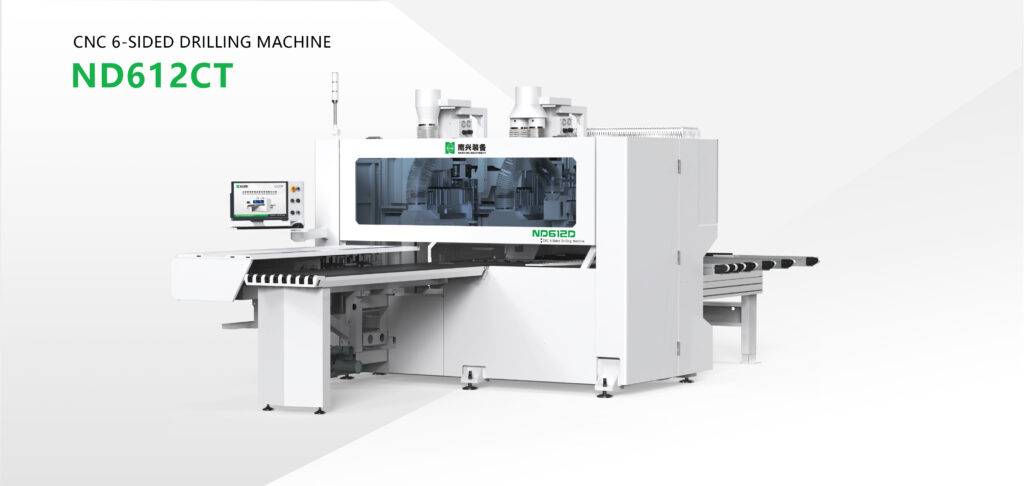
This architecture allows production engineers to double throughput without expanding the physical footprint of the cutting department. The setup often precedes secondary processing at a 6-sided furniture drilling machine station for rapid assembly.
Nesting Software Integration for Optimal Material Utilisation
Modern panel sizing relies heavily on algorithmic optimisation before the main blade spins. Intelligent furniture CAD CAM Kenya software sends exact cutting coordinates to the beam saw controller.
This integration eliminates manual measurement errors at the console. Furniture manufacturers quickly process mixed-batch jobs and translate complex kitchen cabinet designs into efficient, yield-maximising cut lists instantly.
Digital workflows ensure that the office and the factory floor remain perfectly synchronised.
Cutting Capacity and Material Stacking Advantages of Beam Saws
Processing multiple melamine boards simultaneously forms the core advantage of automated panel dividing. High-performance models apply uniform pneumatic pressure across the entire cut line.
This pressure prevents internal board movement. Operators safely stack three to four 18mm boards at once. The machine maintains perfect squareness on the bottom board just as securely as the top board.
Technical Limits for Panel Dimensions and Stack Height
Standard industrial beam saws accommodate raw panel dimensions up to 3300mm in length. This capacity provides ample clearance for oversized imported sheets.
The automated pressure beam secures stack heights up to 90mm during the cutting cycle. This robust clamping force guarantees that melamine surfaces do not rub against each other.
Preserving the decorative finish reduces the need for post-production cleaning or finishing.
Throughput Optimisation for Melamine Batch Processing
Stacking capabilities directly multiply factory output without increasing machine running hours or power consumption. A single operator processing four boards simultaneously achieves a 400% throughput increase compared to single-sheet sliding table operations.
This parallel processing capability clears backlogs in the sizing department. It feeds edge banders and CNC routers continuously to maintain a steady factory pulse.
Control Systems and User Interfaces for Industrial Panel Saws
Operators command modern beam saws through industrial PC interfaces running Windows-based optimisation software. Real-time diagnostic displays monitor blade wear, pneumatic pressure, and servo motor temperatures to prevent unexpected downtime.
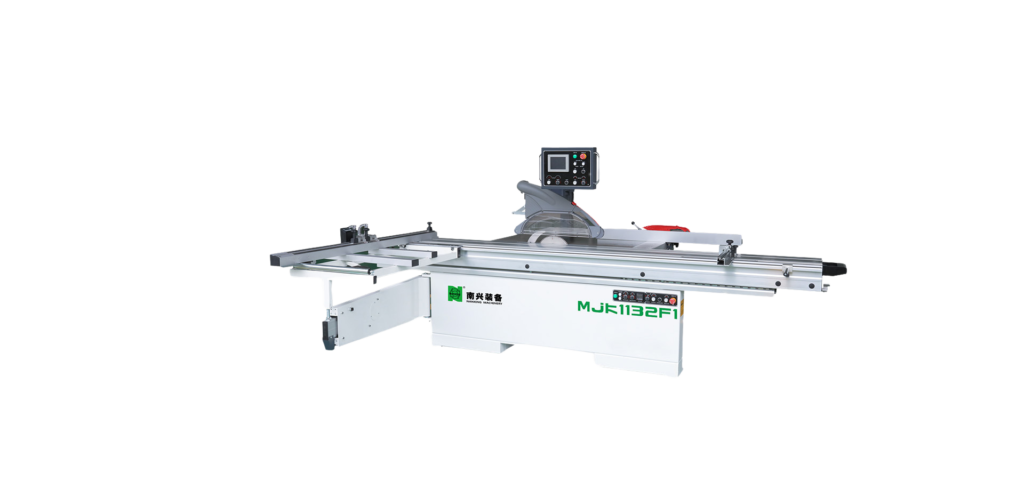
Digital visibility allows workshop supervisors to track exact cutting times and operator efficiency directly from the factory floor. These systems provide the data needed to refine production schedules and improve overall equipment effectiveness.
Strategic Advantages of Partnering with AOE for Panel Saw Solutions
Selecting the right sizing equipment defines the operational ceiling for any East African furniture manufacturer. As a leading machinery supplier Kenya, AOE delivers industrial-grade equipment backed by local engineering support and preventative maintenance schedules.
Factories secure a distinct competitive edge through sustained cutting accuracy and strictly minimised operational downtime. Interested parties can schedule a machinery consultation in Kenya to view these systems in a production environment.
Industrial Engineering Recommendations for Panel Dividing
East African workshops processing more than 50 sheets of melamine daily must consider upgrading to a CNC beam saw as a mandatory step for quality control. The elimination of human pushing force guarantees strict tolerances.
This protection keeps profit margins away from the scrap bin and accelerates downstream assembly. For further technical specifications or machine inquiries, consult with a technical specialist to match machine capacity with specific production targets.