
The safest machinery for cutting aluminium honeycomb panels without compromising core integrity is a specialised panel saw equipped with variable pressure beam controls, such as the NPC330S.
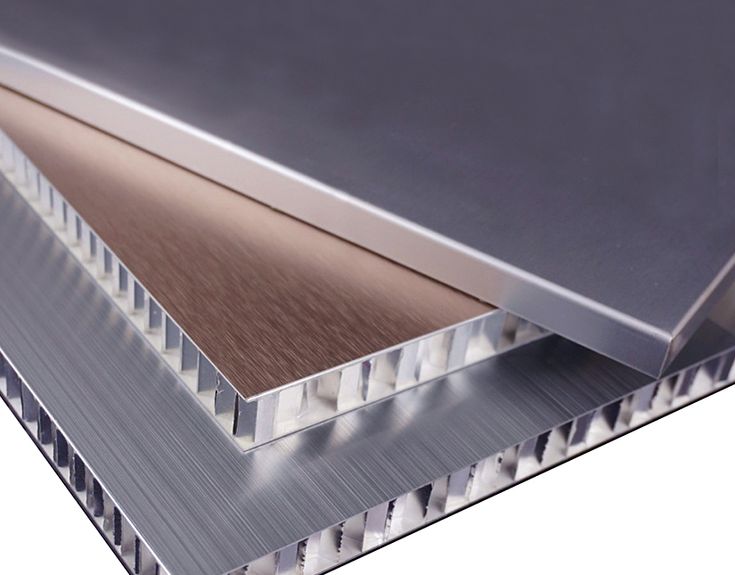
Factory managers processing composite materials require this specific technology to eliminate the costly scrap rates caused when standard equipment forcefully compresses the delicate hexagonal cells during the cutting cycle.
AOE provides these technical solutions to ensure structural stability throughout the production process.
| Technical Specification | Standard Panel Saw | NPC330S Honeycomb Mode | Production Impact |
|---|---|---|---|
| Pressure Beam Control | Fixed Pneumatic Force | Variable Digital Modulation | Zero core crushing on 0.05mm foils |
| Saw Carriage Speed | Static Feed Rate | Inverter Controlled (1-100m/min) | Prevents heat-induced bond failure |
| Clamping Interface | Hard Rubber Pads | Soft-Contact Wide Profile Bars | Eliminates surface marring on PVDF coatings |
| Vibration Damping | Standard Cast Frame | Heavy-Duty Stress-Relieved Steel | Maintains +/- 0.1mm tolerance |
Precision Cutting Mechanisms for Aluminium Honeycomb Panels
Standard industrial panel dividing equipment frequently struggles with modern composite structures. Applying conventional downward force onto a hollow aluminium matrix inevitably buckles the internal geometry before the cutting tool even makes contact.
The NPC330S resolves this manufacturing bottleneck through a dedicated aluminium honeycomb mode that precisely modulates both the pressure beam intensity and the saw blade feed rate.
The system utilizes sensors to detect material density and adjust the clamping force in real-time. This ensures the panel remains stationary during the cut without deforming the internal cells.
Production engineers in Nairobi and Dar es Salaam find this level of control essential for maintaining the structural load-bearing capacity of architectural cladding.
Blade Technology and Core Integrity Protection
Tooling selection dictates the quality of the final edge when processing hollow-core composites. Advanced trapezoidal flat-tooth industrial saw blades reduce the mechanical friction against the thin aluminium foils.
This specific geometry prevents burr formation and heat distortion. Operators achieve clean slices without deformation because the system actively matches blade rotation speeds to the specific fragility of the core matrix.
High-speed steel or carbide-tipped blades must maintain a specific rake angle to slice through the skins and the core simultaneously. The NPC330S supports various tooling configurations that allow for rapid blade changes.
This flexibility ensures that the machine can transition from thick structural panels to thin decorative sheets without compromising the finish quality.
Vibration Damping and Material Stability Features
Machine chassis weight directly impacts the stability of delicate composite panels during high-speed sawing operations. Heavy-duty steel frames absorb the harmonic vibrations generated by spindle motors.
This damping capacity ensures the cutting tool maintains micro-millimetre accuracy. The stability prevents the panel from shifting under light clamping pressures, safeguarding the structural integrity of the honeycomb core.
The NPC330S features a precision-ground worktable that reduces friction during material positioning. This surface prevents the bottom skin of the aluminium panel from scratching.
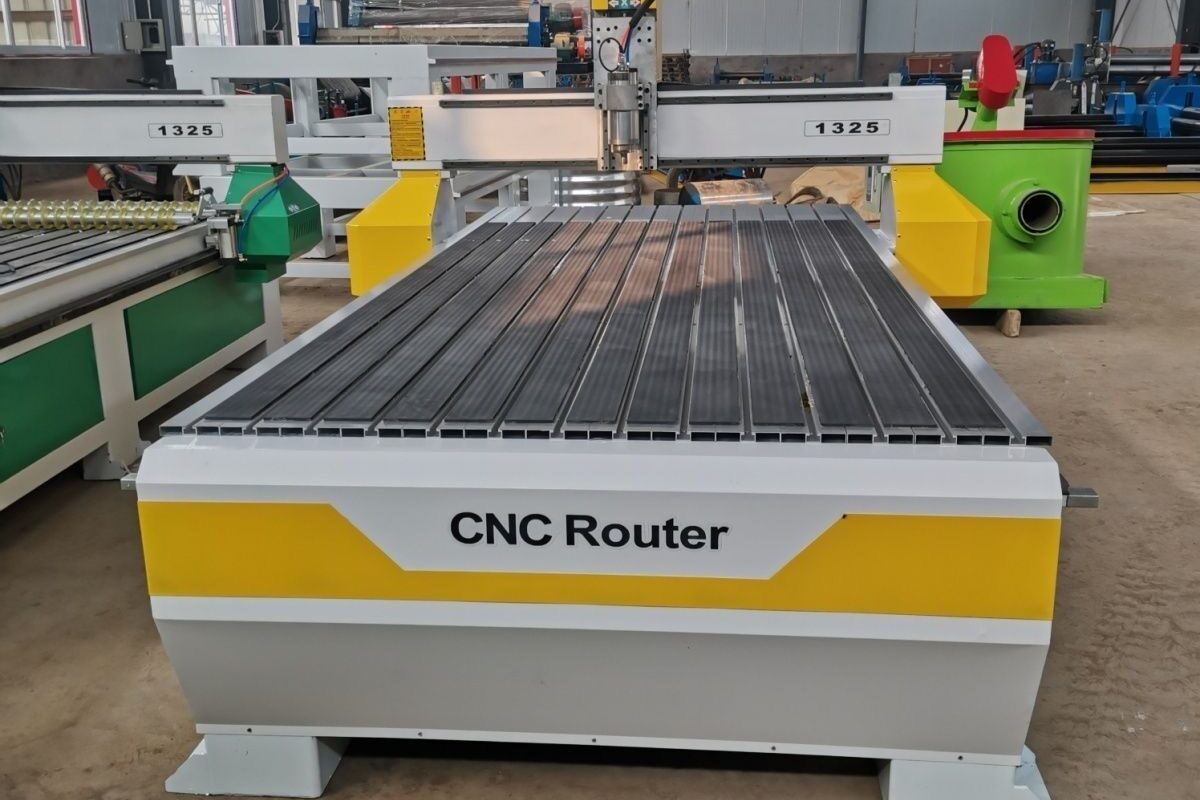
Fabricators using a CNC nesting router in conjunction with a panel saw can achieve higher throughput by delegating straight-line cuts to the NPC330S, which handles bulk sizing with superior speed and edge quality.
Material Handling and Workflow Integration in Honeycomb Production
Moving lightweight but rigid, large-format composite boards requires specialised handling protocols to prevent surface denting. Production engineers implement systems that transport the material from storage racks to the cutting bed without relying on excessive physical manipulation.
Modern factories integrate air-floatation tables to move panels between stations with minimal effort.
Automated Loading and Unloading Systems for Composites
Vacuum-assisted lifting equipment replaces manual handling. This reduction in physical contact limits the risk of operator-induced damage to the panel faces. Conveyor tables synchronise with the saw feed rate to allow continuous throughput.
This automation lowers manual handling errors and protects the surface finish of premium architectural cladding. Operators can request demo sessions to see how integrated loading systems improve safety and speed.
Advanced Clamping Solutions for Delicate Honeycomb Cores
Standard pressure beams often crush hollow core materials. The NPC330S counteracts this by utilising pneumatic clamping bars fitted with soft-contact, non-marking rubber profiles. These profiles distribute hold-down force over a wider surface area.
This engineered approach secures the panel firmly against the cutting line without compressing the internal aluminium cell walls. The result is a perfectly square cut with no visible indentation on the material surface.
Software Integration and Nesting Optimization for High Yield
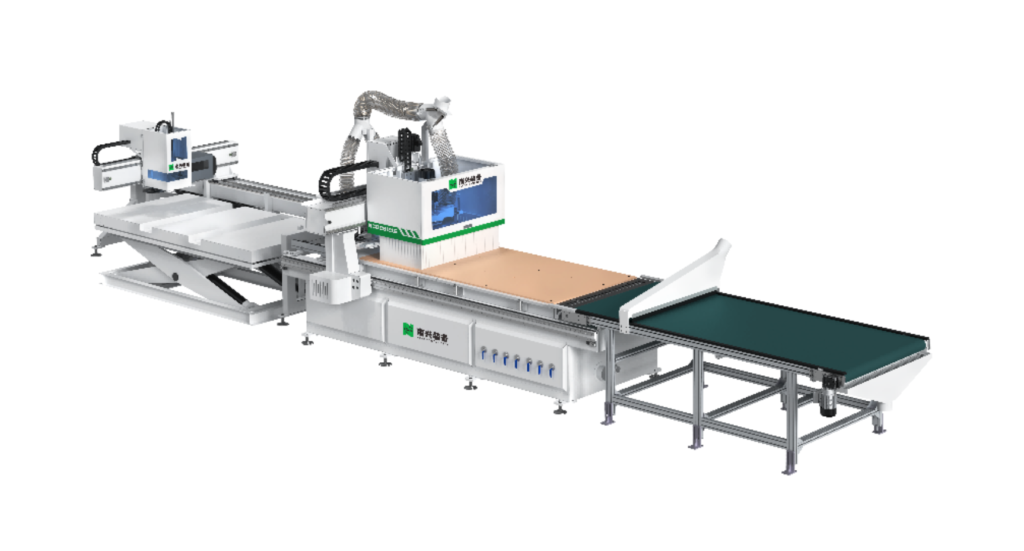
Nesting software transforms raw architectural blueprints into highly efficient cutting maps. Using furniture CAD CAM Kenya standards, algorithmic part placement ensures maximum board yield from expensive composite stock. This directly lowers raw material expenditure and reduces the volume of scrap aluminium generated during each shift.
Digital integration also traces each cut piece. This simplifies assembly workflows for downstream fabrication teams.
Workshop managers track performance through manufacturing trends Kenya data points to ensure the machine meets the strict delivery schedules required by large commercial construction projects.
The software accounts for the kerf width of the saw blade to ensure dimensional accuracy across the entire batch.
Local Support and Installation for East African Manufacturers
Deploying industrial machinery requires robust local engineering support to guarantee long-term operational viability. AOE technicians calibrate every machine on-site.
This calibration includes adjusting the electrical components to handle regional voltage fluctuations safely. Local presence ensures that factories in the region maintain high uptime and consistent production quality.
Technical trainers conduct intensive workshops focusing on the calibration of pressure beams and the specific parameters required for aluminium honeycomb composites. This hands-on skill development minimises accidental scrap and empowers staff to perform first-line maintenance safely.
Having locally available spare parts like sensors and specialised blades ensures that production never halts for extended periods.
Engineering Recommendation for Sustainable Scaling
Workshops handling architectural cladding must transition away from standard dividing saws to eliminate composite deformation. Investing in variable-pressure systems like the NPC330S ensures zero core crushing.
This investment translates into higher material yields and flawless joint assemblies on the construction site. For businesses looking to scale, aligning machine capabilities with factory production targets is critical.
Specifying equipment that respects material science guarantees a competitive advantage in the growing East African industrial sector.