
The 12-slot CNC automatic tool changer removes production bottlenecks by reducing tool swapping intervals from minutes to seconds. This upgrade elevates throughput for woodworking and metalworking factories.
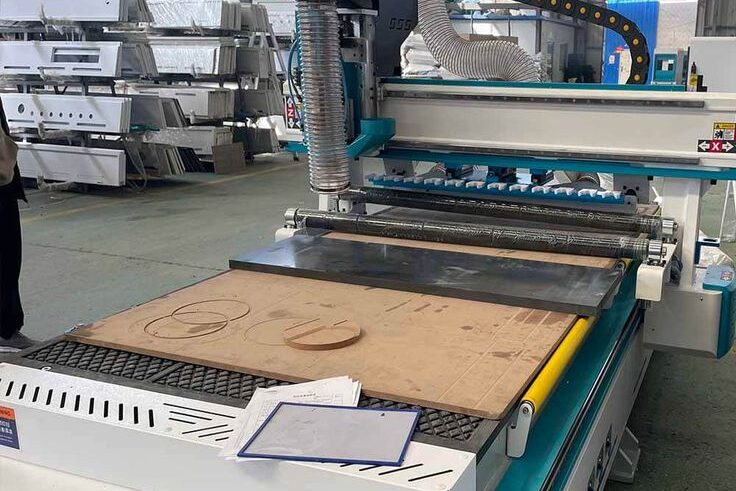
Factory managers who integrate these CNC nesting router systems observe immediate yield improvements. Continuous operation removes manual intervention and standardises batch quality across complex multi-tool cutting profiles.
| Technical Specification | Standard Configuration Metric |
|---|---|
| Spindle Drive Power | 9.0 kW (Air-Cooled) |
| Tool Interface System | ISO30 or HSK63F |
| Maximum Tool Weight | 8.0 kg per slot |
| Exchange Cycle Time | 8 to 12 Seconds |
| Calibration Accuracy | ±0.01 mm |
Technical Specifications of 12 Slot CNC Automatic Tool Changers
Industrial CNC routers equipped with an in-line 12-slot configuration utilise precision servo motors to drive the magazine index efficiently. This setup pairs with high-torque 9kW air-cooled spindles equipped with ISO30 or HSK63F tool holders.
These components guarantee rigid tool retention under heavy lateral loads. East African production engineers specify these systems to handle dense local hardwoods or heavy MDF panels.
The robust motor allows the machine to process material without spindle stall or tool chatter. Engineers often pair these spindles with high-grade router bits Kenya workshops require for long-term durability.
Productivity Metrics and Operational Efficiency Gains
Manual bit changes take several minutes and break operator concentration. These interruptions introduce margins for error during collet tightening. An in-line 12-slot auto tool changer reduces this duration to seconds.
The 9kW spindle switches from a 10mm cutting bit to a 5mm drill bit without pausing the machining cycle. Production managers calculate that saving three minutes per panel on a 50-panel daily run recovers two and a half hours of active spindle time per shift.
Interested stakeholders can request demo sessions to see these cycle times in a live environment.
Operational Flexibility and Application Versatility
The CNC automatic tool changer transforms a standard router into a multi-process machining centre. The machine executes drilling, pocketing, and edge profiling in a single G-code programme.
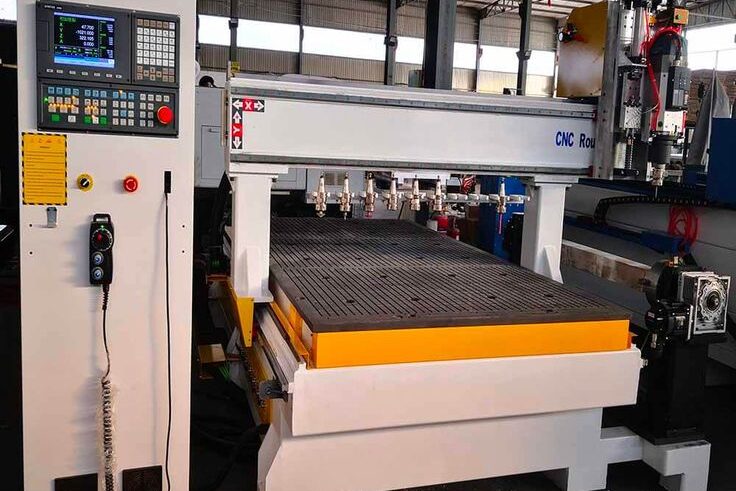
Workshop floors gain the capacity to manufacture complex architectural mouldings and flat-pack furniture components simultaneously. Operators load the linear magazine with specialised aggregates and compression cutters at the start of the shift.
This preparation allows the machine to tackle varying board thicknesses autonomously. Similar automation benefits are found when using a specialized furniture drilling machine for high-volume cabinetry.
Software Integration and Workflow Automation Levels
Modern CAM software dictates the precise tool path sequences. The system automatically calls up the required slot number from the tool magazine via post-processor commands.
Advanced controllers continuously monitor tool life parameters and adjust feed rates dynamically. This digital integration removes the guesswork from tool selection. It actively reduces the scrap rates caused by human error in factories upgrading from manual machinery.
Implementing furniture CAD CAM Kenya specialists recommend ensures that the tool magazine remains synchronised with the production schedule.
Investment Justification and Return on Investment Analysis
Capital expenditure for automated machinery demands clear financial justification based on operational cost reductions. Factory owners weigh the initial premium of an automated spindle against the long-term savings derived from reduced machine downtime and lowered labour overheads.
The table below outlines a standard ROI framework for a mid-sized production facility.
| Operational Metric | Manual Tool Change Router | 12-Slot CNC Automatic Tool Changer |
|---|---|---|
| Average Tool Change Time | 2.5 – 4 Minutes | 8 – 12 Seconds |
| Daily Spindle Downtime (50 panels) | 150 Minutes | 10 Minutes |
| Operator Skill Requirement | High (Manual Calibration) | Low (Automated Workflow) |
| Projected ROI Timeline | Baseline | 14 – 18 Months |
Labour Solutions for East African Manufacturing Challenges
Recruiting and retaining highly skilled CNC operators remains a structural challenge for the regional manufacturing sector.
A CNC automatic tool changer shifts the technical burden from the floor operator to the machine programming phase. Factory owners only require one senior engineer to programme the tool paths.
Semi-skilled technicians can oversee the continuous loading and unloading of raw materials. Industry insights on our machinery blog suggest that this shift significantly lowers the barrier to entering high-precision manufacturing.
Cycle Time Optimisation and Accuracy Standards
Minimising the spindle travel distance between the workpiece and the tool magazine directly impacts overall cycle efficiency. Linear tool changers mounted at the rear of the gantry offer rapid sequences compared to rotary carousel models.
Engineers calibrate the Z-axis retract height rigorously to clear the material quickly while avoiding unnecessary vertical travel. This precision is essential for factories that also operate high-speed industrial panel dividing equipment.
Rapid Tool Exchange Mechanical Sequences
The mechanical exchange relies on high-pressure pneumatic drawbars. These bars release the tool holder taper exactly as the spindle aligns with the magazine fork.
Proximity sensors confirm the successful seating of the tool before the spindle ramps back up to the designated cutting RPM.
This orchestrated mechanical sequence demands clean and dry compressed air. Moisture can degrade the sensitive pneumatic valves and lead to downtime.
Integration of Precision Tool Sensor Technology
Automatic tool calibration pads measure the exact length of each newly loaded bit down to micron-level accuracy. The CNC controller immediately offsets the Z-axis working coordinates.
This adjustment compensates for the physical differences between a long profile cutter and a short boring bit. Physical automation eliminates the need for manual zeroing after every exchange. It ensures consistent depth control across every groove and pocket.
After-Sales Support and Technical Durability in Regional Climates
Harsh workshop environments characterised by voltage fluctuations and fine MDF dust require robust maintenance protocols. Technicians calibrate each installation to address local shopfloor voltage variability.
They fit stabilisers and configure dust extraction hoods to keep the linear magazine clear of debris. Regular maintenance of edge banding machines and CNC routers ensures a unified production standard.
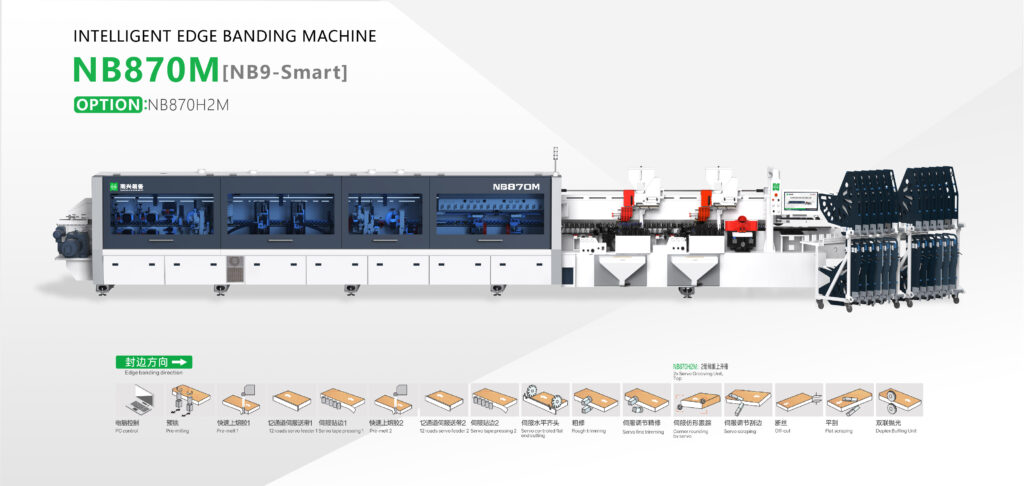
Comprehensive operator training ensures floor staff understand how to clean ISO collets and monitor pneumatic pressures daily to avoid spindle failure.
Engineering Recommendations for Advanced Machining Solutions
Upgrading to a 12-slot automated system represents a mandatory operational shift for any factory aiming to scale production volumes. Production managers should prioritise in-line configurations paired with 9kW spindles for maximum mechanical reliability.
AOE engineers advise pairing these automated centres with robust CAM nesting software to extract the highest material yield from every standard panel. For specific configuration advice or pricing details, please submit your machine inquiries through our technical department.