
Determining the appropriate machine configuration between a standard CNC router and a nesting machine defines the long-term throughput of a woodworking facility. Standard CNC routers excel at bespoke MDF door carving and 3D profiling.
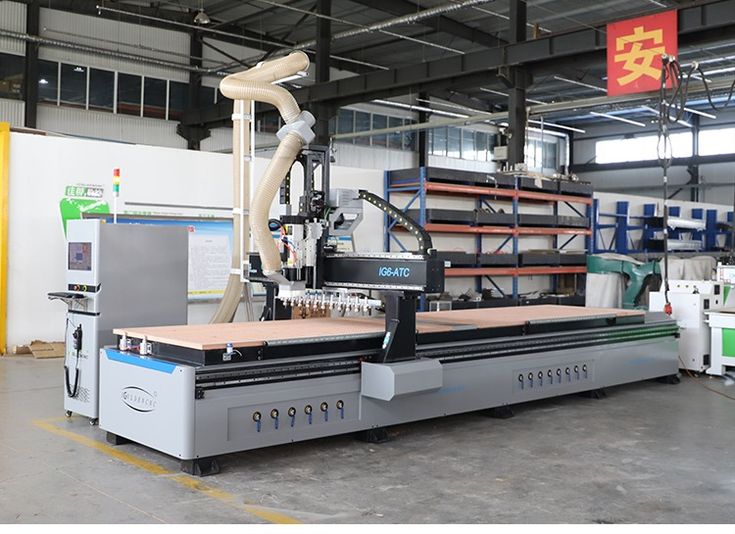
Nesting machines function as integrated modular cabinetry production lines. The AOE technical team frequently implements the NC549SLP nesting cell to integrate automatic loading, unloading, and rotary labelling systems.
These features allow East African factory owners to reduce manual handling and accelerate downstream assembly cycles.
| Production Metric | Standard CNC Router | Automated Nesting Machine (NC549SLP) |
|---|---|---|
| Daily Output | 15 to 25 Boards per shift | 60 to 100 Boards per shift |
| Material Yield | 80 percent to 85 percent | 95 percent plus via algorithmic nesting |
| Labour Force | 2 Skilled operators required | 1 Supervisory operator |
| Vacuum System | Pod and rail or basic matrix | High-flow 7.5kW dual-stage vacuum |
| Tooling Type | V-groove and ball-nose bits | PCD Diamond compression cutters |
Operational Differences Between Standard CNC Routers and Nesting Machines
A standard CNC nesting router operates as a versatile profiling tool designed for intricate MDF doors and solid wood components. These machines use a variety of spindles to manage detailed 3D relief work.
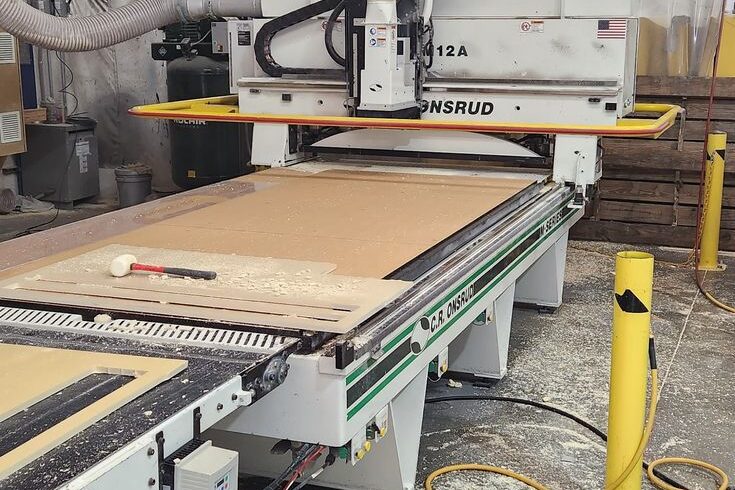
Nesting machines process full sheets of melamine-faced chipboard or plywood in a single automated setup. The machine cuts, drills, and grooves all cabinet carcass parts simultaneously.
Production managers should match the machine geometry to their specific product mix to avoid underutilising expensive capital equipment.
Automation Impact on Production Cycles and Staffing Requirements
Manual loading on standard routers creates bottlenecks because operators must position heavy boards and align suction pods by hand. Nesting configurations eliminate this idle time through automated scissor-lift tables and outfeed conveyor belts.
This automation enables a single operator to manage the entire cutting cell. Factories often redirect manual labour to edge banding or final hardware assembly tasks.
Traditional panel saw operations require multiple handlers to manage large sheets, whereas automated nesting requires only supervisory input.
Yield Optimization and Material Waste Management Strategies
Panel dividing without dedicated software creates excessive offcuts and increases raw material costs. Nesting machines use advanced algorithms to pack cabinet components tightly onto standard boards.
This method routinely achieves material yields above 95 percent. Standard routers often lack high-flow vacuum matrix systems. This makes it difficult to secure small parts during aggressive routing cycles.
Efficient material usage is a primary driver for profitability in the competitive East African furniture market.
Software Integration for Automated Workflow Management
Integrated CAM software connects the design office directly to the shop floor. Nesting lines read parametric cabinet design files and generate exact toolpaths automatically.
Guigui software and similar platforms assign rotary-applied barcode labels for downstream tracking. This digital workflow ensures that operators at the edge banding machine recognise which edge requires PVC tape.
The system also identifies which face requires cam-and-dowel boring before the parts reach the assembly bench.
Investment Returns and Cost Analysis for Cabinet Manufacturing
Capital expenditure for a full nesting cell exceeds the cost of a standalone router. The return on investment improves through reduced labour dependency and higher shift output.
Workshop engineers must factor in raw board savings and electrical consumption over a standard five-year depreciation cycle. Upgrading to full automation consistently drives down the cost-per-part in high-volume cabinet manufacturing.
Many regional factories find that the investment pays for itself within 12 to 18 months of continuous production.
Technical Support and Training for East African Factory Scalability
Sophisticated machinery requires robust technical infrastructure. East African manufacturing environments often face industrial voltage fluctuations. AOE technicians calibrate nesting lines to handle local grid conditions.
The team provides training for floor operators on preventive maintenance and software troubleshooting. Scalable production relies on this continuous upskilling to minimise unplanned downtime during peak project seasons.
Local support ensures that spare parts for the furniture drilling machine or nesting spindle are available to maintain uptime.
Regional Demand for Automated Modular Furniture Production
Rising demand for modular kitchens and built-in wardrobes in regional urban hubs requires rapid production methodologies. Nesting lines accommodate this shift by processing hundreds of identical panels per shift.
Factory operators using these systems consistently outbid competitors who rely on manual cutting. These automated systems provide superior execution speed and absolute dimensional accuracy.
Technical insights on these trends are available on the AOE machinery blog for industry professionals.
Selection and Maintenance of High Performance Tooling
High-speed nesting requires KWS tooling and diamond compression cutters to achieve chip-free edges. Standard routers performing 3D carving rely on solid carbide ball-nose bits.
These tools require frequent sharpening to maintain cut quality. Workshop managers should implement strict tool-life tracking software. This prevents dull bits from causing edge breakout or applying excessive load to the electrospindle.
Proper tool maintenance extends the life of the machine and ensures a high-quality finish on melamine boards.
Vacuum Systems and Workholding Methodologies
Standard routers frequently use pod-and-rail systems to elevate the workpiece. This allows for horizontal drilling and deep edge profiling.
Nesting machines employ high-flow vacuum matrix tables covered with an MDF spoilboard. This ensures that flat panels remain stationary during high-feed through-cuts.
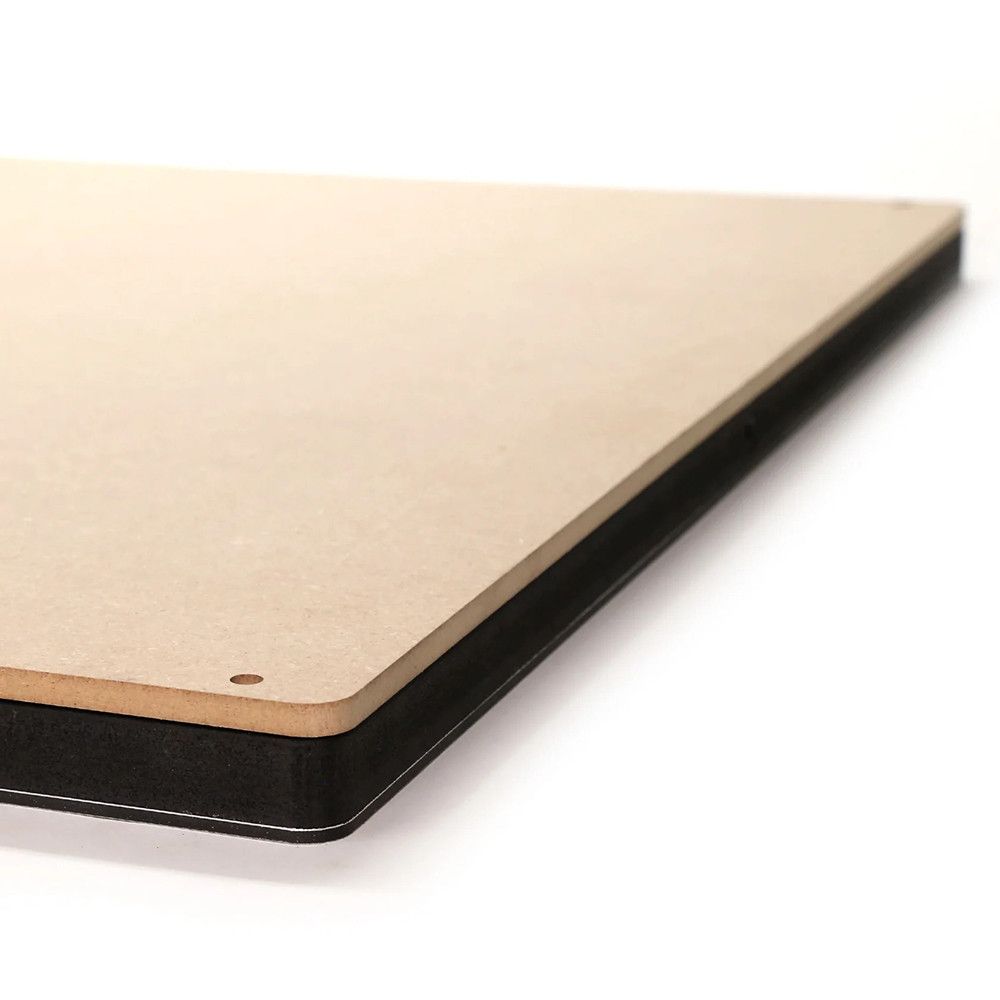
Zoned vacuum controls allow operators to concentrate suction on specific bed areas. This feature secures lightweight parts firmly against the table even when multiple parts are cut from a single sheet.
Dust Collection and Chip Extraction Requirements
High-velocity routing generates large volumes of fine dust. This posing risks to spindle bearings and operator health.
Effective factory integration pairs the nesting machine with high-capacity extraction units. These units should include rotary valves and self-cleaning filter bags.
Proper chip evacuation prevents the secondary recutting of debris. This preserves the cutter lifespan and ensures the melamine board finish remains pristine during the entire cycle.
Floor Space Requirements and Material Flow Planning
A standalone router occupies a modest footprint and suits expanding workshops with limited floor space. A fully automated nesting cell requires significant factory length to accommodate loading stations and outfeed tables.
Production engineers must design the factory layout so nested parts flow directly into edge banding staging areas. Clear forklift access aisles are necessary for positioning raw MDF bundles at the start of the line.
Detailed information about the company history and facility planning is available on the about AOE page.
Strategic Recommendations for Machinery Procurement
Manufacturers producing bespoke solid wood furniture or custom 3D signage should invest in a heavy-duty standard CNC router. Factories focusing on modular kitchens and flat-pack office furniture require a fully automated nesting machine.
This is the only viable path to scale operations and eliminate manual cutting errors. Factory owners should request demo sessions to see these machines in operation before finalizing their equipment list.
Selecting the correct machinery defines the future profitability and daily capacity of the production facility.