
The 12kW high speed CNC spindle motor provides East African factory owners with the capacity to increase production throughput by up to 40% when machining dense materials.
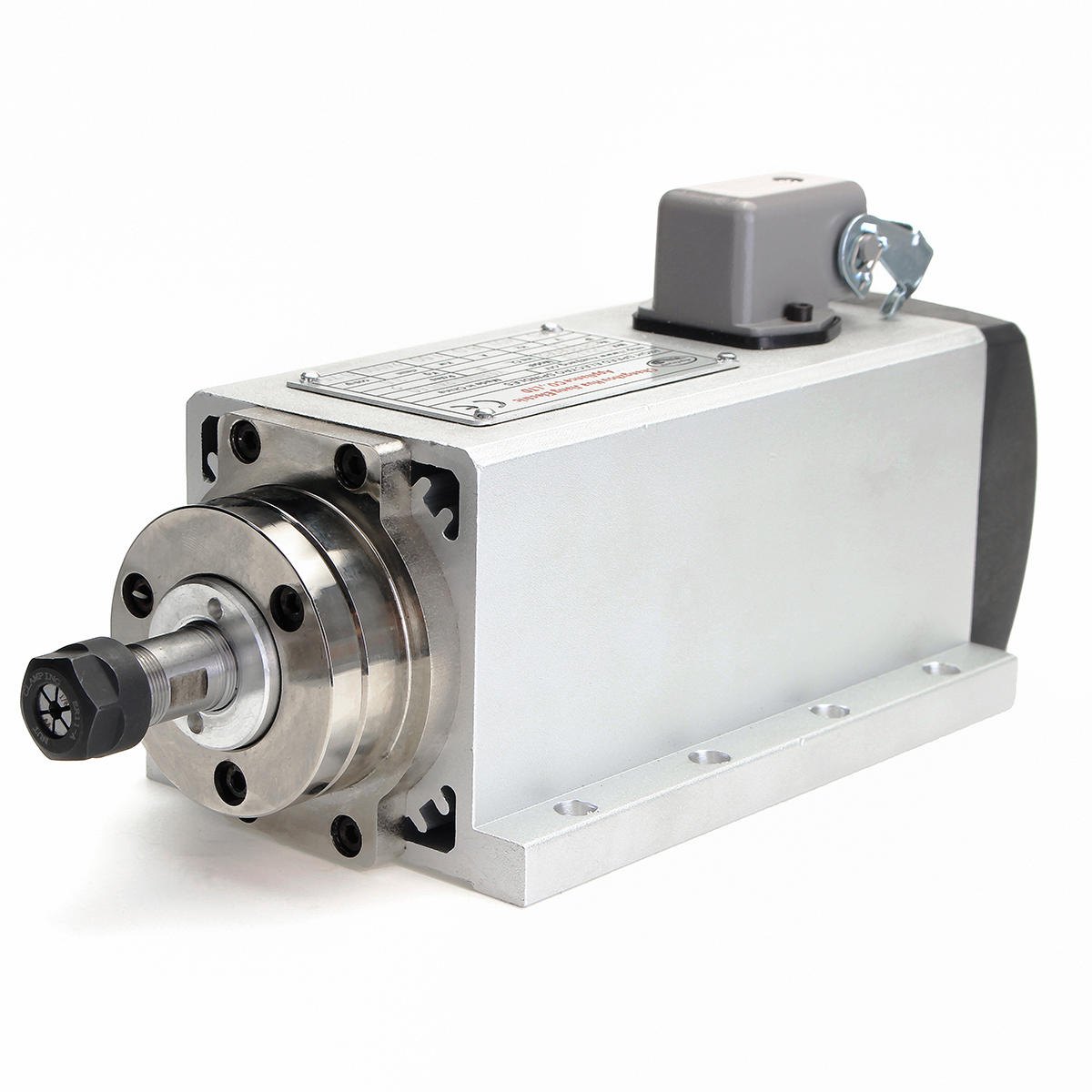
This power upgrade eliminates the spindle stall issues common with lower-wattage units. A 12kW ISO30 taper spindle allows a CNC nesting router to slice through thick hardwood panels or compact laminates in a single pass without the motor bogging down.
Technical teams at AOE recommend this configuration for facilities transitioning from light-duty work to high-volume industrial output.
| Spindle Specification | Pass Requirement (18mm Hardwood) | Average Feed Rate Limit | Tooling Lifespan Impact |
|---|---|---|---|
| 9kW Standard Spindle | 2 to 3 Passes | 12m – 15m per minute | Moderate (Heat buildup accelerates wear) |
| 12kW High Speed Spindle | 1 Single Pass | 20m – 25m per minute | Extended (Consistent RPM prevents chatter) |
Technical Specifications for 12kW Spindle Material Processing
A 12kW spindle delivers sustained torque across variable RPM ranges to prevent tool chatter during aggressive material removal. East African workshops face varying timber densities.
This power reserve maintains high feed rates on heavy local species like mahogany or mvule. Consistent rotational force ensures cleaner edge finishes. This performance level reduces subsequent sanding and edge-preparation operations.
Industrial CNC setups rely on standardisation for tooling. The integration of ISO30 or HSK63F interfaces on these larger motors guarantees rigid tool holding. This mechanical stiffness transfers the full 12kW cutting force directly to the bit rather than losing energy to vibration.
Operators achieve superior surface finishes on dense composite panels that typically cause vibration marks on lighter machinery. This rigid mounting is essential when using router bits Kenya workshops require for high-density boards.
Production Efficiency Gains with 12kW CNC Spindles
Production managers measure profitability by machine cycle times and daily output volume. A 12kW unit permits operators to increase feed speeds from 15m/min to over 25m/min on thick core boards without risking motor burnout.
Faster routing and drilling cycles translate directly to higher daily panel yields for large-scale cabinetry and architectural operations. This efficiency is comparable to the high output seen in industrial panel dividing operations.
Reducing the pass count from three to one slashes the active machining time required per sheet of material. Factories running multi-shift operations multiply these saved minutes across hundreds of panels.
This strategy compounds daily manufacturing capacity. Less time spent cutting also lowers the ambient electrical draw per panel. This result optimises overall factory overheads.
ROI Analysis for CNC Spindle Upgrades
Upfront machinery capital requires clear payback metrics through labour savings, increased capacity, and reduced tooling consumption. Upgrading the primary cutting motor accelerates the amortisation period by allowing the factory to take on thicker, high-margin materials.
Modern industrial design software can accurately predict these time savings by simulating tool paths at higher feed rates.
Integration Requirements for 12kW CNC Systems
Retrofitting a higher capacity spindle dictates matching the Variable Frequency Drive (VFD) to the new amperage draw of the larger motor. Workshop engineers must verify the VFD handles the sustained electrical load required during heavy plunging operations.
Inadequate inverter matching results in safety fault triggers and stalled production runs. Efficient furniture drilling machine processes also depend on this electrical stability to ensure consistent hole depth.
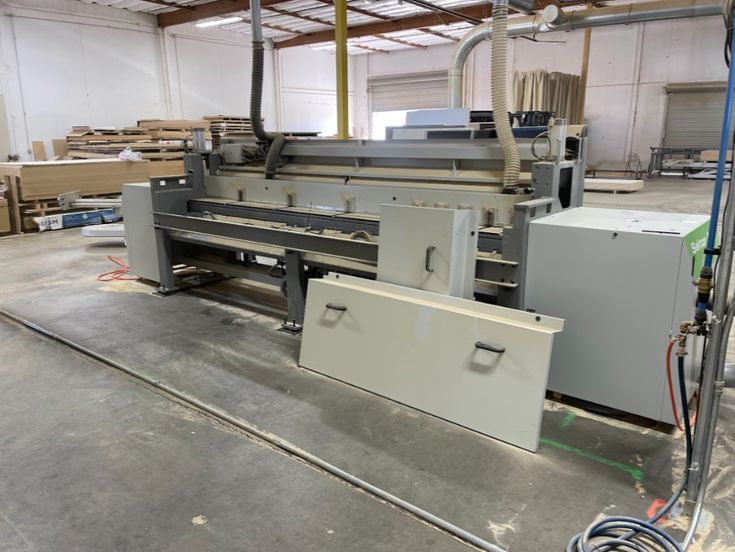
Cooling mechanisms must scale proportionally with the increased thermal output generated by a 12kW stator. Heavy-duty liquid cooling systems or high-flow pneumatic fans must be plumbed and calibrated to extract heat rapidly from the ceramic bearings.
Proper thermal management guarantees the motor reaches its full multi-year lifespan in hot equatorial workshop environments. AOE installation teams calibrate these systems to account for regional humidity and temperature peaks.
Reliability and Support for CNC Spindle Motors in East Africa
Industrial CNC routers operate in abrasive environments with frequent voltage fluctuations across regional power grids. Procuring a spindle featuring robust ceramic bearings and a comprehensive local warranty mitigates costly unplanned downtime.
Heavy-duty construction withstands the lateral loads of single-pass cutting to prevent premature bearing failure. About AOE, the company provides direct regional support to ensure rapid component replacement and calibration.
Relying on verified local supply chains prevents the weeks of halted production associated with importing replacement parts from overseas manufacturers. Fast technical interventions keep production lines generating revenue.
This local availability is a critical factor for workshops maintaining tight delivery schedules for commercial clients.
Strategic Growth for Manufacturing with 12kW Spindles
Scaling a manufacturing facility requires machinery capable of executing future production targets without requiring system overhauls. Equipping a router with a 12kW power plant allows factories to accept demanding architectural millwork contracts that stall underpowered machinery.
Production lines remain versatile enough to handle everything from lightweight plywood routing to deep pocketing in solid phenolic resin boards. This adaptability is documented in recent manufacturing trends Kenya journals.
Future-proofing the shop floor means investing in capacity limits that exceed current daily requirements. As local supply chains pivot towards harder engineered materials and compact laminates, factories operating 12kW units bypass the need to subcontract heavy processing jobs.
Retaining complex fabrication work in-house maximises project margins and quality control.
Precision Machining of Hardwoods and Laminates
Regional furniture markets heavily feature dense local hardwoods and abrasive high-pressure laminates for commercial fit-outs. The substantial torque output of the upgraded motor prevents RPM drops when the tool engages these resistant materials.
Consistent tool speed is the critical variable for preventing burning on timber edges and tear-out on delicate laminate faces. Manufacturers achieve chip-free cuts on laminated surfaces. This achievement directly lowers panel rejection rates at the quality control station.
Eliminating frayed edges removes manual rework from the assembly line. This allows joiners to apply edge banding immediately after the CNC cycle finishes. Precision cutting lowers material waste and elevates the final product quality.
Spindle Motor Power Output and RPM Ranges
High-capacity spindles typically operate between 18,000 and 24,000 RPM. Raw speed fails to deliver results without adequate wattage backing the rotation. The 12kW rating ensures the motor maintains its commanded RPM even under aggressive chip loads.
This torque stability prevents the excessive heat buildup that causes premature dulling of expensive router bits. Variable frequency control allows operators to map specific RPMs to different material densities. This customisation maximises the efficiency of the cut.
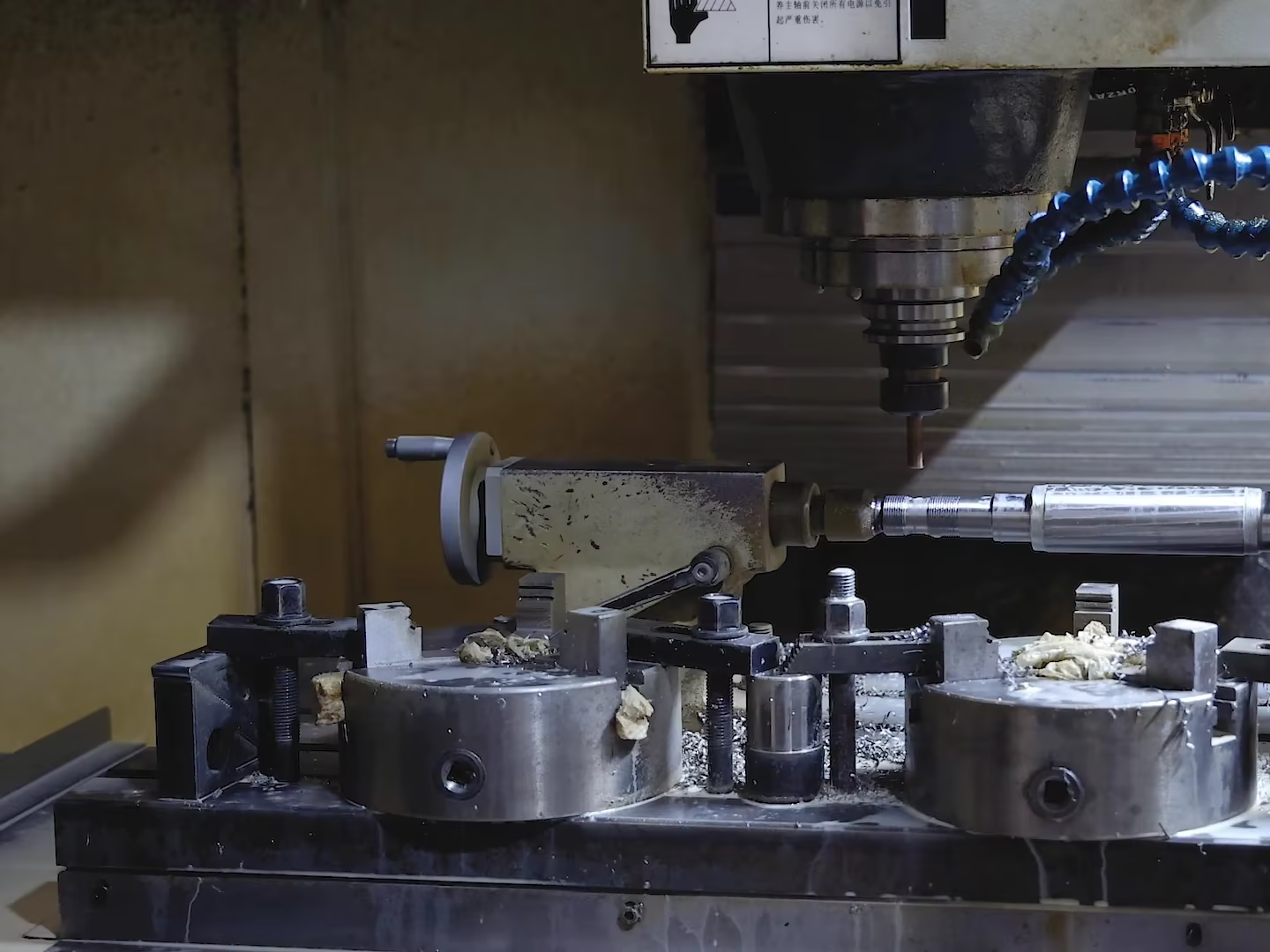
Running a large diameter surfacing bit requires massive torque at lower RPMs. The 12kW stator meets this demand easily. Precise speed control dictates the longevity of both the spindle bearings and the cutting tools.
Tooling Selection for High Speed Material Removal
A high-capacity motor demands industrial-grade tooling to extract maximum ROI from the mechanical upgrade. Diamond-tipped (PCD) router bits and large diameter compression cutters utilise the available torque to shear heavy board layers efficiently.
Proper tool balancing becomes critical at these elevated power levels. Correct balance prevents destructive harmonic vibrations from transferring back into the spindle shaft.
System Integration for CNC Control Units
Communication protocols between the CNC controller and the inverter must accurately translate G-code commands into precise spindle RPMs. Modern control systems utilise analogue or digital signals to ramp up the motor smoothly.
This prevents electrical spikes across the factory floor. Engineers must calibrate these acceleration and deceleration curves to match the heavy rotor mass of a 12kW unit.
Accurate sensor integration relays vital thermal and RPM data back to the operator console. If the spindle encounters an unexpected load or temperature spike, the control system must trigger an automatic feed hold to protect the hardware.
Correctly wiring these safety interlocks prevents catastrophic damage to the tooling and the workpiece.
Electrical Requirements and Machine Frame Considerations
Pushing 12 kilowatts of continuous power demands a stable three-phase electrical supply and heavy-duty contactors rated for industrial machinery. Upgrading to this power tier often exposes weaknesses in lightweight machine frames through resonant vibrations during heavy cuts.
Operators must ensure their CNC base utilises heavy welded steel construction and precision linear guides to absorb aggressive cutting physics safely.
Technical Assessment and Upgrade Consultation
Committing to a 12kW spindle configuration shifts a workshop from light-duty fabrication to heavy industrial production capability. Factory owners processing dense core materials will recover the upgrade premium within the first twelve months through labour efficiency and drastic reductions in tooling wear.
AOE technicians routinely evaluate existing gantry architectures to guarantee your machinery accommodates this power increase safely. Interested manufacturers may request demo sessions to evaluate performance on specific local materials.