
A rigorous daily maintenance routine for a high speed CNC drill Kenya ensures optimal uptime when processing engineered wood panels in dusty East African workshops.
Factory managers implementing strict pneumatic and lubrication protocols reduce Z-axis plunging faults by up to 85%. These actions directly safeguard batch consistency and protect tight production margins in competitive markets.
Comparative ROI and Maintenance Performance Metrics
The following table outlines the technical maintenance requirements and the associated operational benefits for high-speed automated drilling systems.
| Maintenance Action | Frequency | Target Component | Operational ROI Benefit |
|---|---|---|---|
| Pneumatic Pressure Calibration | Daily (Start of Shift) | Pressure Regulators | Eliminates drill block retraction failures and tooling collisions |
| Air Purge and Cleaning | Daily (End of Shift) | Dual Clamping Zones | Prevents melamine dust accumulation and panel slippage |
| Manual Spindle Lubrication | Weekly | Vertical Z-Axis Spindles | Ensures smooth travel during high-speed plunging cycles |
| Cabinet Filter Replacement | Monthly | Electrical Control Unit | Prevents servo drive overheating and electronic component failure |
| Extraction Velocity Test | Quarterly | Dust Extraction Ports | Maintains the 28 metres per second flow required for fine dust |
Capabilities and Configurations of Modern 6-Sided Drilling Systems
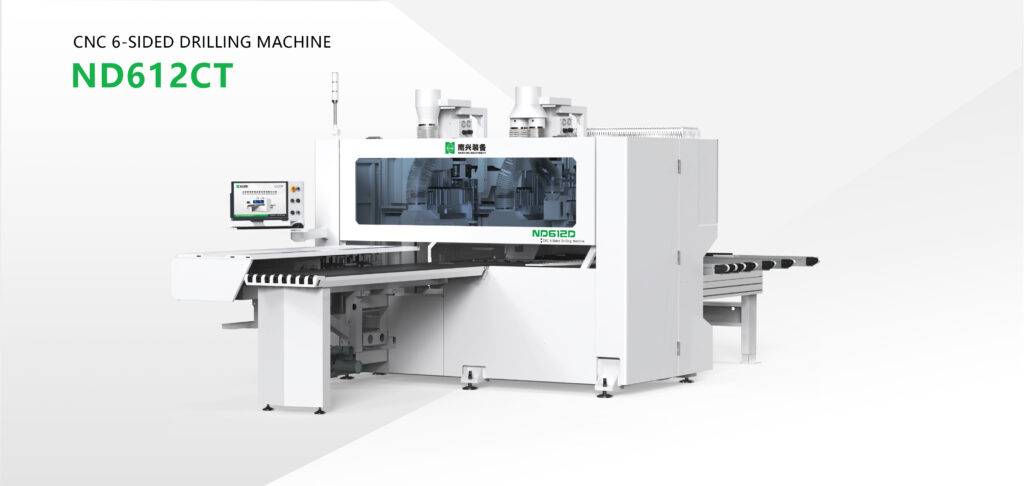
A modern high speed cnc 6-sided drilling machine processes all faces of a workpiece simultaneously without requiring operator repositioning. This capability drastically improves throughput for modular furniture manufacturers managing large runs of medium-density fibreboard (MDF) and particleboard.
Production managers depend on these multi-spindle configurations to execute complex routing, grooving, and boring tasks in a single pass. Integrating furniture CAD CAM Kenya software allows these machines to transition between different panel sizes without manual setup delays.
These complex kinematics demand strict operational oversight to maintain millimetre precision over long shifts. Heavy production loads place immense stress on the servo motors, pneumatic cylinders, and linear guide rails operating inside the machining envelope.
Failure to protect these precision systems from the realities of industrial woodworking degrades the machine foundations and long-term accuracy.
Daily Cleaning and Dust Management for Critical Hardware
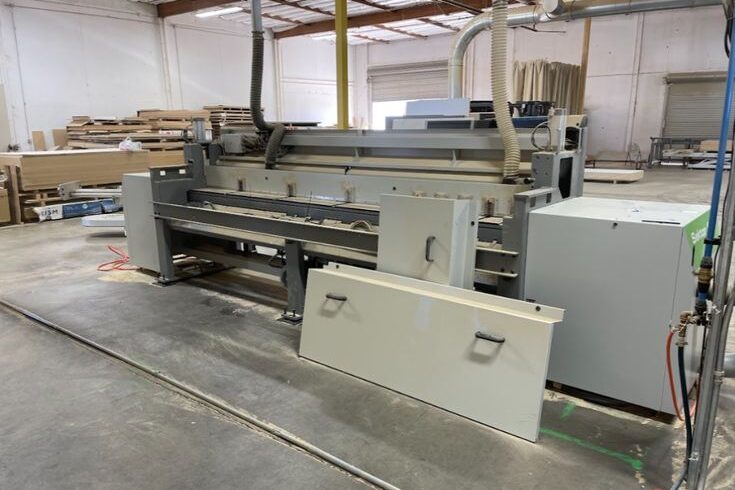
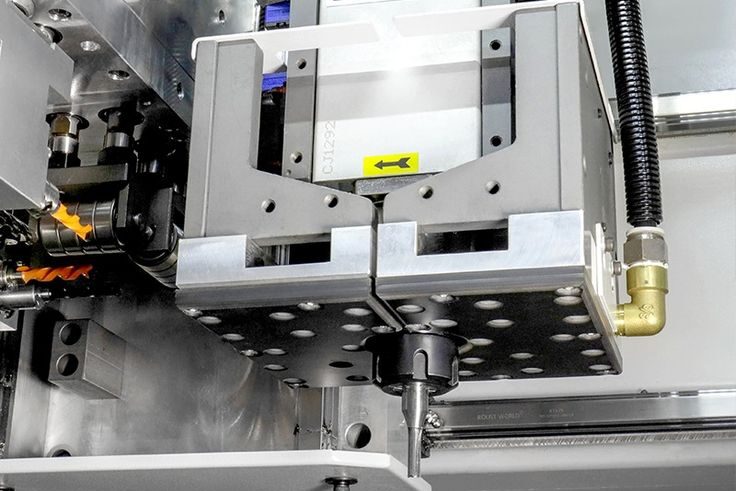
Fine melamine dust rapidly clogs the pneumatic clamps responsible for securing panels during aggressive machining cycles. Operators must blow out the dual clamping zones with dry, compressed air at the end of every shift to maintain correct clamping pressure.
Debris accumulation causes panel slippage, which results in costly dimensional inaccuracies and rejected parts. Following production tips Africa specialists provide helps workshops maintain these standards under local conditions.
Effective dust extraction systems coupled with daily manual cleaning extend the operational life of the clamping cylinders. Workshop managers must verify that vacuum hoses remain free of blockages and that extraction flow rates match the machine volume for material removal.
High-volume factories often pair these machines with a CNC nesting router to create a streamlined production flow for carcass manufacturing.
Lubrication Best Practices for Precision Moving Parts
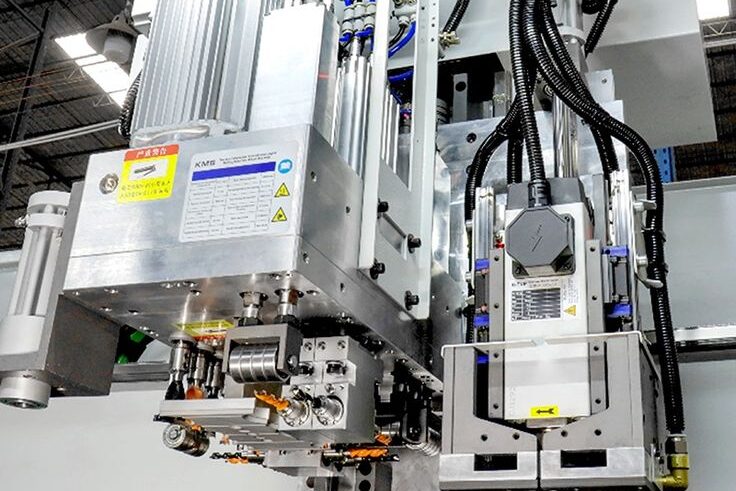
Proper lubrication determines the reliability of multi-axis movement under heavy production loads. Technicians must strictly adhere to greasing the vertical spindles to prevent the Z-axis from sticking during rapid plunging motions.
Using the manufacturer-specified high-temperature lithium grease prevents metal-on-metal friction within the ball screws and linear bearings. High-speed spindles often require service intervals every 1800 hours to ensure bearing integrity.
Over-lubricating attracts more ambient wood dust and creates an abrasive paste, so application requires exact measurements per the maintenance manual. Automated central lubrication systems require weekly visual inspections to confirm that oil lines successfully deliver fluid to the designated bearing blocks.
Using premium KWS tooling also reduces vibration, which lessens the mechanical load on the spindle bearings and lubrication films.
Environmental Impact of Humidity and Dust on Machine Longevity
East African humidity fluctuations combined with fine sawdust create an abrasive layer that degrades exposed mechanical linkages over time. Airborne particulates interfere with optical sensors and limit switches, causing alignment faults during automated feed cycles.
Factories installing climate control or heavy-duty air filtration units reduce the frequency of sensor replacement and electronic drive errors. This environment is also common for an edge banding machine, where glue pots and sensors are equally sensitive to dust.
Moisture inside the pneumatic air lines poses a severe threat to internal machine valves. Installing industrial air dryers and performing daily manual bleeds of the compressor tank ensures that only clean, dry air interacts with the drilling machine sensitive pneumatic components.
These precautions are vital for maintaining the integrity of an industrial furniture panel saw and other heavy machinery on the same air circuit.
Predictive Maintenance via IoT Sensor Integration
Integrating Internet of Things (IoT) technology transforms reactive repair operations into efficient predictive maintenance protocols. Sensors monitoring spindle vibration and motor temperature instantly alert production managers to abnormalities before severe damage occurs.
East African workshops deploying these digital diagnostics experience higher machine availability and predictable operating expenditures.
Data collected from these interconnected systems helps engineers calculate the true lifespan of routing bits and boring drills. Replacing tooling based on actual degradation data lowers consumable costs while ensuring flawless edge quality on finished panels.
Manufacturers requiring a machinery consultation Kenya can view these smart technologies in a live factory environment.
Spare Parts Management for East African Supply Chains
Maintaining an on-site inventory of high-wear items guarantees continuous production despite regional supply chain delays. Essential stock must include replacement collets, pneumatic seals, limit switches, and proprietary drive belts.
Storing these components in a climate-controlled environment prevents degradation before installation on the machine. Technical teams can send machine inquiries to our support desk to identify the critical spares kit for their specific model.
Partnering with distributors that provide local technical support ensures complex software calibrations and spindle rebuilds happen without costly international technician call-outs. Rapid access to skilled mechatronics engineers directly impacts a factory’s ability to fulfil high-volume orders on schedule.
The woodworking machines Nairobi market relies on this local expertise to maintain production momentum.
Operator Training and Safety Protocols
Untrained operators represent the highest risk to both personnel safety and machine integrity on the factory floor. Comprehensive training programmes must cover emergency stop protocols, safe tool changing procedures, and correct panel loading techniques.
Certified operators identify unusual machine noises early, preventing minor mechanical issues from escalating into major component failures.
Managers should mandate that only authorised personnel access the software parameters controlling feed rates and spindle speeds to avoid accidental axis overloads.
Total Cost of Ownership Analysis for Long-term Productivity
Calculating the Total Cost of Ownership (TCO) requires factoring in scheduled downtime, spare parts consumption, and technician labour alongside the initial capital expenditure.
Neglecting preventative maintenance artificially inflates TCO by causing premature servo replacements and excessive material wastage. A high speed cnc 6-sided drilling machine delivers the fastest return on investment when workshops strictly enforce daily cleaning and lubrication mandates.
Factories that log their maintenance actions gain visibility into the operating cost per manufactured panel. This data empowers workshop owners to price their finished furniture competitively while maintaining healthy profit margins.
Investing in a premium machinery supplier Kenya ensures the machine arrives with a clear maintenance schedule tailored to local production volumes.
AOE Engineering Support for Regional Manufacturing
AOE supplies industrial-grade machinery specifically configured to withstand the environmental challenges of East African production facilities.
Technical teams conduct rigorous on-site commissioning, operator training, and workflow optimisation to guarantee maximum throughput from day one. Factory owners rely on AOE for immediate access to critical spare parts and expert engineering diagnostics.
Engineers audit your factory air supply and dust extraction capabilities before installation to ensure the drilling machine operates in a protected environment.
This proactive engineering approach eliminates standard failure points and creates a stable production backbone for growing furniture brands.
Technical Recommendation for Maximum Machine Uptime
Executing uncompromising maintenance on complex multi-spindle equipment is the only path to sustained profitability. Workshops that institutionalise daily dust extraction protocols and precision vertical spindle lubrication eliminate avoidable Z-axis plunging failures.
Protecting high-speed drilling assets guarantees consistent factory output, preserves profit margins, and secures long-term manufacturing dominance in the regional market.