
Maximising daily panel output with the Nanxing ND612 requires workshop managers to align continuous feeding mechanisms with precise digital batching. East African furniture factories leveraging this 6-sided drilling machine drastically reduce manual handling and spindle setup times.
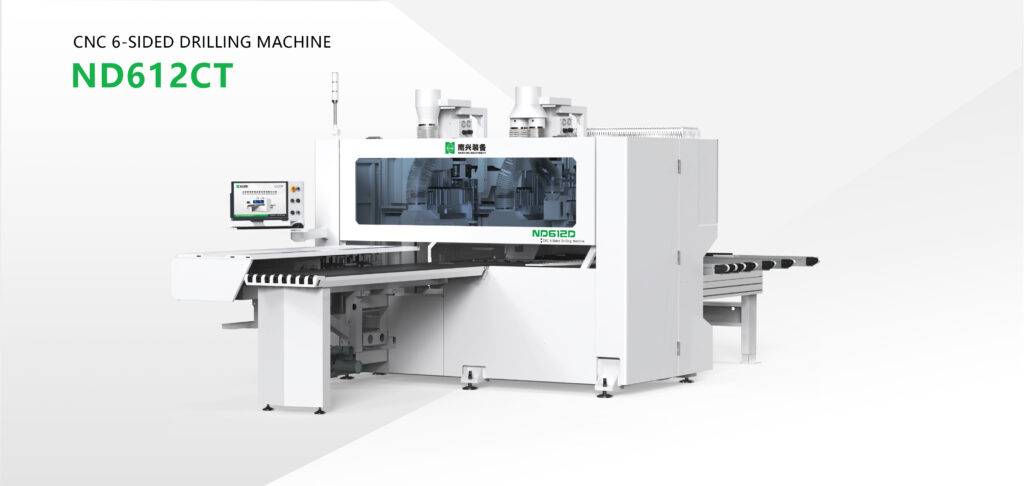
This integration directly lowers the cost per bored panel in high-volume production lines. Production efficiency increases when AOE technology is paired with rigorous floor management.
| Performance Metric | Manual Multi-Borer | Nanxing ND612 CNC | Operational Impact |
|---|---|---|---|
| Processing Speed | 2-3 panels per minute | Up to 8 panels per minute | Higher volume per shift |
| Boring Accuracy | 0.5mm – 1.0mm variance | 0.05mm precision | Perfect assembly fit |
| Labour Requirement | 2 Operators per machine | 1 Operator for two units | 50% reduction in labour cost |
| Setup Efficiency | Manual ruler adjustment | Barcode automated setup | Eliminates measurement errors |
Technical Specifications and Drilling Capabilities of the Nanxing ND612
The Nanxing ND612 executes simultaneous top, bottom, and horizontal drilling to eliminate the need for manual panel flipping. Multiple independent drill banks allow the machine to process complex custom cabinetry joints in a single pass.
Production engineers benefit from high-speed servo motors that drive exact spindle positioning. This precision reduces defect rates on MFC and MDF boards compared to traditional methods.
High-precision furniture CAD CAM Kenya solutions provide the necessary data streams to feed these high-speed drill banks.
Automation Throughput and Workflow Optimisation for the Nanxing ND612
Factory floors achieve maximum output by feeding the machine continuously rather than operating in isolated batches. Automated panel alignment sensors square the material instantly to allow the heavy-duty grippers to secure the board without operator intervention.
Mechanised handling reduces idle time between cycles and multiplies overall daily shift yields. Many workshops integrate this unit alongside a high-speed edge banding machine to create a streamlined manufacturing cell.
Cycle Time Efficiency and Production Rates
Cycle times dictate factory profitability in competitive manufacturing markets across Kenya, Uganda, and Tanzania. The ND612 operates at rapid feed speeds to complete standard wardrobe side panels in seconds rather than minutes.
Fast processing ensures downstream assembly lines never wait for bored components. This throughput eliminates costly production bottlenecks that often occur during manual drilling phases.
Optimised Dust Extraction and Machine Longevity
Heavy drilling generates fine particulate matter that quickly fouls optical sensors and jams linear guides. Robust dust extraction ports positioned directly over the drill banks capture MDF dust at the source.
Clean sensor pathways prevent micro-stoppages and extend the operational lifespan of the pneumatic cylinders. Regular maintenance updates found on the machinery blog help technicians maintain these extraction systems at peak efficiency.
Software Integration and Nesting Optimisation for Industrial Planning
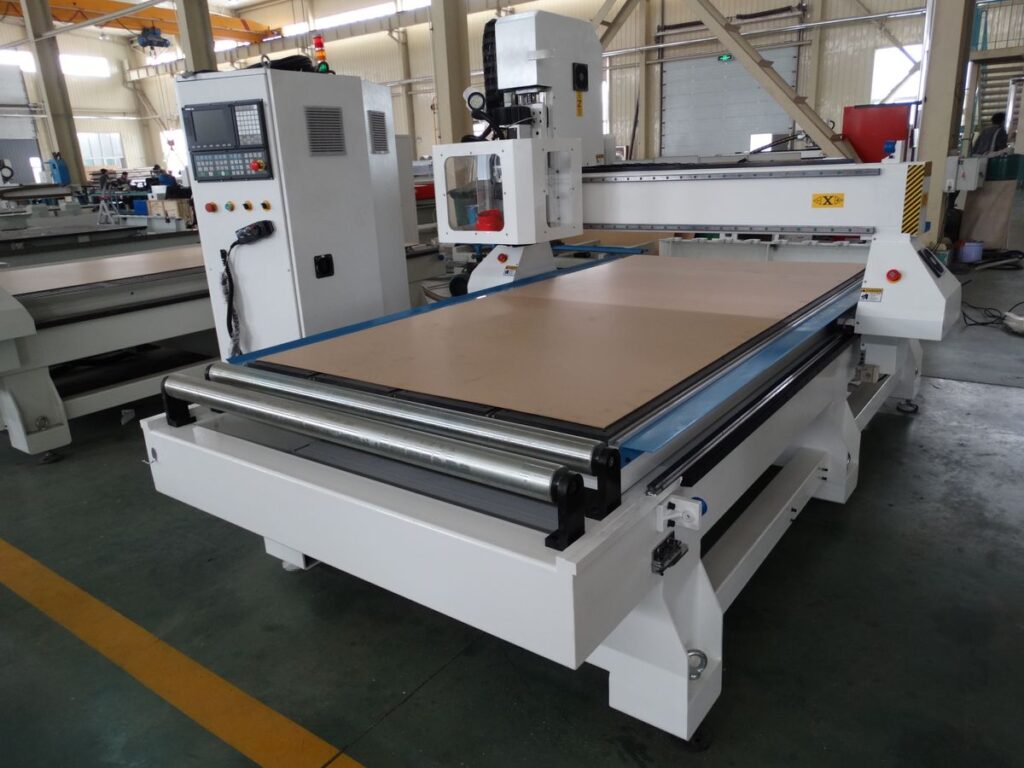
Modern panel processing relies on direct communication between software and machine controllers. The ND612 reads barcode labels generated during the cutting phase to recall the exact drilling pattern for each specific part. Operators scan and feed the panel to eliminate manual data entry errors.
This digital workflow protects expensive material from incorrect boring. Factories often see the best results when the drilling station follows a high-performance CNC nesting router in the production sequence.
ROI Calculations and Scalability for Regional Factories
Capital expenditure on automated drilling justifies itself through rapid reductions in labour hours and scrap material. A single operator running the ND612 replaces multiple traditional manual boring stations. This transition frees skilled staff for complex assembly tasks and bespoke finishing.
Tracking the cost-per-part reduction provides a clear timeline for machinery payback. Successful implementation usually involves a primary furniture panel saw for initial sizing before the ND612 handles the complex joinery details.
| Production Metric | Traditional Point-to-Point Boring | Nanxing ND612 6-Sided Drilling | Direct Factory Benefit |
|---|---|---|---|
| Handling Requirement | Manual flipping for double-sided boring | Single-pass 6-sided processing | Eliminates physical fatigue and handling damage |
| Setup Time | 15 to 30 minutes per new batch | Instant via barcode scanning | Enables profitable custom Batch Size 1 production |
| Output Capacity | 150 to 200 panels per shift | Up to 1,000 panels per shift | Scales factory output without adding floor space |
Operator Training and Safety Standards for Industrial CNC Equipment
Advanced CNC machinery demands operators who understand both mechanical tolerances and digital file management. Industrial training focuses on interpreting error codes and adjusting drill bit depth offsets.
Operators must learn to safely navigate the control console while the machine is in high-speed motion. Strict safety protocols around the automated ejection zone prevent workplace injuries and costly machine downtime.
Professional KWS tooling ensures that the drills remain sharp and safe for continuous use.
Achieving Peak Performance with Technical Support in East Africa
Generic user manuals often leave factories operating at a fraction of the machine’s true capacity. Local engineering support ensures your team learns how to adjust feed parameters specifically for the variations found in regional particleboard supplies.
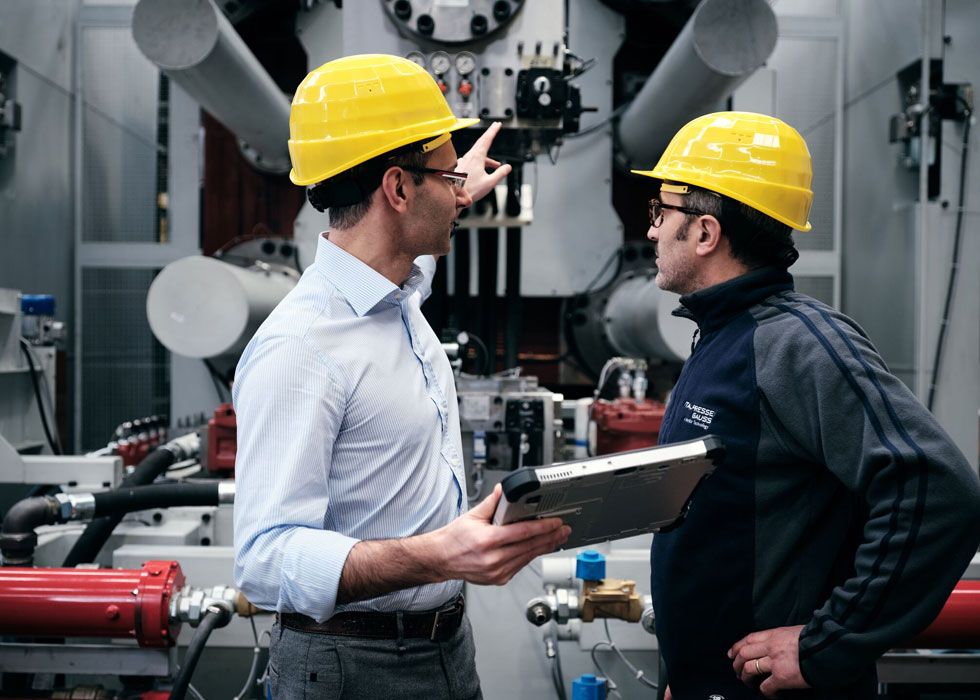
Direct technical mentorship transforms basic machine operators into competent production troubleshooters. Expertise in regional timber characteristics allows for finer tuning of the drill descent speeds.
Maintenance Protocols and Spare Parts Availability in Kenya and Tanzania
Preventative maintenance dictates the long-term reliability of any high-speed drilling centre. Workshop technicians must establish daily routines for lubricating guide rails and checking belt tensions.
Spindle housings require regular cleaning to prevent heat buildup. Sourcing replacement drill blocks and sensor units locally avoids weeks of stalled production caused by overseas shipping delays.
Having a reliable inventory of sensors and switches keeps the production line moving without interruption.
Continuous Panel Feeding and Ejection Systems
The ND612 is designed for high-throughput continuous feeding. Operators who organise panel stacks by thickness before feeding them into the machine minimise automatic recalibration time.
Grouping identical thicknesses ensures the upper pressure beams remain static. This simple workflow adjustment shaves crucial seconds off every single cycle.
Consistent feeding patterns reduce the wear on the intake rollers and gripper pads.
Material Handling Specifications for Large Scale Manufacturing
Air-floatation tables and robust grippers accommodate panels ranging from small drawer fronts to full-sized wardrobe doors. The machine automatically detects the board dimensions and adjusts the working zone to prevent collisions.
Spindle travel efficiency increases when the machine knows the exact boundaries of the workpiece. Consistent mechanical material handling eliminates the scratching and edge chipping associated with manual loading of delicate boards.
Installation Procedures and Power Requirements for Industrial Zones
Industrial CNC machines require precise levelling and rigid anchoring to maintain drilling tolerances over thousands of operating hours. Commissioning engineers verify that the machine bed is perfectly horizontal before calibrating the zero points on the X, Y, and Z axes.
Proper physical installation prevents high-speed vibration that leads to oval-shaped drill holes. The stability of the floor foundation is critical for maintaining long-term drilling accuracy.
Electrical Infrastructure and Power Stability Considerations
Grid power fluctuations in East African industrial zones severely damage sensitive servo drives and PLC units. Factory owners must install dedicated voltage regulators and surge protection specifically rated for the total kilowatt load of the machine.
Clean and stable three-phase power guarantees the computer control systems function without sudden reboots or data loss. High-quality electrical components within the machine cabinet require a cool and dry environment for optimal performance.
Compressed Air and Dust Extraction System Integration
Pneumatic clamps and drill deployment rely entirely on consistent and dry compressed air. Refrigerated air dryers prevent moisture from entering the lines and rusting internal machine valves.
Synchronising the dust collector activation with the machine spindle start cycle optimises factory energy consumption. Consistent air pressure at 6 to 8 bar is necessary for the reliable operation of the heavy-duty panel grippers.
Procuring Genuine Spare Parts and Consumables
Counterfeit drill bits lead to ragged hole edges and blown-out melamine surfaces. Production managers must secure reliable supply chains for OEM collets and boring bits.
Stocking critical high-wear items on-site ensures your drilling line never stops over a minor component failure. High-quality consumables extend the life of the motor bearings by reducing lateral vibration during high-speed boring cycles.
Strategic Implementation with AOE Engineering Support
The machinery supplier Kenya provides more than just equipment; they offer a roadmap to production excellence. AOE integrates advanced drilling technology directly into your existing production workflow.
Technicians audit your shop floor layout to establish the most efficient material flow from the primary saws to the finishing department. A professional machinery consultation Kenya identifies the specific configuration required for your product range.
AOE Engineering Verdict
Transitioning to 6-sided CNC drilling is a mandatory upgrade for East African workshops competing for large-scale commercial contracts. The Nanxing ND612 delivers the exact automation required to eliminate boring bottlenecks and secure panel precision.
This machinery investment translates immediately into higher daily outputs and lower operational costs for the modern factory floor.