
Evaluating the 6 sided cnc drilling machine price kenya reveals a baseline investment starting around KES 3.5 million to KES 6 million. This investment delivers a full ROI within 14 months for high-volume cabinet manufacturers.
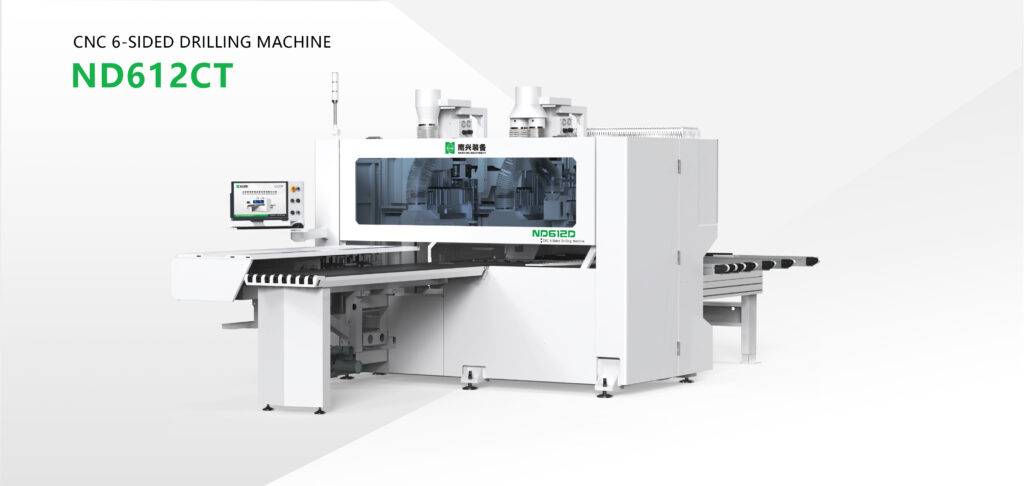
A machine like the ND612 drills the top, bottom, and all four edges simultaneously without flipping the board. This technology functionally replaces three traditional point-to-point boring machines and reduces assembly line delays.
Factory managers upgrading to 6-sided drilling technology immediately eliminate the bottlenecks associated with manual panel handling and operator fatigue.
| Machine Classification | Drilling Capacity | Estimated Price Range (KES) | Expected ROI Timeline |
|---|---|---|---|
| Standard 6-Sided CNC Drill | Medium Volume (Up to 800 panels/shift) | 3.5M – 4.5M | 14 – 18 Months |
| Heavy-Duty Industrial (ND612) | High Volume (1,200+ panels/shift) | 5.0M – 6.5M | 10 – 14 Months |
| Automated Cell Integration Unit | Continuous 24/7 Batch Production | 7.0M+ | 18 – 24 Months |
Technical Specifications and Workflow Efficiency for Cabinet Production
Precision cabinet production requires exact dowel and cam-lock hole placements to guarantee rapid carcase assembly. Six-sided drilling centres feature opposing vertical and horizontal spindle blocks that process every face of a panel in a single pass.
This continuous feed mechanism eliminates the need to manually unclamp, flip, and re-register workpieces. Such features push batch processing speeds to new factory limits across East Africa.
Dual-gripper systems feed panels through the machining zone with sub-millimetre precision. This ensures absolute alignment for complex joinery.
Operators scan a barcode generated by industrial design software, and the machine automatically retrieves the correct drilling pattern. Minimising human input at the machine level reduces scrap rates caused by manual data entry errors.
Productivity Gains and Labour Optimisation with Automated Machinery
High operator turnover and inconsistent skill levels impact many furniture workshops. Installing a six-sided drill shifts the operational focus from skilled manual boring to automated execution.
One moderately trained machine operator can outpace three dedicated operators working on traditional multi-spindle boring setups. This transition provides a significant advantage for those using modern woodworking machines Nairobi.
Consolidating boring operations into a single machine frees up floor personnel for higher-value tasks. These tasks include edge banding quality control or final cabinet assembly. This labour reallocation lowers the cost-per-part and increases the overall daily output capacity of the workshop floor.
Workshop managers often find that these machines work best alongside an industrial furniture panel saw to maintain a balanced production flow.
Total Cost of Ownership and ROI for Manufacturing Equipment in Kenya
Calculating the true investment requires looking beyond the initial landed cost at the Port of Mombasa. Total Cost of Ownership (TCO) encompasses power consumption, pneumatic supply requirements, tooling wear, and preventative maintenance schedules.
High-end machines like the ND612 mitigate these costs by utilising energy-efficient servo drives. These drives optimise drill bit travel paths to reduce wear on router bits Kenya and other consumables.
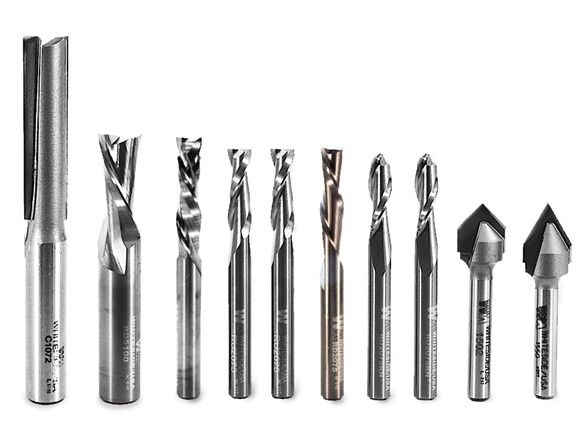
ROI calculations favour these machines when factoring in the reduction of floor space. Replacing three point-to-point machines with one compact six-sided drill reduces the factory footprint.
This saves on premium industrial rent in zones like Nairobi Industrial Area or Ruiru. Most medium-to-large panel processing plants recover their capital expenditure within 14 months through volume increases and waste reduction.
After Sales Support Training and Local Spare Parts Availability
Machine downtime translates to lost revenue and missed installation deadlines. Procuring advanced CNC equipment necessitates a robust local support network. This network must dispatch technicians within hours.
AOE technicians calibrate each installation to address local shopfloor voltage variability. This ensures sensitive servo drives remain protected against power grid anomalies common in the region.
Sourcing proprietary drill blocks or sensor switches from overseas causes production halts. Reliable suppliers maintain stock of critical wear parts, including collets, pneumatic cylinders, and specific drill bits, directly within Kenya.
Comprehensive onsite training empowers the local engineering team to handle daily diagnostic checks and routine lubrication protocols. Detailed maintenance guides can be found on our machinery blog.
Integration Capabilities and Future Factory Scalability
Isolated machinery limits a factory’s ability to scale production. Six-sided CNC drills integrate directly into existing CAD/CAM ecosystems. They read MPR or DXF files generated by industry-standard software.
This networked approach ensures the design office dictates exact machining parameters. The system bypasses the factory floor’s manual interpretation entirely. These drills are often the final piece of the puzzle for shops already running a CNC nesting router.
Scaling production lines becomes a straightforward exercise in material handling. These drilling centres interface with automatic return conveyors and robotic stacking arms.
This setup paves the way for a fully automated manufacturing cell. Forward-thinking workshop owners secure this scalability to handle future bulk contracts for commercial fit-outs or large residential developments.
Supplier Credibility and Regional Installation Case Studies
Evaluating a supplier demands proof of sustained machine performance in local operating conditions. Regional installations across East Africa demonstrate how these machines handle the specific densities of locally sourced MDF, particleboard, and plywood.
As a leading machinery supplier Kenya, AOE references multiple high-output facilities where automated drilling lines operate across double shifts with minimal mechanical degradation.
Case studies highlight the elimination of assembly bottlenecks. One Nairobi-based facility transitioned from manual edge boring to a six-sided CNC system and cut flat-pack kitchen production time by 45%.
Real-world data proves the investment pays for itself when supported by a credible, engineering-focused supplier.
Right First Time Accuracy and Material Waste Mitigation
Inaccurate boring forces installers to modify panels on-site, which destroys profit margins. Six-sided CNC machines utilise laser sensors to detect the dimensions of incoming panels. The machine dynamically adjusts drilling coordinates to compensate for minor board sizing errors.
This technology guarantees that cam and dowel holes align perfectly every time. This precision is essential when panels are finished on a high-speed edge banding machine. Rejecting panels due to blowout or misaligned edge drilling represents a financial drain.
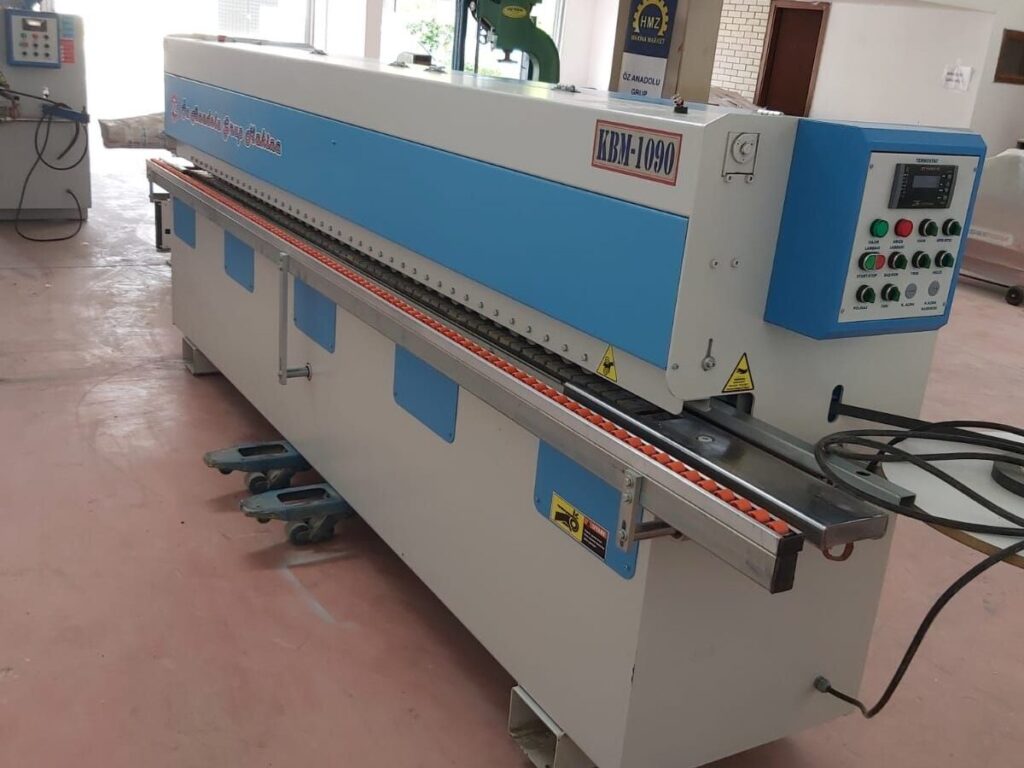
Rigid cast-iron frames and precise spindle rotation ensure clean entry and exit holes on brittle melamine-faced boards. Right-first-time accuracy protects material yield and elevates the final finish of the cabinetry.
Core Technical Specifications of Industrial Drilling Units
Mechanical architecture allows production engineers to match equipment specifications against workflow demands. Every component, from the spindle blocks to the drive motors, dictates the machine’s absolute tolerance and processing speed.
Recognised Machine Brands and Construction Standards
Industrial workhorses like the ND612 lead the market by offering robust construction for continuous three-shift operations.
These models prioritises heavy-duty gantry structures that absorb high-frequency vibrations during aggressive drilling cycles. Selecting a recognised brand ensures long-term access to firmware updates and structural diagrams.
Drilling Spindle Configuration and Panel Dimensions
A standard industrial setup features independent upper and lower boring blocks. These blocks are populated with 12 to 20 vertical spindles and dedicated horizontal edge drills.
This configuration accommodates panel sizes ranging from 50x50mm drawer components up to 2800x1200mm wardrobe side panels. The ability to select the correct drill bit without pausing the feed mechanism defines the throughput capability.
Software Interface and Automation Intensity
The control console parses complex G-code into coordinated servo movements in milliseconds. Modern interfaces feature industrial touchscreen PCs running Windows-based software.
These systems visually simulate the drilling path before execution. High automation intensity includes barcode scanners that load processing programmes instantly, removing manual keystrokes.
Cycle Time and Power Requirements
Rapid positioning speeds exceed 130 metres per minute on the X-axis. This shrinks the cycle time per board significantly. These machines demand a stable 3-phase, 380V power supply.
They typically draw between 15kW and 25kW depending on the spindle load. Integrating an industrial-grade voltage stabiliser remains mandatory to protect frequency inverters from power grid fluctuations.
Logistical Considerations for Kenyan Machinery Procurement
Acquiring heavy manufacturing equipment requires precise planning from the port of entry to the factory floor. Overlooking logistical parameters causes delays and unexpected costs.
Installation Footprint and Utility Requirements
The six-sided drill replaces three separate machines, but its linear footprint requires adequate clearance for panel feeding and outfeed extraction.
Factory managers must route dedicated high-pressure pneumatic lines and high-capacity dust extraction ducting directly to the installation zone. Proper foundation levelling guarantees the machine maintains micro-millimetre accuracy over years of operation.
Delivery Lead Time and Finance Options
Ocean freight and customs clearance at Mombasa dictate a standard lead time of 45 to 60 days. Many Kenyan commercial banks and asset finance institutions fund these CNC machines because they represent revenue-generating assets.
Structuring asset finance against the projected 14-month ROI ensures the machine pays its own monthly premiums. For a detailed quote, you may machinery consultation Kenya to speak with a specialist.
Maintenance Schedules and Warranty Provisions
Industrial warranties cover spindle motors, servo drives, and main control boards for a minimum of 12 months. Strict adherence to the manufacturer’s maintenance schedule prevents catastrophic mechanical failures.
This includes daily greasing of linear guide rails and automatic lubrication system checks. Partnering with a supplier that enforces scheduled preventative maintenance visits secures the longevity of the investment.
Navigating Your Investment with Expert Consultation
Procuring a six-sided drilling centre marks a shift from basic woodworking to advanced industrial manufacturing.
AOE provides engineering oversight to ensure the specified machine aligns with the factory power infrastructure and production volumes. Factory owners who consult with machinery experts avoid specification errors and secure equipment that scales the business.
AOE Engineering Verdict: For Kenyan cabinet makers producing over 800 panels per shift, investing in a six-sided CNC drilling machine like the ND612 is an operational necessity.
The consolidation of floor space, the eradication of manual flipping errors, and the resulting 14-month ROI make this technology the most effective bottleneck-breaker in modern panel processing.