
Integrating top and bottom processing units into modern CNC drilling machinery doubles throughput by executing dual-sided boring operations in a single, uninterrupted pass.
East African factory owners facing rising labour costs and tight production schedules find that traditional methods introduce unacceptable risks of surface damage.
AOE provides specialised machinery designed to mitigate these risks by automating the handling of heavy melamine-faced MDF panels. Using industrial 6-sided drilling technology ensures that registration errors remain negligible during high-volume production cycles.
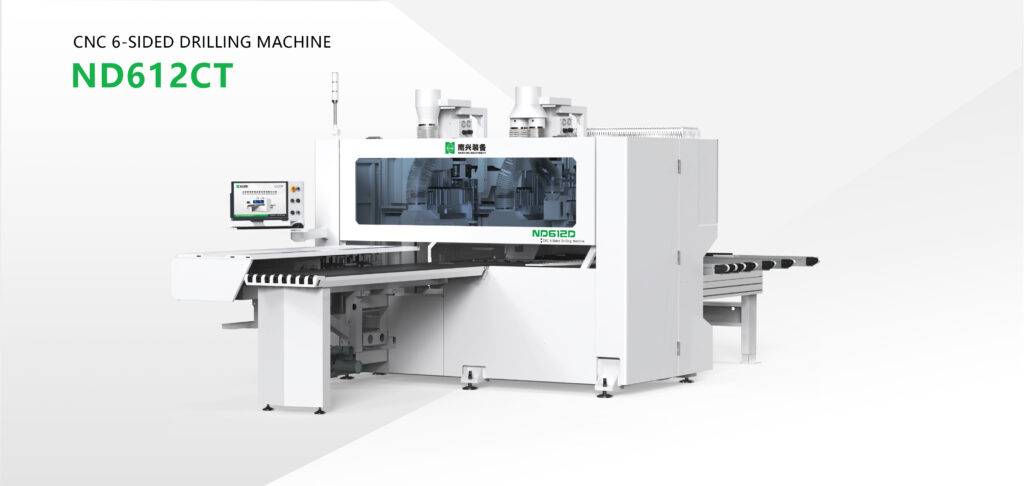
| Operational Metric | Traditional Single-Side CNC Router | Dual Processing CNC (e.g., Nanxing ND612D) |
|---|---|---|
| Cycle Time (Avg. Cabinet Panel) | 60 to 90 Seconds | Under 30 Seconds |
| Panel Handling Requirement | Manual flipping required for through-holes | Zero flipping with single-pass execution |
| Registration Accuracy Risk | High cumulative alignment errors | Zero risk via simultaneous fixed datum |
| Typical Power Requirements | 9kW to 12kW Spindles | Dual 4.5kW to 6kW Synchronised Spindles |
| Break-Even ROI Timeline | 24 to 36 Months | 14 to 18 Months |
Operational Mechanics of Dual Processing Units in CNC Drilling
Traditional CNC nesting router systems only drill from the top, which fundamentally limits production speed and expands cycle times. Upgraded platforms like the ND612D feature simultaneous top and bottom processing units.
These units allow through-holes and hinge boring in a single pass without flipping heavy panels. This dual-action engineering utilises synchronised spindle motors operating on separate Z-axes.
The system applies precise torque to both faces of the board concurrently to maintain structural integrity.
Panel Thickness Compatibility and Tooling Integration
High-performance CNC drills handle variable board gauges ranging from 9mm backing panels up to 60mm solid core worktops. Operators configure tooling arrays with specific router bits Kenya suppliers provide, including brad point and through-hole bits tailored to exact material density.
Robust pneumatic clamping mechanisms secure the panel during engagement to prevent vibration. This stability ensures heavy-duty tooling cuts clean profiles without chipping delicate laminated surfaces.
Simultaneous Drilling Mechanics for Through-Hole Precision
Opposing drill banks advance at programmed feed rates to meet at a precise mid-point within the panel thickness. This coordinated feed prevents breakout on the exit face.
Workshop engineers rely on this mechanical synchronisation to produce flawless connecting holes for cam and dowel joinery. The alignment remains consistent across thousands of cycles because the machine maintains a constant reference point on the panel edge.
Eliminating Panel Flipping and Re-registration Challenges
Manual intervention to flip large format panels disrupts continuous production lines and increases the risk of positioning errors. Machining both faces simultaneously removes this hazardous handling step from the shop floor workflow.
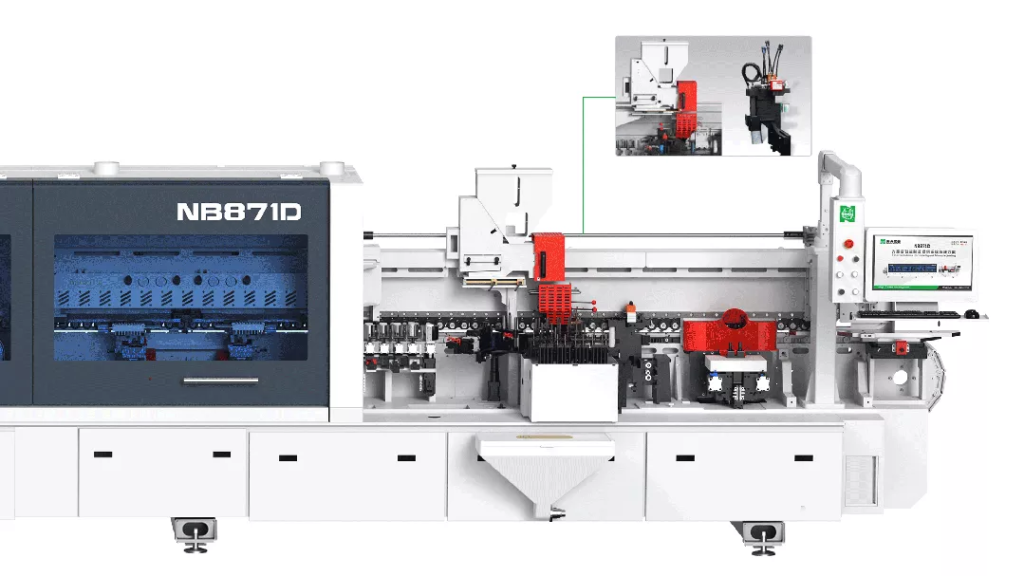
Zero repositioning translates directly to zero cumulative alignment deviation. Panels leave the bed ready for an edge banding machine or immediate assembly.
Productivity Throughput and Labour Optimisation Benefits
Cycle time reduction stands as the primary financial driver for upgrading to dual-action machinery. Workshops report capacity increases exceeding 80% when eliminating the secondary loading and registration phases typical of older routers.
Factory managers reallocate operators to higher-value quality control tasks rather than manual material handling. This shift improves the overall technical skill level within the production environment.
Achieving Shorter Cycle Times and Higher Batch Output Rates
Processing a standard cabinet side panel with hinge and system holes takes under 30 seconds on a dual-unit machine. This rapid turnaround allows East African manufacturers to scale batch production to meet bulk commercial contracts efficiently.
Predictable, high-speed output stabilises production forecasting. These metrics allow for tighter delivery windows for demanding commercial clients.
Reducing Manual Labour and Enhancing Operator Efficiency
A single operator manages the continuous loading and offloading sequence without physical overexertion. Eradicating the physical strain of flipping 40kg panels reduces fatigue and associated workplace injuries.
Sustained operator energy maintains high throughput metrics across an entire eight-hour shift. Efficiency remains stable because the machine dictates the pace of the production line.
Accuracy and Material Waste Reduction Advantages
Scrap rates plummet when machines dictate positional accuracy rather than relying on human re-registration. Precise coordinate mapping ensures every hole aligns exactly with the digital drawing.
Dimensional adherence guarantees that flat-pack components assemble correctly on the job site without manual adjustments. This consistency is vital for manufacturers supplying modular office furniture or high-end residential kitchens.
Ensuring Precise Hole Alignment and Diameter Consistency
Spindle rigidity across both the upper and lower banks maintains strict diameter tolerances for hardware insertion. Cam locks and dowels fit perfectly, which accelerates the final assembly phase and strengthens the finished furniture joint.
Consistent tool feed rates prevent overheating and resin build-up. This thermal management extends the lifespan of expensive carbide drill bits and reduces replacement costs.
Minimising Rework and Material Scrap in Dual Processing
Mistakes in manual flipping often result in mirrored or misaligned hole patterns that ruin expensive veneered panels. Dual processing removes the human variable from the dimensional equation.
Lower material waste directly boosts the gross margin per project. Professional joinery shops using an industrial panel dividing system alongside dual-drilling units see the highest reduction in material loss.
Software Integration and Ease of Operation
Modern control software translates complex 3D cabinet models into automated routing paths for both spindle banks instantly. Operators load the networked production file, scan a barcode, and initiate the sequence.
This digital pipeline bypasses manual coordinate entry and reduces setup time to mere seconds. High-performance systems utilize furniture CAD CAM Kenya specialists recommend for East African factory environments.
Streamlined CAD CAM Workflows for Top and Bottom Drilling
Advanced CAM processors allocate drilling tasks optimally between the upper and lower tools to minimise head travel. This algorithmic efficiency shaves vital seconds off every individual panel cycle.
Direct integration with design software means bespoke adjustments upload directly to the machine. Technicians avoid complex code editing, which reduces the likelihood of programming errors.
Intuitive Interfaces and Operator Training
Touchscreen consoles display visual panel orientations and real-time machining progress. New technicians adapt quickly to these graphical interfaces, shortening the training period for workshop staff.
Built-in diagnostic tools actively alert operators to tool wear or pneumatic pressure drops. Early alerts prevent poor cut quality and allow for scheduled maintenance before a breakdown occurs.
Cost Benefit Analysis and Long-term Value Proposition
Initial capital expenditure on advanced CNC equipment requires rigorous justification through measured output gains. Factories running multi-shift operations typically recover the investment within 14 to 18 months through sheer volume increases.
The efficiency metrics favour upgrading to simultaneous processing over operating multiple single-sided routers. A machinery supplier Kenya based can provide localised data on these ROI projections.
Calculating ROI for High-Volume CNC Drilling Operations
Financial models must factor in reduced labour hours, lower scrap costs, and increased daily unit output. A factory producing 200 cabinets daily sees dramatic margin improvements when throughput doubles without adding extra shifts.
Predictable tooling consumption and lower energy usage per panel further accelerate the break-even timeline. These savings provide the capital needed for further factory expansion.
Evaluating Operational Savings and Competitive Advantages
Workshops equipped with dual-unit drills consistently outbid competitors on large tenders by quoting faster lead times. Superior machining quality builds brand reputation among commercial developers and interior fit-out contractors.
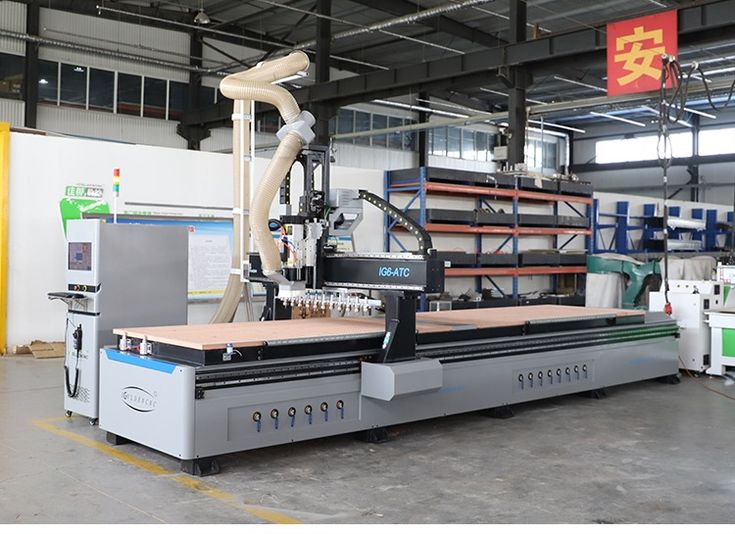
This technological leverage transforms an average joinery shop into a highly capable industrial manufacturer. Precision drilling is the foundation of high-quality modular furniture production.
Installation Requirements and Maintenance in East Africa
Precision machinery requires stable three-phase power and clean, dry compressed air to function optimally. AOE engineers assess factory infrastructure prior to installation to ensure voltage variability does not damage sensitive servo drives.
Localised technical support guarantees rapid spindle recalibration and immediate spare parts availability. Reliable support is essential for maintaining uptime in the competitive East African manufacturing sector.
Consulting AOE for Dual Processing CNC Drilling Solutions
Scaling a production line requires machinery engineered for strict tolerances and relentless shifts. The AOE engineering team provides granular workflow audits to match a factory with the exact drilling configuration necessary for specific material types.
You may request demo sessions or technical consultations to model exact ROI and observe machine capabilities. Expert guidance ensures the selected equipment integrates perfectly with existing workflows.
AOE Engineering Verdict: Investing in dual top and bottom processing units transitions a workshop from reactive fabrication to proactive, high-yield manufacturing.
By eliminating manual panel flipping and secondary registration, East African factory owners secure maximum board yield and protect operator safety while reducing cycle times by over 50%.