
The NB671N series provides a specialised mechanical solution for edge banding narrow panels and drawer fronts in East African furniture manufacturing facilities.
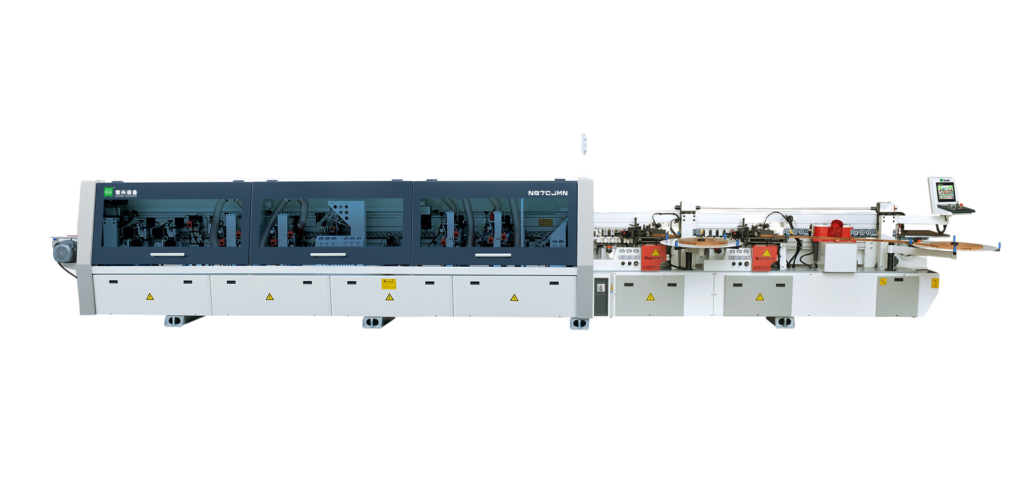
Technical consultation at AOE indicates that standard machines typically struggle to grip pieces under 80mm due to limited track surface area. This series features a dedicated narrow parts auxiliary feeder that securely holds workpieces down to 40mm wide.
The mechanical grip prevents machine jams and protects expensive melamine materials from being ruined during the feeding cycle.
| Production Metric | Standard Edge Bander | NB671N Series (Narrow Feeder) |
|---|---|---|
| Minimum Reliable Grip Width | 80mm | 40mm |
| Scrap Rate on Small Components | 15 to 20 percent | Less than 1 percent |
| Operator Hazard Exposure | High (Manual guide required) | Low (Automated hold-down) |
| Feed Speed Capability | Unstable for small parts | 12 to 20 metres per minute |
| ROI Timeline (High Volume) | 24 to 36 Months | 12 to 16 Months |
Technical Capabilities of the NB671N for Narrow Panel Edge Banding
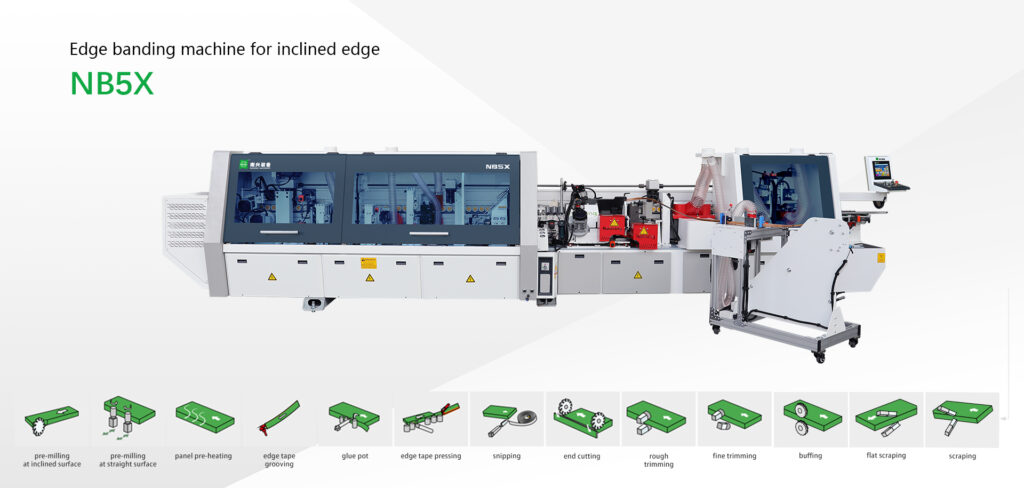
Processing plinths and drawer fronts requires precise mechanical control to counteract the lateral forces applied during the milling and gluing stages.
Mechanical adaptations in a Nanxing edge bander ensure that even the smallest components remain stable throughout the work cycle.
The NB671N series replaces standard top rollers with a synchronised auxiliary feeding belt engineered specifically for minimal width stability.
This adaptation ensures continuous downward friction on components and eliminates the slip defects common in conventional edge banders.
Maintenance of a perfect 90-degree angle against the reference fence is critical when edge tape is applied to small surface areas. Standard machines lack the track footprint to stabilise 40mm boards and often cause the buffing stations to gouge the material.
Integration of specialised narrow parts feeders standardises the pressure and ensures flush trims on the smallest modular components.
Operational Safety Improvements for Small Component Edge Banding
Hand-feeding small drawer fronts into standard edge banders often brings operators close to 200°C glue pots and high-speed trimming saws.
Deployment of a dedicated narrow-panel machine isolates the operator hands from hazard zones through automated feed tracks. Workshop engineers record a significant reduction in near-miss incidents once the auxiliary feeder assumes the mechanical grip of the workpiece.
Machinery consultation services in Kenya provide guidance on how automated feeding reduces workforce risks. Operator fatigue correlates with feeding inconsistencies during long production shifts.
The ergonomic design of narrow panel machinery allows workers to load materials at a safe distance without applying manual lateral pressure. This secure feeding mechanism protects the workforce and prevents off-axis jams that damage internal machine sensors.
Throughput Efficiency and Quality Standards in Narrow Panel Production
Production managers understand that batching small components creates factory bottlenecks due to high rejection rates and manual rework requirements. Dedicated narrow panel equipment standardises the feed rate and guarantees uniform glue application across thousands of drawer fronts.
Consistent mechanical feeding translates to predictable throughput and allows production lines to maintain high speeds without sacrificing joint quality. Additional production tips Africa suggest that automation is the most reliable way to maintain these standards.
Factories that rely on manual workarounds for small parts suffer from severe batch inconsistency. Automation of the grip and feed of 40mm panels helps manufacturers achieve identical edge quality on every piece in a batch.
This predictability allows workshop floors to scale up production for large commercial fit-outs and residential developments with confidence.
Investment ROI and Total Cost of Ownership for Narrow Panel Applications
Evaluation of machinery investments involves analysing the cost of ruined melamine boards and lost production hours.
Facilities that process high volumes of cabinetry hardware recover their capital expenditure by eliminating the 15 to 20 percent scrap rate typical of improper narrow piece feeding. Accurate cost-per-part calculations favour machines that do not require constant operator intervention.
High-quality industrial saw blades and feeders extend the service intervals of the machine by reducing vibration and mechanical stress.
After Sales Support and Technical Training for East African Manufacturers

East African workshop environments present unique operational variables including grid voltage fluctuations and high ambient dust levels.
Technicians from a leading machinery supplier Kenya calibrate every installed unit to accommodate local electrical variability.
This calibration protects sensitive PLC components and glue pot heating elements from sudden power spikes. Proper dust extraction integration prevents sensor fouling during intensive narrow panel runs.
Rigorous on-site training ensures local machine operators master the specialised narrow track adjustments and routine maintenance protocols. Provision of comprehensive after-sales support minimises downtime and reduces the factory reliance on external diagnostic engineers.
This localised expertise ensures machinery consistently hits maximum uptime targets in demanding environments.
Integration of Narrow Panel Processing into Manufacturing Workflows
Modernisation of a factory floor requires new equipment to sync with existing CNC routers and multi-spindle boring machines.
The compact footprint of the NB671N allows production managers to position the unit directly alongside primary cutting stations. Strategic placement of the unit alongside a CNC nesting router or industrial panel dividing saw improves material flow and accelerates batch progression.
Forward-thinking factory layouts account for future automation upgrades. Investment in edge banders with advanced PLC controls prepares the workshop for eventual integration with fully automated return conveyor systems.
This structural readiness ensures the equipment remains central to the production line as factory output demands increase over time.
Automation Solutions for Skilled Labour and Quality Demands
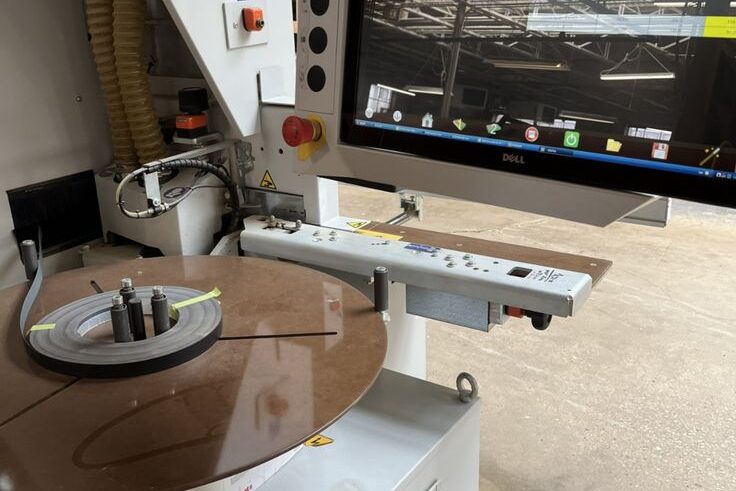
Recruitment of operators capable of manual finessing for 40mm plinths is difficult and drives up factory labour costs. Automated narrow panel solutions shift the burden of precision from the worker to the machine.
This transition mitigates the impact of skilled labour shortages currently affecting the regional manufacturing sector. The use of furniture CAD CAM Kenya and 6-sided drilling technology further enhances this automated workflow.
Furniture factories use this automation to meet growing demands for premium modular cabinetry without overextending their payroll.
Consistency in edge quality allows East African manufacturers to compete directly with imported flat-pack furniture brands. By standardising the output of challenging small components, factories improve their reputation for quality and reliability.
Expert Recommendations for Selecting Narrow Panel Machinery
Manufacturing facility owners must prioritise equipment engineered specifically for the dimensional challenges of modern modular furniture.
The NB671N series remains the definitive recommendation for processing drawer fronts, handle-less cabinet profiles, and structural plinths. Specialised auxiliary feeding technology addresses the mechanical failures of conventional machines and ensures long-term operational stability.
Workpiece security down to 40mm guarantees operational safety while improving throughput velocity and reducing waste.
Investment in this targeted capability provides a reliable competitive advantage for woodworking floors. This technology equips manufacturers to execute high-volume and high-precision contracts profitably in the competitive East African market.