
| Frame Technical Specification | Standard Duty Frame | Heavy Duty Industrial Frame (NPT Series) |
|---|---|---|
| Base Construction | Folded Sheet Metal | Annealed Thick-Walled Steel Tubing |
| Structural Weight | 450 kg – 600 kg | 900 kg – 1,200 kg |
| Cutting Tolerance (per 3000mm) | ± 0.50 mm | ± 0.10 mm |
| Vibration Absorption | Low (Resonance issues) | High (Internal webbing) |
| Max Operating Shifts | 1 Shift (8 Hours) | 3 Shifts (24/7 Continuous) |
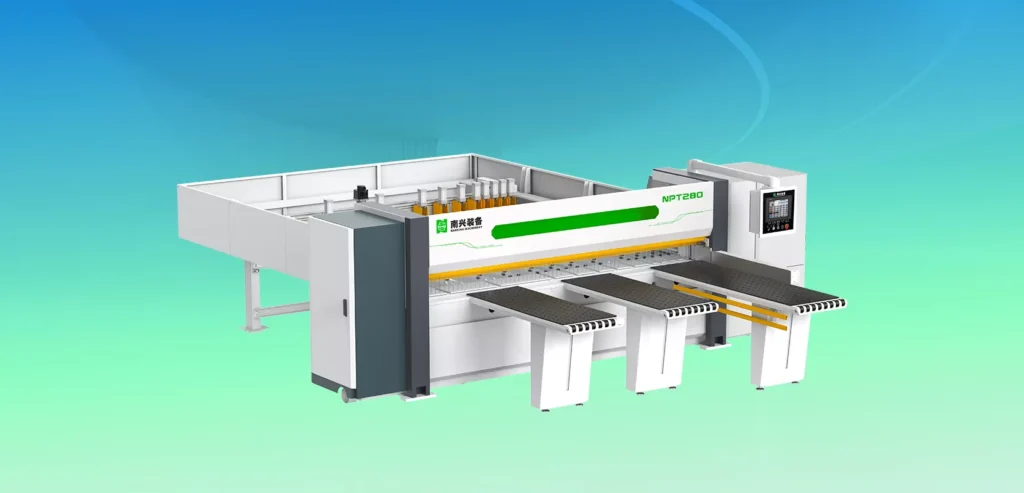
The structural mass of an industrial panel saw Kenya determines the accuracy of every component produced in a high-volume facility. A heavy duty panel saw frame dictates the absolute cutting precision and machine longevity required for continuous 24/7 factory shifts across East Africa.
Upgrading to a highly rigid structure prevents the chassis from warping under the constant stress of stacked MDF and particleboard. This stability reduces edge defects on production lines and ensures a smoother workflow for any AOE machinery installation.
Structural Integrity of Panel Saw Frame Design
Machinery chassis design dictates the fundamental tolerance of the entire cutting assembly. Light frames flex and distort under the immense gravitational load of multiple 18mm stacked boards passing across the sliding table.
A heavy duty panel saw frame provides the necessary mass to anchor the main saw carriage. This mass prevents micro-movements that ruin board squareness during high-speed feeding cycles.
Frame Material Selection for Industrial Durability
Manufacturers utilise high-grade, thick-walled steel tubes welded into a unified base to achieve maximum structural rigidity. Annealing the welded chassis inside a thermal furnace relieves internal material stress.
This process ensures the metal does not warp after installation on the shop floor. A heat-treated base provides factory owners with a reliable foundation capable of handling aggressive shift schedules without mechanical fatigue or structural misalignment.
Vibration Damping Systems for High Precision Cutting
Light frames often vibrate under the weight of stacked boards. The NPT280 uses an integrated, high-rigidity frame structure that absorbs motor vibration to ensure the 3200mm cutting line stays perfectly straight.
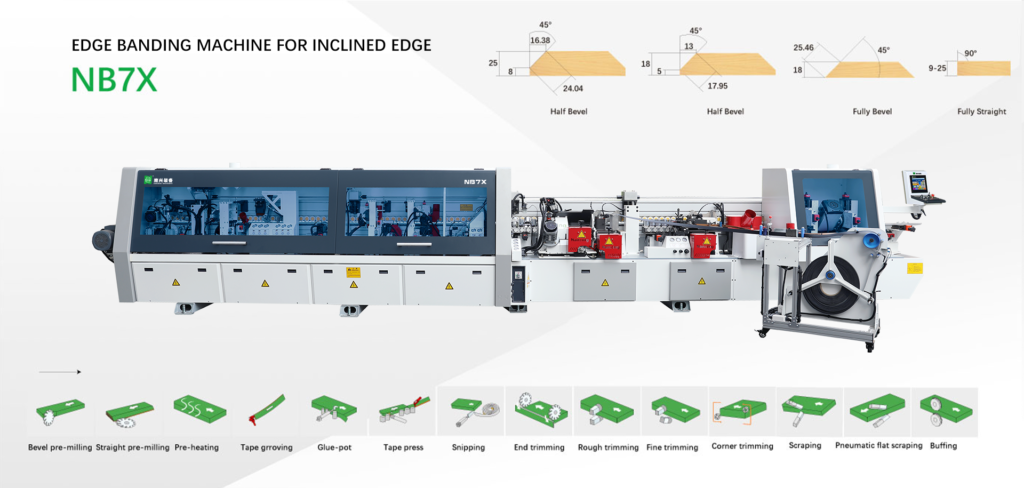
Effective vibration damping eliminates blade chatter. This produces chip-free edges that move directly to an edge banding machine without requiring supplementary edge routing or manual cleaning.
Sustained Performance Standards for Industrial Panel Saws
Sustained performance relies on maintaining exact geometric alignment between the sliding table, rip fence, and main saw blade over millions of linear metres. A heavy duty panel saw frame anchors the cylindrical guides or prismatic rollers in a permanent coordinate.
This fixed geometry allows workshop engineers to calibrate the machine once and trust the tolerances hold across multiple operator hand-overs and various shifts.
Accuracy Retention During Continuous Factory Shifts
Continuous shift work subjects internal components to elevated operating temperatures and constant mechanical load. Massive steel bases resist the slight thermal expansion and contraction that often affects lightweight aluminium or thin steel alternatives.
Production managers rely on this structural stability to ensure the 500th panel cut matches the dimensions of the very first board of the day. This reliability is vital for maintaining production tips Africa specialists recommend for scaling local brands.
Material Yield Optimization and Waste Reduction
Inaccurate cuts force assembly teams to reject expensive melamine-faced chipboard (MFC) and high-pressure laminates. Rigid machine bodies guarantee the scoring blade aligns perfectly with the main saw blade to prevent bottom-edge chipping.
Eliminating these defects directly lowers rework rates. This precision increases the raw material yield for cost-conscious manufacturing facilities across the region.
Operational Throughput of Robust Machinery Frames
A robust heavy duty panel saw frame enables operators to push heavier stacks of material through the blade at maximum feed speeds without stalling. Operators spend less time compensating for machine flex and more time processing high-volume cutting lists.
Maximising this daily throughput allows East African furniture makers to confidently commit to large-scale commercial fit-out contracts. The stability of the frame also complements high-speed CNC nesting router workflows in integrated factories.
Total Cost of Ownership and Asset Longevity
Investing in superior structural mass heavily dictates the Total Cost of Ownership (TCO) for industrial woodworking machinery. Rigid bases protect sensitive electrical components and bearings from destructive harmonic vibrations.
This protection extends the lifespan of the entire saw assembly. Factory owners achieve faster return on investment (ROI) by realising several distinct operational benefits:
- Decreased spindle wear due to superior harmonic damping.
- Lower frequency of blade sharpening and replacement for industrial saw blades.
- Elimination of recalibration downtime during shift changes.
- Extended life for internal guide rails and motor trunnions.
Safety Features of Stable Saw Bases
Operator safety improves when the machine chassis refuses to shift or vibrate under massive sheet loads. A stable heavy duty panel saw frame prevents sudden kickbacks caused by blade binding during heavy-stack ripping operations.
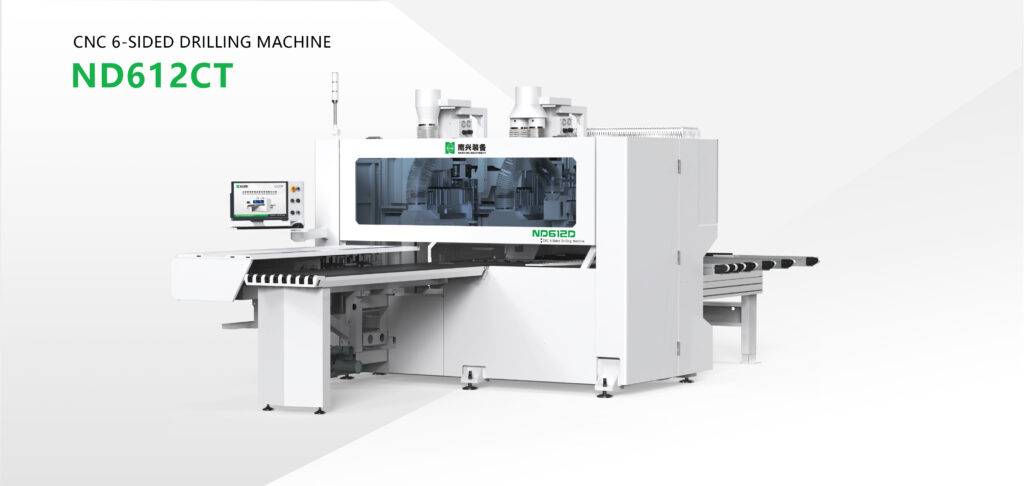
Ergonomics also improve as operators experience less physical fatigue pushing the sliding carriage along a level, distortion-free base. This stability is equally critical when integrating other equipment like a 6-sided drilling station near the cutting area.
Integration of Machine Frames with Factory Automation
Automated panel loading systems and digital fence positioning require an absolute fixed reference point to function correctly. Flimsy machine bodies shift position during loading and instantly throw off digital calibration coordinates.
A massive structural frame guarantees that integrated vacuum lifters and automated pushers align perfectly with the saw table. Using furniture CAD CAM Kenya standards requires this level of physical precision to match digital designs with physical output.
Panel Saw Performance with East African Raw Materials
East African workshops routinely process highly dense indigenous hardwoods alongside imported, often dimensionally inconsistent, engineered boards. These variable densities exert unpredictable forces against the saw blade and trunnion assembly during deep cuts.
Heavy duty chassis designs absorb these sudden load spikes to protect the motor spindle and prevent the blade from stalling or deviating.
Processing Variable Density Panel Stock
Fluctuating humidity levels across regional supply chains often result in bowed or warped panel stock arriving on the factory floor. Processing irregular materials requires a heavy machine base to forcefully guide the stock without the saw itself flexing.
This rigid foundation allows pneumatic clamping systems to securely flatten boards against the sliding carriage for highly accurate sizing before they reach the assembly stage.
Product Consistency in Regional Furniture Production
Standardising final product dimensions represents a significant hurdle for growing regional furniture brands attempting to scale operations. A heavy duty panel saw frame guarantees every processed component matches the digital model regardless of the material batch.
Consistency at the cutting stage ensures rapid, predictable assembly. This reliability helps a machinery supplier Kenya partner build trust with long-term industrial clients.
Expert Consultation for Panel Saw Selection
Selecting the right machinery base architecture determines the long-term profitability of your panel processing division. AOE engineers assess specific factory load requirements to match production lines with the correct structural saw configurations.
Partnering with structural machinery experts ensures East African manufacturers install cutting platforms built for sustained industrial success. Interested parties should request demo sessions to see these heavy-duty frames in operation.
Engineering Specifications for Machine Procurement
Prioritise machine mass and internal frame webbing when evaluating new panel dividing equipment for multi-shift facilities. Upgrading to models featuring heavy duty frames like the NPT280 guarantees vibration-free operation.
This choice lowers TCO while maintaining strict ± 0.1mm tolerances across high-volume East African production lines. Focus on the thickness of the steel and the annealing certificates provided by the manufacturer during the procurement phase.