
Traditional point-to-point boring machines require operators to manually reposition panels for multi-face drilling. Upgrading to a 6-sided drilling centre allows East African manufacturers to machine all surfaces simultaneously in a single pass.
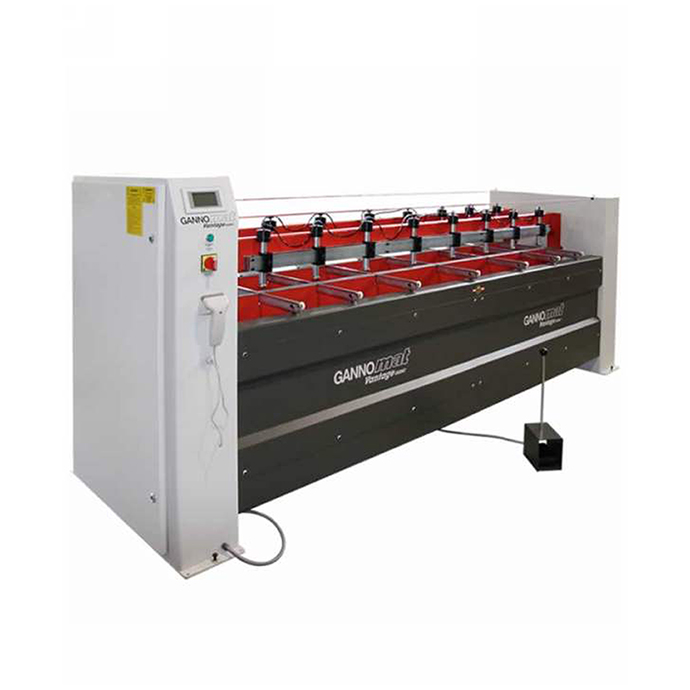
Factory owners looking to scale flat-pack furniture production rely on this automated multi-face processing to eliminate manual board flipping. This transition slashes cycle times by up to 60% and reduces rework rates significantly.
Manufacturers can schedule a machinery consultation in Kenya to evaluate their current floor layout against these automated systems.
| Performance Metric | Point-to-Point Boring Machines | 6-Sided CNC Drilling Centres |
|---|---|---|
| Handling Method | Manual flipping for opposite faces | Single automated clamp and pass |
| Cycle Time (Per Cabinet Part) | 120 to 240 seconds | 30 to 45 seconds |
| Accuracy Risk Profile | High risk due to manual repositioning | Extremely low risk with fixed zero point |
| Secondary Grooving | Requires separate panel saw Kenya operation | Integrated top and bottom routing spindles |
| Operator Skill Required | High skill for coordinate reading | Low skill via barcode automation |
Technical Accuracy Comparison for Industrial Drilling
Standard point-to-point boring machines process panels sequentially. This method necessitates X-Y axis recalibration every time an operator loads a new face or edge. Repeated manual clamping introduces microscopic alignment errors.
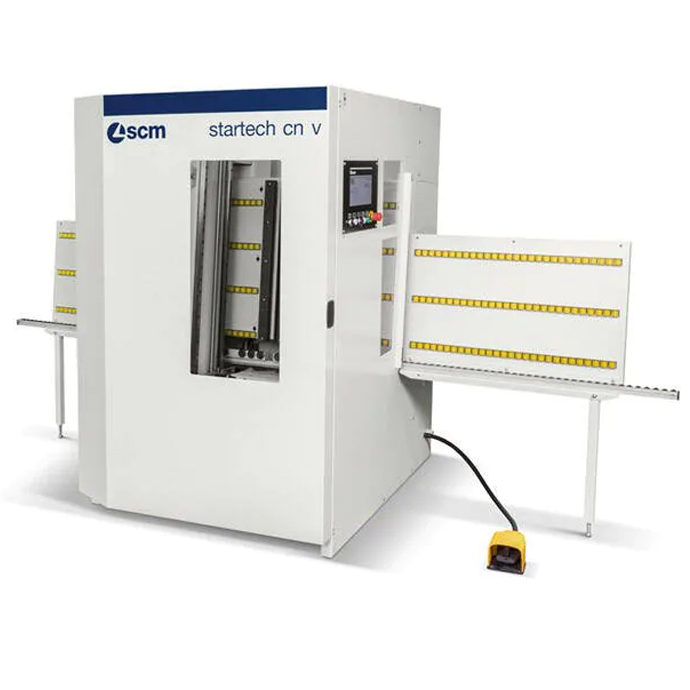
These errors cause cumulative tolerance stacking that misaligns cam-and-dowel joints during final assembly. The 6-sided CNC machine utilises heavy-duty dual grippers to secure the panel once.
It executes top, bottom, and lateral drilling automatically to guarantee absolute concentricity across all intersecting boreholes.
Throughput Gains and Labour Optimisation
Replacing manual panel repositioning with automated feed systems accelerates batch processing speeds on the shop floor. East African factory managers can reassign machine operators from tedious board handling tasks to quality control or assembly lines.
This shift systematically lowers overall labour overheads. The continuous feeding mechanism of advanced 6-sided models ensures high-volume spindle utilisation. These systems eliminate the idle wait times inherent in legacy boring equipment.
Material Handling Efficiency and Damage Prevention
Manual board flipping exposes melamine and delicate veneer panels to surface scratching or edge chipping. A point-to-point machine requires the operator to manually move the board for side drilling.
The 6-sided CNC holds the board once and processes all faces automatically. This method reduces handling damage and saves time. Scrapped panels eat heavily into profit margins.
Touchless machining cycles serve as a critical requirement for workshops processing high-gloss or architectural components where surface integrity is paramount.
Software Integration and Production Workflow
Modern CNC drilling centres rely on barcode scanning systems to pull exact machining files directly from furniture CAD CAM Kenya platforms. Operators scan the label and the machine automatically configures the tool paths for all six sides.
This process removes the need for manual data entry at the console. Eliminating manual coordinate programming prevents costly drilling mistakes. Every hinge hole and shelf pin aligns perfectly on the first run.
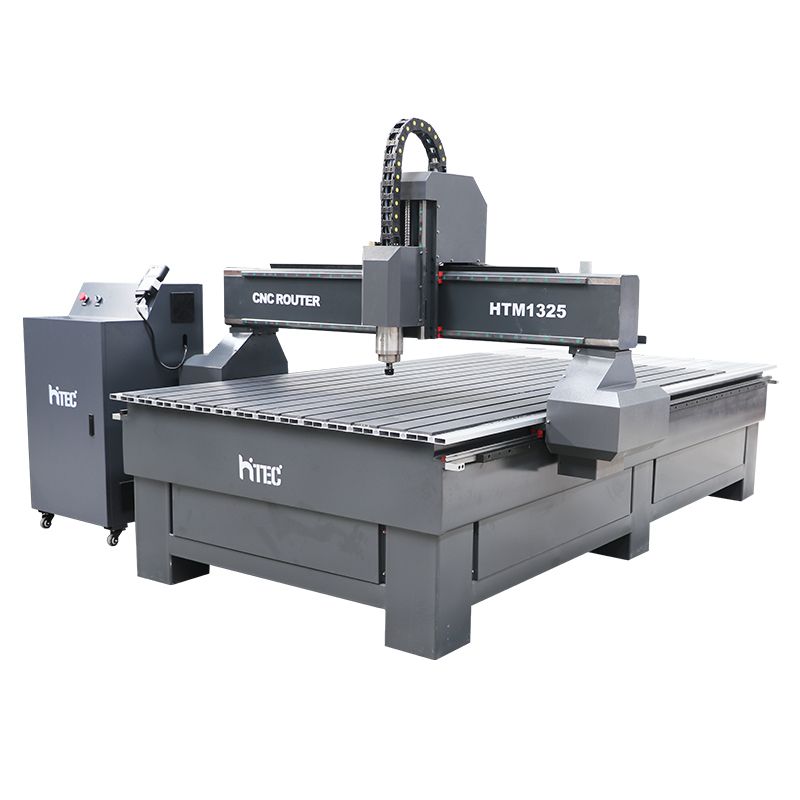
Many factories integrate these systems alongside a CNC nesting router to create a unified digital production environment.
Financial Implications for Regional Manufacturers
Capital expenditure on a 6-sided CNC centre is higher than purchasing standard entry-level boring equipment. Production managers must calculate the return on investment based on increased daily output and lower rejection rates.
High-capacity operations in Kenya and Uganda typically recover the premium investment within 18 to 24 months. This ROI is driven by sheer volume capabilities and material yield optimisation.
Automated machines allow factories to maintain high output even when faced with shifting labour availability.
Technical Support and Spare Parts Availability
Sophisticated servo motors and multi-axis controllers demand specialised technical support to maintain peak calibration under heavy workloads. AOE technicians provide rigorous on-site training for operators.
This training covers routine spindle maintenance, software troubleshooting, and effective dust extraction management. Localised access to diagnostic support ensures production lines remain operational.
This support is vital for navigating regional power fluctuations or environmental challenges common in East African industrial zones.
Precision Joinery for Export Quality Furniture
Regional export markets demand flat-pack furniture with precise and repeatable joinery. Advanced 6-sided machines guarantee exact tolerances for Minifix connectors, wooden dowels, and concealed hinges across thousands of identical panels.
Consistently accurate hole placements give manufacturers the quality baseline necessary to compete against imported knock-down cabinetry.
Using high-quality KWS tooling in these machines further ensures clean entry and exit points in various board densities.
Technical Specifications and Mechanical Limits
Evaluating machinery upgrades requires attention to mechanical limits and specific tooling configurations. Production engineers must match the machine’s capabilities against their heaviest board profiles and daily target volumes to prevent bottlenecks.
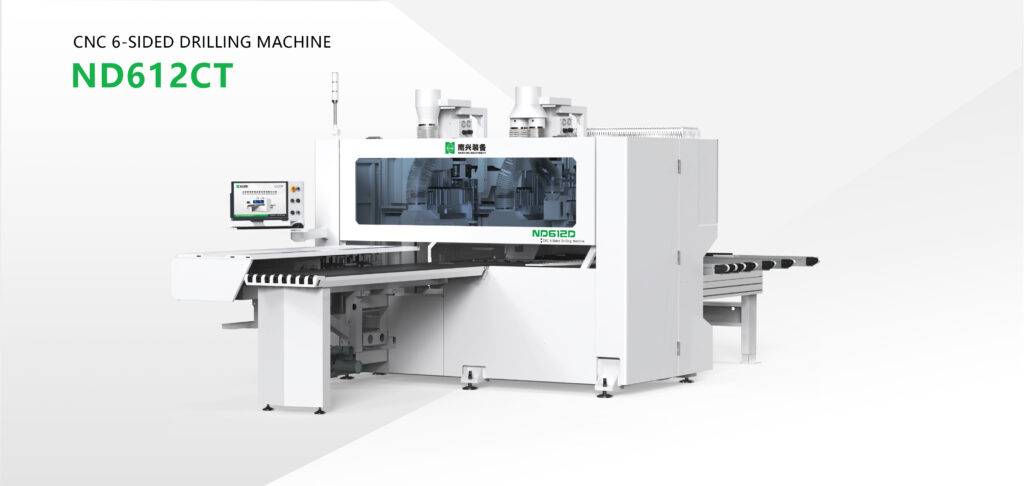
Modern 6-sided machines automatically adjust gripper positioning to accommodate panel thicknesses ranging from 9mm to 40mm. This dynamic sizing capability allows workshops to switch instantly between structural cabinet boxes and thin drawer bases without interrupting the feed line.
Drilling Operations and Integrated Tooling Options
Comprehensive machining requires dedicated drill banks for vertical and horizontal boring alongside integrated routing spindles. Advanced models utilise independent spindle selection to execute complex hole patterns rapidly.
These systems drop multiple drill bits simultaneously to reduce cycle time. Adding integrated grooving saws directly into the drilling cycle removes the need for secondary processing.
This integration is particularly beneficial when preparing panels that have already passed through an edge banding machine.
Facility Integration and Safety Standards
High-throughput CNC drilling lines require stable three-phase power and robust voltage regulation. This protects sensitive drives from regional supply spikes.
Factory floor layouts must accommodate automated outfeed tables or return conveyors to maximise continuous processing capabilities. Integrated light curtains and pressure mats ensure operator safety around the high-speed feed tracks and heavy-duty clamping zones.
These safety features are standard on modern equipment supplied by industrial specialists.
Implementing Automated Drilling with AOE
Transitioning from basic boring equipment to automated 6-sided machining redefines panel processing efficiency and factory output. About AOE, we focus on conducting detailed facility audits to align production targets with correct machinery specifications.
Upgrading a shop floor with this technology guarantees precise joinery and minimises material waste. Further insights on industrial efficiency are available on our machinery blog for manufacturers seeking to scale their operations in the regional market.