
Achieving flawless, chip-free cuts on double-sided MDF requires a precision sliding table saw equipped with an independent scoring unit to prevent breakout on the fragile bottom face.
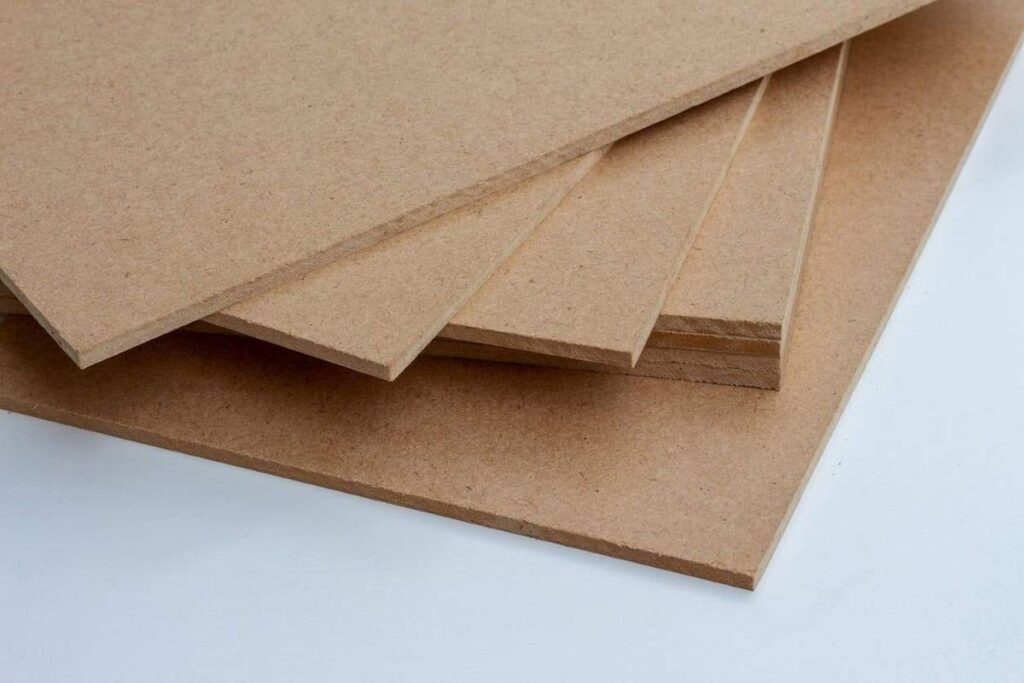
Factory managers who upgrade from standard cabinet saws eliminate costly panel rework and material waste by deploying a panel saw Kenya explicitly engineered to handle abrasive melamine resins without compromising high-volume batch quality.
| Machinery Type | Edge Quality on Laminated MDF | Material Yield Factor | Labour Impact | Estimated ROI Timeline |
|---|---|---|---|---|
| Standard Cabinet Saw | Heavy bottom-face chipping | High waste from offcuts | Severe rework required | Negative productivity return |
| AOE Precision Sliding Table Saw | Flawless, chip-free edges | Improved yield by 12% | Ready for edge banding | 14 to 18 Months |
Mechanical Specifications of Precision Sliding Table Saw Blades for Clean MDF Processing
Machining melamine-faced medium-density fibreboard (MDF) demands exact blade synchronisation to overcome the material’s brittle outer layers.
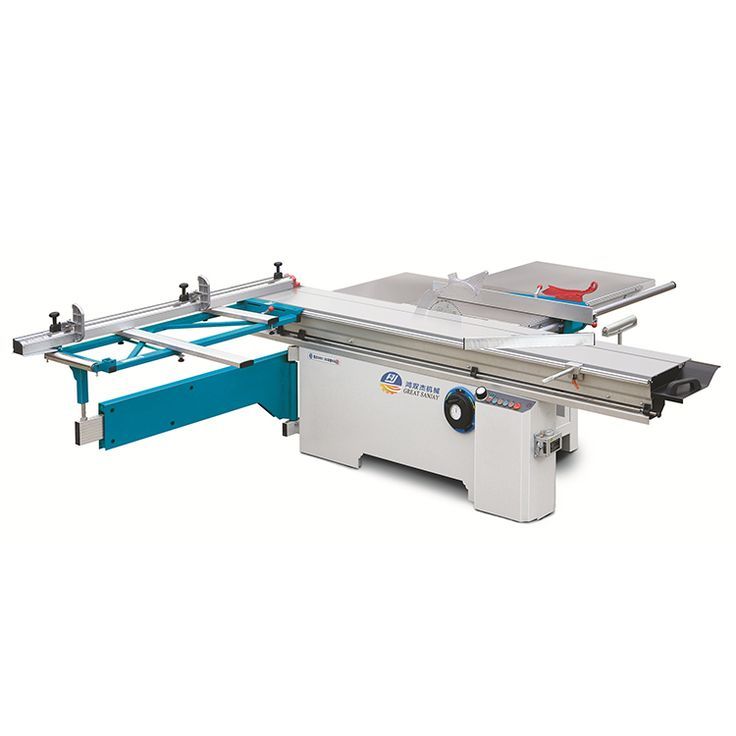
High-performance cutting systems separate the scoring and main cutting actions. This separation ensures the panel edges remain pristine even under heavy feed loads during a busy shift.
Scoring Blade Operations for Bottom Face Melamine Protection
Operators must use a scoring blade to protect the laminate integrity during the cutting cycle. The independent 1.1kW scoring saw motor on models like the MJ1132F spins in reverse to pre-cut a shallow kerf into the bottom melamine layer before the main blade makes contact.
This reverse rotation ensures the brittle veneer is sliced inward. This action entirely eliminates the upward force that causes bottom-face chipping.
Main Blade Technical Parameters for Clean Cutting Results
The primary saw blade clears the remaining core material after the scoring blade establishes the foundation. The main blade must align perfectly with the scoring kerf.
This alignment typically requires a split-shim scoring set to match the exact cutting width. Misalignment of 0.1mm results in stepped edges. Such defects immediately compromise edge banding machine adhesion during downstream assembly.
Optimisation Strategies for Sliding Table Saw Settings on Laminated Panels
Operators calibrate blade height and rotation speeds to match specific board compositions. Precision setup directly influences the lifespan of industrial saw blades and the structural integrity of the final joint.
Blade Selection for Triple-Chip and Trapezoidal Grind Configurations
Standard alternating top bevel (ATB) blades dull rapidly against hardened melamine glue lines. Industrial workshops rely on triple-chip grind (TCG) or trapezoidal flat tooth configurations to shear through laminated MDF.
These specialised geometries distribute cutting forces evenly. The distribution delays edge wear and maintains a factory-grade finish across extended production runs.
Feed Rate and RPM Synchronisation for Variable MDF Densities
Rapid panel feeding causes tear-out. Slow movement creates friction burns on the MDF core. Workshop engineers match the main motor RPM to a steady manual feed rate.
The RPM is often set between 4,000 and 5,000 to allow the teeth to clear sawdust efficiently. Maintaining this equilibrium reduces thermal expansion on the blade plate. This prevents runout during critical sizing operations.
Regional Calibration of Sliding Table Saws for East African Manufacturing
Operating industrial cutting machinery across East Africa requires adjusting factory parameters to manage unique environmental variables.
Heat, humidity, and the specific composition of locally sourced MDF dictate optimal machine configurations.
Machinery supplier Kenya expertise is often required to calibrate these units for local voltage and climate conditions.
Machine Adaptation for East African Climates and Material Grades
High humidity in regions like coastal Kenya or Tanzania causes MDF cores to swell and grip the blade. This swelling increases motor load. Technicians frequently clear resin buildup from the blade gullets.

They also adjust the scoring blade kerf to accommodate slight thickness variations in regional board supplies.
Implementing strict dust extraction protocols also mitigates abrasive particle buildup. These particles rapidly degrade cutting precision in tropical climates.
Production Efficiency Gains through Waste Reduction in Sizing Operations
Investing in heavy-duty cutting equipment alters workshop economics by maximising the usable yield from every standard 8×4 sheet.
Accurate initial sizing removes the requirement for secondary trimming operations. Manufacturers can request demo sessions to see how precise sizing streamlines the entire furniture production line.
Yield Metrics for High Performance Panel Sizing
Production managers achieve dimensional tolerances of plus or minus 0.2mm per linear metre using advanced sliding carriage mechanics. This strict accuracy limits panel offcuts.
It raises the overall board yield by up to 12% compared to manual cutting methods. Accurate cuts translate directly into higher profit margins for high-volume cabinet makers.
Elimination of Downstream Rework and Production Bottlenecks
Chipped edges force joiners to discard components. This waste increases labour hours spent masking defects with putty and oversized edge tape. A calibrated scoring system produces ready-to-band edges straight off the saw.
This maintains a continuous flow on the assembly line. Eliminating this rework bottleneck doubles the daily throughput of a standard furniture plant.
Maintenance Protocols and Operator Training for Machine Longevity
Machine longevity hinges on rigorous upkeep and disciplined operation. A poorly maintained sliding table quickly loses its parallel alignment.
This loss of alignment defeats the purpose of high-end blade sets and increases production tips Africa needs for troubleshooting.
Preventive Maintenance Routines for Industrial Saw Components
Engineers routinely clean the hardened steel guide rails. They lubricate the carriage bearings to prevent dust-induced scoring.
Regularly checking the drive belts for tension ensures the 1.1kW scoring motor and main drive deliver consistent torque without slipping.
Implementing a daily calibration check prevents micro-deviations from accumulating into noticeable cut defects.
Operator Skill Development for Consistent Processing Quality
Technicians require formal training to understand the relationship between blade projection and chip clearance. Operators learn to adjust the main blade height so only one full tooth protrudes above the material surface.
This optimises the exit angle. Competent staff lower tool replacement costs by identifying dulling blades before they force the motor to overwork.
Total Cost of Ownership and ROI Analysis for Industrial Saws
Procurement teams evaluate heavy machinery based on long-term output rather than the initial purchase price. A commercial-grade saw pays for itself through reduced waste and uninterrupted uptime.
Many workshops eventually integrate these saws with a CNC nesting router to handle complex shapes while the saw manages high-volume straight cuts.
Lifetime Value and Operational Expense Calculations
Energy consumption, blade sharpening, and routine bearing replacements constitute the primary operating expenses. An industrial saw built with a cast-iron trunnion absorbs vibration.
This absorption significantly extends the life of expensive TCG carbide blades. Reducing blade sharpening intervals drops annual maintenance costs and keeps the machine in active production.
Quality Metrics and Financial Returns on Sizing Equipment
Producing flawless architectural millwork allows East African workshops to secure higher-paying commercial contracts.
The ability to guarantee zero-defect edges on premium acrylic and melamine finishes elevates the company’s market position. Accurate sizing is the foundation of high-quality furniture manufacturing.
Sliding Table Saw Performance Across Variable Panel Thicknesses
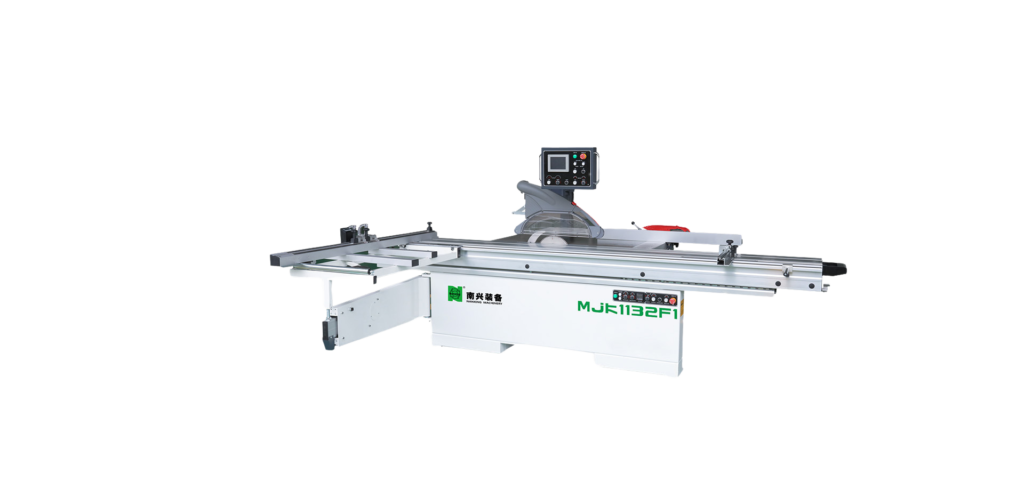
Commercial operations rarely cut a single material gauge throughout the day. Switching between 3mm backer boards and 18mm structural panels requires immediate machine adaptations.
Technicians must understand the mechanical limits of their equipment to avoid motor strain.
Machine Parameter Adjustments for Diverse Panel Dimensions
Operators increase the scoring depth slightly when slicing thick 25mm workstation tops. This counters the heavier downward pressure of the main blade.
Cutting stacked 18mm sheets demands maximum torque and a reduced feed speed to prevent the belts from stalling. Properly setting the overhead blade guard ensures optimal dust extraction regardless of the stack height.
Cycle Time Optimisation and Batch Output Rates in Furniture Production
Maximising floor space and personnel requires intelligent routing of panels through the cutting station. Efficient batch processing lowers the per-unit cost of every cabinet box produced.
High-performance workshops use AOE equipment to maintain these rigorous standards.
Production Strategies for High Volume Panel Processing
Production planners group cut lists by material thickness and colour. This grouping minimises blade adjustments and board handling.
Utilising digital crosscut fences with programmable stops allows operators to cycle through identical dimensions with zero measurement downtime. This systematic approach scales up output predictably to meet stringent construction deadlines.
Regional Support and After-Sales Service for East African Manufacturers
Machinery downtime immediately halts factory revenue. Reliable technical support is a non-negotiable factor in equipment procurement. East African manufacturers need partners who understand local logistical constraints and power stability issues.
Critical Component Availability and Local Spare Parts Support
Waiting weeks for a replacement carriage bearing or scoring motor belt cripples production schedules. AOE maintains regional inventories of critical consumable parts.
These parts are available for next-day dispatch to facilities in Nairobi, Kampala, or Dar es Salaam. Local stocking eliminates air-freight charges and prevents production bottlenecks.
Evaluation of Technical Training Programs for Installation and Setup
Installing a heavy-duty saw requires precise levelling and electrical phasing. AOE technicians calibrate every installation on-site. They teach local engineers how to true the sliding table to the main blade axis.
Comprehensive handover training empowers the client’s maintenance team to handle routine troubleshooting independently.
Expert Recommendations for Precision Sliding Table Saw Optimisation
Achieving absolute precision is an ongoing process of aligning operator skill with industrial-grade machinery.
Factories looking to dominate the bespoke furniture market must standardise their cutting protocols to ensure consistent quality across all production batches.
Consultation Services and Factory Performance Audits
Workshop owners experiencing persistent edge-chipping should schedule a rigorous equipment audit to identify mechanical misalignments. AOE engineering consultants assess extraction systems, blade specifications, and carriage tolerances.
These audits pinpoint the root cause of panel defects. Upgrading to the MJ1132F platform guarantees immediate rectification of breakout issues.
Engineering Recommendations for Factory Integration
A precision sliding table saw with an independent scoring unit is mandatory to permanently eliminate melamine breakout. Saws lacking a dedicated 1.1kW reverse-spinning scoring motor will inevitably compromise edge quality.
This compromise drives up hidden labour costs. Prioritise machinery with cast-iron internals and local East African spare parts backing to guarantee maximum ROI and continuous factory throughput.