
A precision sliding table saw carriage reduces operator fatigue in East African furniture factories by lowering the push-force required to process dense 18mm MDF panels.
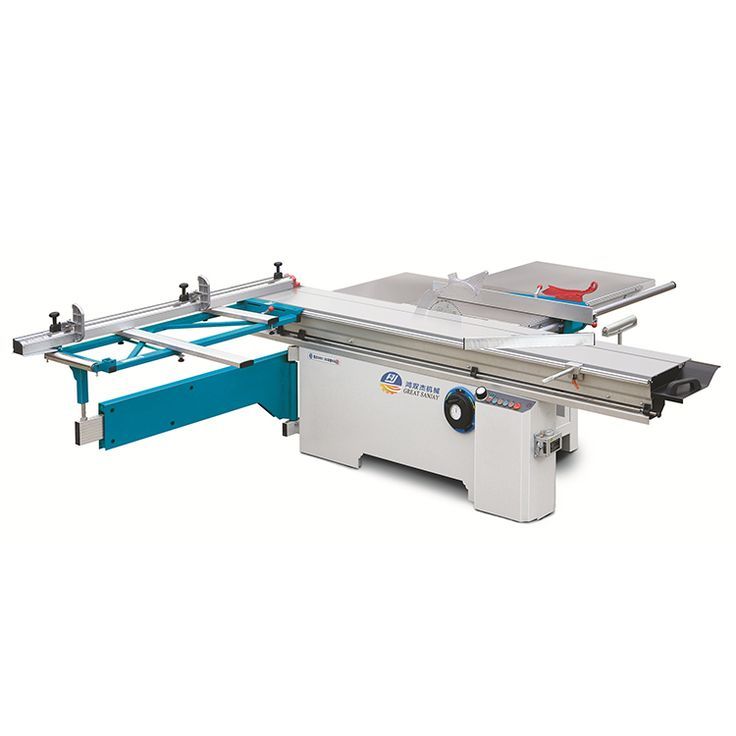
Upgrading to a furniture panel saw equipped with an ultra-smooth roller bearing system allows production managers to maintain strict dimensional accuracy during ten-hour shifts.
This mechanical assistance lowers the risk of repetitive strain injuries and ensures consistent throughput in high-volume environments.
| System Specification | Traditional Ball Bearing | Standard Linear V-Track | Nanxing Roller Bearing |
|---|---|---|---|
| Manual Push-Force Required | 15kg to 20kg | 8kg to 12kg | Less than 3kg |
| Resistance to Workshop Dust | Low (requires frequent cleaning) | Moderate | Excellent (integrated wipers) |
| Typical Maintenance Cycle | Monthly | Quarterly | Bi-Annually |
| Expected Service Life | 3,000 Shifts | 6,000 Shifts | 12,000+ Shifts |
Strategies for Reducing Operator Fatigue with Precision Sliding Tables
Pushing heavy MDF sheets throughout a production shift exhausts operators and leads to dangerous lapses in concentration. A precision sliding table saw carriage transfers the material weight entirely to a linear guide track.
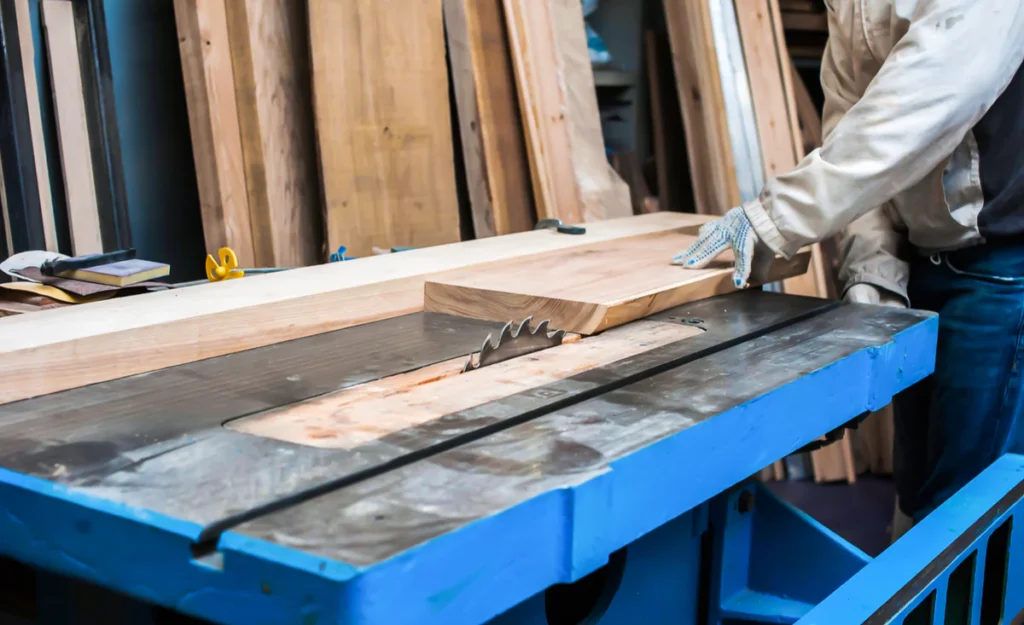
Factory owners who invest in ergonomic equipment via the AOE machinery blog insights observe immediate reductions in operator errors around the main saw blade. These safety improvements directly lower the frequency of workshop accidents.
Fatigued workers often lean into the material and place their hands near the cutting zone to force the board forward. Upgraded carriage systems pull the weight away from the user to ensure hands remain firmly on the safety grips.
Implementing these ergonomic improvements helps stabilise factory insurance premiums by mitigating the most common causes of shopfloor injuries.
Technical Engineering of Nanxing Precision Sliding Table Saw Carriages
The Nanxing carriage uses an ultra-smooth roller bearing system to minimise resistance during late shifts. Extruded aircraft-grade aluminium provides a rigid platform that glides without lateral deflection under heavy loads.
Dual cylindrical guides ensure the carriage travels true along the entire 3200mm cutting stroke. These specifications are standard on the panel saw Kenya models supplied to regional workshops.
Internal structural rigidity prevents the mechanical binding that forces operators to overexert themselves on standard machines. Multi-chambered carriage profiles resist torsional twisting when heavy solid timber or double-stacked particleboards rest on the outrigger table.
Engineers specify these wide-format profiles to distribute the load evenly across the entire bearing array. This design extends the life of the machine components by reducing point-load stress.
Comparing Sliding Table Technologies for East African Furniture Factories
Legacy ball-bearing systems frequently jam with abrasive sawdust. This friction requires operators to forcefully shove panels through the scoring blade.
Modern linear roller technologies maintain a frictionless glide even in dusty workshop environments where central extraction systems might experience pressure drops. Using high-quality industrial saw blades alongside these carriages ensures the system does not work harder than necessary to clear material.
Upgrading from standard phenolic slides to hardened steel rollers transforms the daily operator experience from a physical task to a controlled technical process.
Production managers track machine wear to understand how different carriage builds affect daily energy expenditure. The transition to roller bearings represents a significant leap in workshop efficiency.
Improving Panel Quality Through Consistent Feed Dynamics
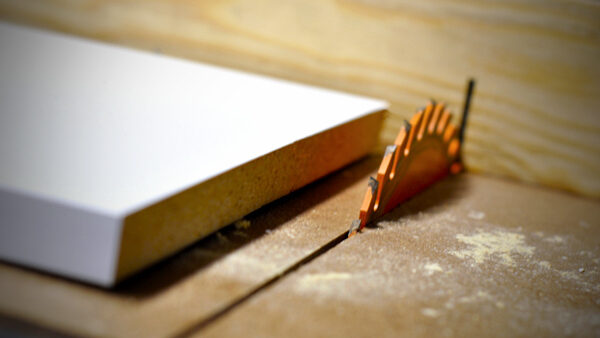
Fatigued machinists often apply uneven forward pressure. These fluctuations cause micro-stutters that chip delicate melamine edges. A precision sliding table saw carriage maintains a steady feed rate across the main blade.
This consistency ensures perfectly square cuts regardless of the operator’s physical state. Steady feed dynamics reduce the volume of rejected panels that require edge banding rework.
Operators focus on reading cut lists and checking diagonal measurements when they exert less physical energy. This mental clarity prevents costly miscuts on expensive high-gloss acrylic panels.
Maintaining operator energy levels is essential for factories running double shifts to meet tight project deadlines.
Measuring ROI for Ergonomic Machinery Investments
Production managers calculate the return on investment for ergonomic machinery by tracking reductions in material waste and operator absenteeism. Eliminating the physical exhaustion associated with manual panel pushing increases daily throughput.
Workshops processing sixty sheets per day typically recover the investment cost of a premium carriage system within eight months through saved labour and recovered board yield. This equipment often serves as the primary feeder for a CNC nesting router in integrated production lines.
Financial controllers must factor the eliminated costs of medical leave into their machinery procurement budgets. A more efficient cutting station allows for continuous operation without mandated recovery breaks for staff. This stability provides a predictable production schedule for large-scale furniture contracts.
Improving Staff Retention with Ergonomic Workshop Equipment
East African manufacturing facilities face a shortage of trained panel saw operators capable of reading complex cut lists.
Installing ergonomic machinery demonstrates a commitment to workforce health and improves staff retention rates. Professional industrial design software users prefer working in environments where the physical hardware matches the precision of their digital designs.
Master operators remain on the shop floor longer when their joints do not absorb the daily impact of moving heavy timber sheets.
Supplying engineers with friction-free equipment ensures high-value talent stays loyal to the production facility. A comfortable work environment is a competitive advantage in the regional manufacturing sector.
Regional Maintenance and Spare Parts for AOE Machinery
Advanced carriage systems require periodic alignment and cleaning to prevent track scoring from particle buildup. AOE technicians calibrate each installation on-site to ensure the sliding table runs parallel to the blade assembly despite local workshop floor irregularities.
This technical support from an established machinery supplier Kenya prevents unexpected downtime. Regional spare parts hubs in Nairobi and Kampala provide immediate access to replacement roller bearings and track wipers.
Rapid maintenance response times prevent production bottlenecks. Properly maintained carriages ensure operators never have to force a malfunctioning machine through a cut.
Engineering Recommendations for Panel Processing Facilities
Upgrading to a Nanxing panel saw equipped with a heavy-duty roller carriage is a necessary operational shift for workshops scaling beyond custom carpentry.
The drop in operator fatigue leads to higher daily panel yields and better edge quality. Interested facility managers should request demo sessions to observe the push-force differences between various carriage technologies.
Factory engineers must prioritise carriage mechanics over basic motor specifications to guarantee long-term shop floor safety. Investing in ultra-smooth carriage travel secures both the health of the workforce and the reliability of the production schedule.
This strategic investment supports the sustainable growth of the furniture manufacturing industry in East Africa.