
A servo driven movable crosswise fence eliminates the geometric drift common in standard digital table saws. Operators input dimensions directly into a touchscreen for exact motor-controlled positioning.
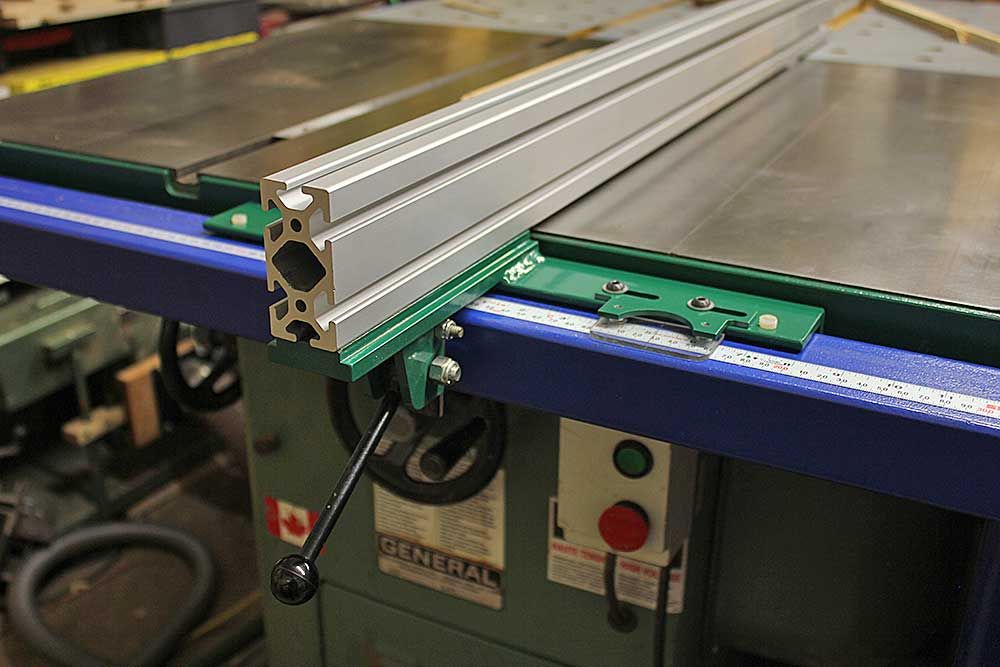
East African furniture factories face pressure to standardise batch cutting. Integrating this automated system reduces off-square panel waste and reliance on manual measuring tapes.
AOE provides these technical solutions to upgrade any panel saw Kenya based facility.
Technical Precision and Engineering Specifications of Servo Driven Crosswise Fences
| Technical Feature | Manual Crosscut Fence | Servo Driven Movable Crosswise Fence | Production Impact |
|---|---|---|---|
| Setup Time | 45 – 90 seconds | 3 – 5 seconds | Saves 15+ hours per week |
| Tolerance | ± 0.5mm – 1.0mm | ± 0.1mm | Reduces rework by 80% |
| Stability | Prone to vibration drift | Absolute motor-locked stability | 12% higher board yield |
| Data Input | Manual tape measure | Digital PLC touchscreen | Eliminates human reading errors |
Manual fences lose square alignment over time due to constant heavy board impact and daily workshop vibrations. A servo driven movable crosswise fence utilises a motor to set the exact dimension typed into the screen.
This ensures absolute repeatability for batch cutting. The closed-loop servo system continually verifies the fence position against digital encoders to a machine tolerance of 0.1mm. High precision is essential for a furniture panel saw intended for export quality production.
Factory managers replace mechanical stops and ruler-reading errors with programmed cut lists imported to the machine interface. Linear guide rails supporting the servo mechanisms absorb lateral load.
These rails maintain 90-degree squareness even when processing dense MDF or heavy particleboard daily.
Increasing Throughput and Reducing Material Waste with Automated Fence Systems
Production bottlenecks occur when operators walk around the sliding table to unclamp, adjust, and re-clamp standard analogue fences. Motorising this axis transforms the digital table saw into a high-throughput panel station.
Operators remain at the control panel to switch between cut dimensions in seconds. This speed is a primary requirement for workshops that also operate an edge banding machine to process high volumes.
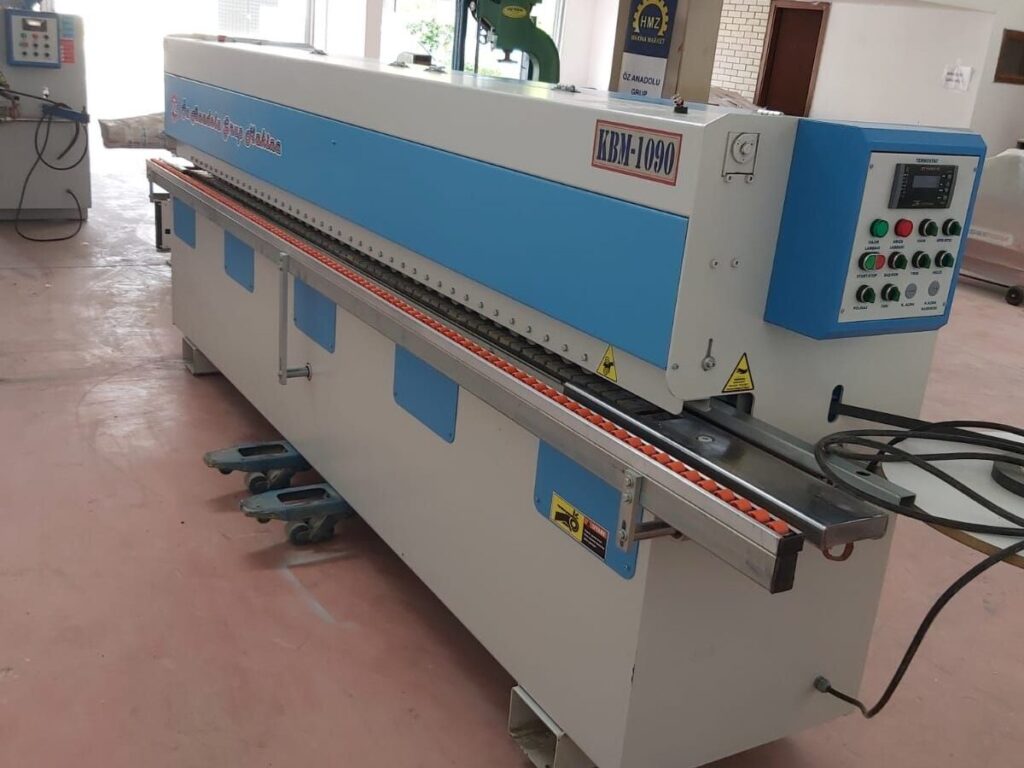
Eliminating trial cuts reduces expensive material waste on imported melamine boards. High-volume workshops report material yield improvements reaching 12 percent.
The automated crosscut fence removes human estimation from the sizing equation.
Managing Operator Skill Gaps through Digital Automation
Timber processors in East Africa often find it difficult to retain highly experienced machine operators capable of setting complex batch dimensions manually. Digital automation transfers the burden of accuracy from the worker to the machine programmable logic controller (PLC).
New staff execute complex, multi-dimension cut lists by recalling saved programmes from the memory. Using a CNC nesting router alongside a digital table saw further standardises the workflow.
Automation accelerates onboarding timelines for floor staff. Workshop supervisors spend less time troubleshooting sizing errors. They focus instead on optimising raw material flow towards edge banding and drilling stations.
Investment Value and ROI for Digital Table Saws
Factory owners weigh the initial capital expenditure of servo-integrated machines against long-term operational savings.
Calculating the return on investment requires auditing current offcut waste, rework hours, and daily panel throughput rates. Prospective buyers should request demo sessions to see the speed difference in real-time scenarios.
Workshops processing over 100 panels daily often recover the cost differential of the servo upgrade within 14 to 18 months. Raw material preservation alone accounts for a significant portion of these savings.
Software Integration and Production Workflow Optimisation
Modernising a workshop requires machinery capable of communicating with production software. Digital table saws equipped with servo positioning integrate with panel optimisation programs generated in the factory office.
The saw receives the precise cut sequence via network connection. This forces the crosswise fence to sequence through dimensions automatically. Systems like Guigui software provide the data structures needed for this level of automation.
Digital connectivity prevents the operator from misinterpreting a printed cut list. Bypassing manual data entry secures the production line against expensive miscuts during high-pressure shifts.
Enhancing Operator Capabilities with Digital Control Interfaces
Manufacturing operations require equipment that bridges the gap between traditional craftsmanship and digital operation. A servo driven movable crosswise fence simplifies machine setup by converting complex measurement tasks into basic touchscreen protocols.
Digital table saws feature visual displays that guide the operator through the cutting sequence step-by-step. This reduces cognitive load on the factory floor and allows staff to focus on safe panel handling.
Long Term Maintenance and Reliability in East African Factory Environments
Industrial electronics operating in East African workshops must withstand fluctuating power grids and fine particulate dust. Protecting the servo motors and linear bearings dictates the operational lifespan of the sizing saw.
Operators must use high-quality industrial saw blades to ensure the motor does not face unnecessary resistance during heavy cuts.
AOE technicians calibrate each installation to address local shopfloor voltage variability. They integrate dedicated stabilisers where necessary.
Dust extraction must operate at peak efficiency to prevent chip build-up on the magnetic encoding strips that dictate fence positioning. Regular technical reviews on the machinery blog provide updated maintenance tips for these environments.
Software Updates and Diagnostics for Digital Table Saws
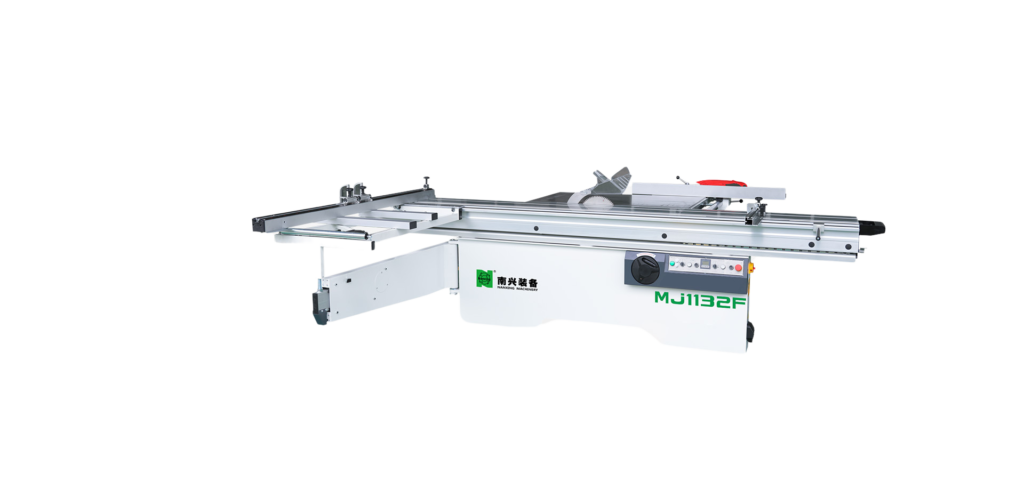
Original equipment manufacturers release firmware updates to refine motor control algorithms and touchscreen interfaces. Keeping the digital table saw software current ensures maximum positional accuracy and network compatibility.
Modern PLCs include integrated diagnostic tools that flag servo communication faults before they cause physical jamming. Factory engineers read error codes directly from the main console to accelerate troubleshooting and limit downtime.
Preventative Maintenance Schedules for Servo Fence Systems
Mechanical longevity depends on strict adherence to daily and weekly cleaning routines. Workshop floor managers must mandate the clearing of tracks and application of dry lubricants to the crosswise fence guide rails.
- Daily: Vacuum dust from the servo track and inspect the fence profile for resin build-up.
- Weekly: Check the tension of drive belts connecting the servo motor to the linear carriage.
- Monthly: Verify absolute squareness using a precision digital protractor to ensure the electronic zero-point remains true.
AOE Engineering Insights for Panel Processing Facilities
Upgrading to automated fence positioning shifts how a workshop handles high-capacity panel processing. Relying on analogue stops restricts growth and creates operational bottlenecks.
It also limits the dimensional consistency required for modern modular cabinetry assembly and high-speed processing on a furniture drilling machine.
A servo driven movable crosswise fence secures absolute repeatability and reduces labour-intensive setup times.
For East African factories targeting export-grade manufacturing quality, specifying this motorised technology is a critical engineering baseline for any new digital table saw investment.