
An automatic rotary labeling system resolves cabinet part tracking bottlenecks by assigning unique digital identities to panels immediately upon exiting the CNC nesting router. This technology eliminates manual sorting on the East African factory floor.
Production managers use this tracking hardware to send precise machining instructions directly to downstream equipment. AOE provides these integrated solutions to help local manufacturers scale their output through digitisation.
| Feature | Manual Identification | Automatic Rotary Labeling |
|---|---|---|
| Application Speed | 45 Seconds per panel | 1.5 Seconds per panel |
| Data Capacity | Limited handwritten notes | Full CAD/CAM instruction set (QR) |
| Downstream Integration | None (Manual setup) | Automated machine calibration |
| Label Durability | Low (Prone to smudging) | High (Thermal transfer/dust resistant) |
| Error Rate | 12-15% in high-volume shifts | Less than 0.1% |
Technical Capabilities of Automatic Rotary Labeling Hardware
Modern panel processing lines require rigid control over material flow to maintain high throughput. Automated labelling stations replace manual marker-pen notations with industrial-grade thermal transfer printing.
This shift ensures every component remains identifiable through the entire production cycle. Engineers design these systems to rotate and position labels precisely on the edge or face of the board. The specific orientation depends on the stacking and handling requirements of the workshop.
This exact placement guarantees barcode scanners read the tags instantly at subsequent workstations. Operators no longer need to manually realign panels before processing.
Printing Standards for Industrial Labeling Applications
High-speed printing units within the automatic rotary labeling system generate high-contrast QR codes and barcodes. These labels survive workshop dust and heavy handling.
Mechanical application arms stamp these labels onto moving panels with millimetre accuracy. The system adjusts dynamically to varying board dimensions without human intervention.
Factory floors benefit from this mechanical consistency. Misplaced or wrinkled labels frequently cause scanner faults in manual environments.
A robotic application mechanism ensures perfect adhesion. This reliability reduces the risk of lost panel identities during transport between the furniture panel saw and the assembly area.
Data passport Architecture for Part Tracking
Each label functions as a comprehensive digital passport for the cabinet part. The encoding process embeds critical production data into the 2D matrix.
This data includes material type, dimensions, grain direction, and routing coordinates. Local engineers use Guigui software to generate these data packets during the design phase.
Operators rely on this encoded intelligence to verify they hold the correct part for a specific client order. This immediate verification halts the incorrect assembly of visually similar cabinet components.
The system provides a failsafe that protects material yield and project timelines.
Operational Efficiency of Automatic Rotary Labeling Systems
Manual intervention introduces fatal inconsistencies into high-volume cabinet manufacturing. An automatic rotary labeling system removes the lag time associated with handwriting dimensions.
This automation eliminates the need for machinists to decipher illegible notes on the shop floor. Production rates increase when downstream machinists spend zero time interpreting ambiguous instructions.
The labelling unit standardises the communication chain. Panels travel faster from the initial sizing stage to the furniture drilling machine for final processing.
Automated Calibration for Edge Banding Equipment
The NC549LP unloads cut parts and simultaneously prints a QR code label carrying all subsequent processing instructions. The operator at the AOE edge bander scans this code to set the machine parameters automatically.
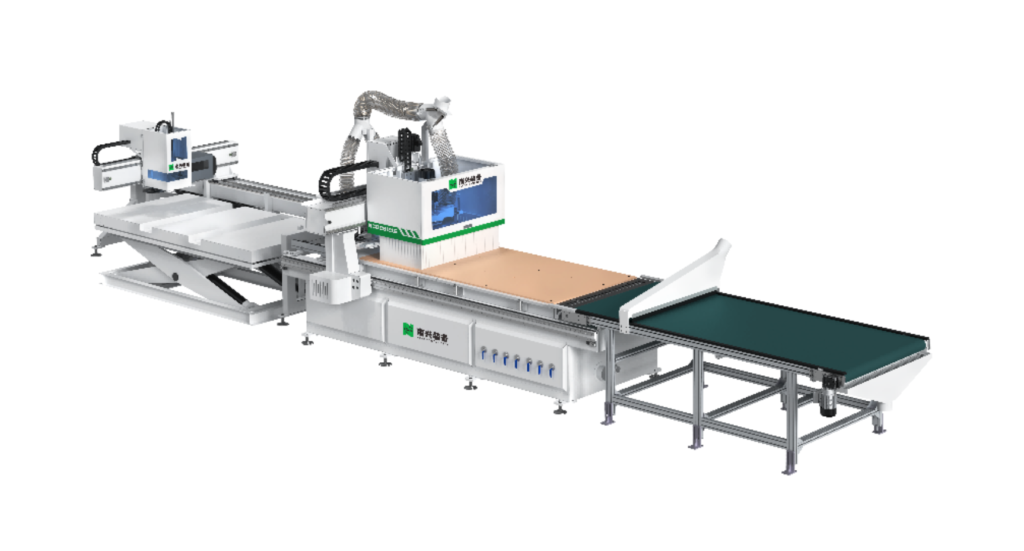
This includes edge thickness and PUR gluing settings. This automated handshake between the label and the machine slashes setup times for mixed-batch production.
Workshop engineers do not waste minutes manually calibrating pressure rollers for every new panel thickness. The system handles the transitions, allowing for a continuous workflow even with diverse material types.
Waste Reduction through Digital Verification
Reject rates drop significantly when machines handle data transfer. Misinterpreting a handwritten label often leads to an incorrectly drilled hinge hole.
This mistake ruins expensive high-gloss MDF boards. Digital scanning ensures the boring machine receives the exact spindle coordinates required for that specific cabinet door.
Factory owners see a direct reduction in material wastage. Expensive rework cycles decline as the precision of the KWS tooling is matched by the accuracy of the tracking data. The label acts as the final authority for every machining operation.
Digital Factory Connectivity for Rotary Labeling Systems
Industrial labelling infrastructure acts as the physical link in a facility digital network. It translates manufacturing instructions into a physical tag that travels with the raw material. This integration connects the design office directly to the factory floor.
Engineers push CAD/CAM data directly to the labelling unit. This process bridges the gap between digital design and physical cabinet assembly. The workflow ensures that what is designed in the software is exactly what is produced on the machines.
Interface with Manufacturing Execution Systems
Advanced manufacturing demands tight synchronisation between shop floor operations and enterprise resource planning software.
The labelling hardware interfaces directly with the factory Manufacturing Execution System (MES). It pulls down real-time order specifications to ensure the latest revisions are applied.
This connection prevents the production of cancelled or modified orders. The system only prints labels for active, approved batches.
East African workshops use this connectivity to optimise their daily material yield based on current ERP data. Managers can read more on manufacturing trends to see how this connectivity impacts regional competitiveness.
Implementation Requirements for East African Manufacturers
Deploying advanced tracking hardware in emerging industrial hubs requires robust local support frameworks. High ambient temperatures and power grid fluctuations present operational challenges for sensitive printing equipment.
Partnering with established engineering firms helps mitigate these environmental risks. AOE ensures that pneumatic lines and network cables meet strict regional industrial standards.
Technicians must align the labelling outfeed conveyor perfectly with the CNC machine. This alignment prevents panel skewing during the high-speed application process.
Technical Maintenance and Local Support
Hardware investments require comprehensive operator education to ensure longevity. AOE provides on-site training for maintenance staff.
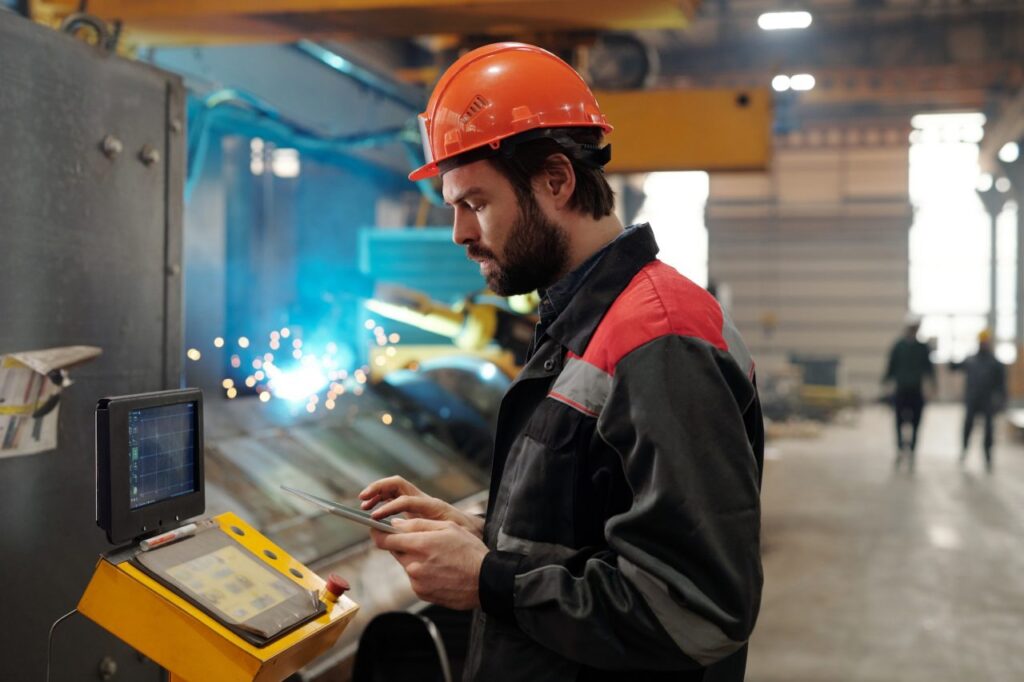
This training covers thermal printhead replacement and rotary arm sensor recalibration. Maintenance teams learn to keep the system running at peak capacity in dusty workshop environments.
Rapid response teams based in Nairobi and Kampala ensure minimal downtime. Access to local spare parts repositories prevents a minor sensor failure from halting a production line.
Factory owners can request a machinery consultation to evaluate the technical requirements for their specific facility.
Return on Investment for Automated Tracking Systems
Upgrading to automated part tracking requires a capital outlay. Factory owners justify this through measurable operational savings.
The financial return stems from accelerated throughput and the elimination of manual sorting labour. High-volume operations often recoup their investment within 18 months through recovered material yield and error reduction.
The scalability of modular rotary units allows workshops to upgrade print speeds as production grows. This protects the initial investment. The labelling infrastructure handles everything from custom furniture batches to continuous commercial fit-out contracts.
Implementing an automatic rotary labeling system transitions a workshop from reactive material handling to proactive, data-driven manufacturing.