
A properly calibrated digital crosscut fence ensures perfectly square cabinet panels and eliminates costly assembly failures on the workshop floor.
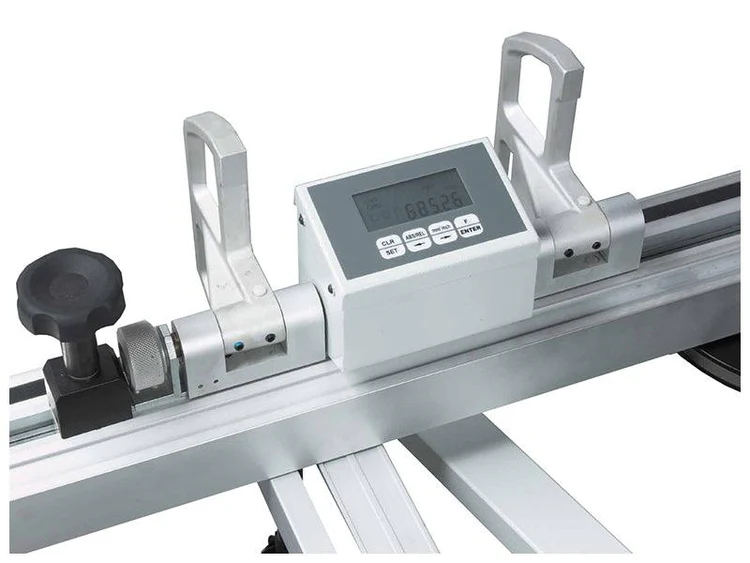
East African production managers who invest in this technology reduce material waste and minimise manual rework. These systems maintain 0.1mm dimensional accuracy across high-volume MDF and particleboard runs.
Implementing an industrial furniture panel saw equipped with digital stops allows workshops to meet international quality standards consistently.
| Production Metric | Analogue Flip Stops | Digital Crosscut Fence | Factory Impact |
|---|---|---|---|
| Setup Time Per Cut | 15 to 25 seconds | 2 to 5 seconds | Increases daily cut volume by up to 30%. |
| Dimensional Accuracy | ± 0.5mm | ± 0.1mm | Eliminates assembly gaps in cabinetry. |
| Material Waste Rate | High due to test cuts | Negligible first-cut accuracy | Directly lowers monthly raw material spend. |
| ROI Timeline | Not Applicable | 3 to 5 Months | Rapid payback driven by saved material. |
Digital Crosscut Fence Technical Specifications and Digital Integration
Modern manufacturing requires hardware that withstands aggressive industrial workshop environments. Top-tier digital fences utilise magnetic tape encoders.
These sensors resist sawdust accumulation and bypass the mechanical wear found in traditional analogue stops. AOE provides systems designed for long-term durability in high-demand settings.
Operators should select units with IP65-rated digital displays. This rating protects internal circuitry from the fine airborne particulate common in Kenyan and Ugandan joinery hubs.
Integrating these digital readouts with heavy-duty machinery ensures repeatable precision. This setup does not rely on the operator’s eyesight under poor factory lighting conditions.
Verifying Digital Crosscut Fence Precision with the 5-Cut Method
A cabinet that lacks perfectly square edges will not assemble correctly. This leads to uneven gaps, jammed drawers, and compromised structural integrity.
Relying on a standard engineer’s square against the saw blade often introduces micro-errors over a large panel span. Using high-quality industrial saw blades is only effective if the fence geometry is verified.
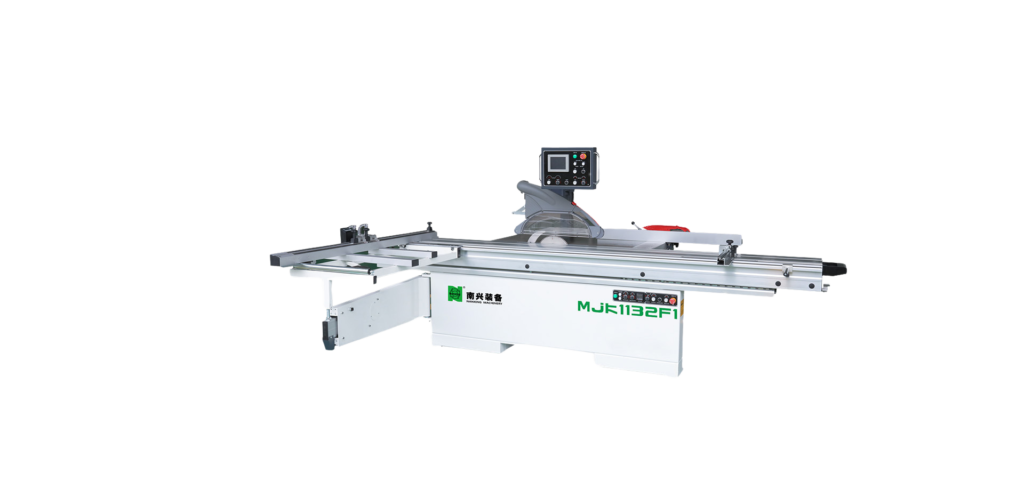
Workshop technicians must test the machinery geometry to ensure the digital stop rail sits at exactly 90 degrees to the main sliding carriage. This process requires a systematic cutting protocol.
The protocol amplifies tiny alignment deviations into measurable data points for adjustment.
The 5-Cut Method for Digital Fence Calibration
Engineers use the 5-cut method to isolate the exact angular deviation of the crosscut fence. The process begins with a scrap panel measuring approximately 600mm by 600mm.
The technician labels the four edges sequentially from one to four. Many specialists share these production tips Africa wide to improve regional manufacturing quality.
The operator trims a few millimetres off side one and rotates the board clockwise. Side one then sits flush against the fence to cut side two. The operator repeats this rotation and cutting process for sides three and four while ensuring the panel remains firmly pinned against the stops.
The technician rotates the board once more and makes a fifth cut along side one. This slices off a thin strip roughly 15mm wide. Digital callipers measure the top and bottom widths of this offcut.
Dividing the difference by four reveals the exact error per cut. This figure dictates the precise micro-adjustment required on the fence alignment dial.
Productivity Gains and Waste Reduction via Digital Crosscut Fences
Manual measuring requires operators to perform multiple test cuts. This habit slows down batch processing and increases scrap rates. Digital readouts provide instant positioning.
Machinists lock in exact dimensions in a matter of seconds. This efficiency is as vital to a workshop as a high-speed edge banding machine is to a finishing line.
Rapid setup capability is critical when running custom cut-to-size orders or complex wardrobe components. Factories report a 30% increase in daily panel throughput by removing manual tape measures from the crosscutting workflow.
The reduction in human error protects the profit margins of every project.
Digital Crosscut Fence Implementation and Support in East Africa
Deploying advanced measuring equipment requires strict mechanical alignment with existing machines. Technicians from a reputable machinery supplier Kenya can calibrate magnetic strips and secure sensor brackets. These brackets must withstand the heavy vibrations generated during continuous commercial cutting cycles.
Local workshops often face power stability challenges. Sudden fluctuations can disrupt sensitive electronics and reset absolute coordinates.
Installing battery-operated readouts or units with robust internal voltage regulation ensures the fence retains its zero-point calibration during grid instability.
Cost Benefit Analysis and Long-Term ROI
Upgrading to a digital fence involves a higher initial capital outlay than standard mechanical flip stops. Production managers evaluate this equipment cost against the immediate reduction in spoiled premium boards. The data indicates that the upfront cost is recovered through lower material rejection rates and higher daily yields.
Factories processing expensive imported laminates typically hit their break-even point within the first two financial quarters. The precision ensures that every component fits the first time. This reduces the labour costs associated with sanding or re-cutting panels that do not fit the assembly jig.
Mitigating Material Waste in the East African Woodworking Market
High logistics costs and import tariffs increase the price of quality melamine and high-gloss MDF in East Africa.

Scrapping a sheet due to a 2mm crosscut error degrades the profit margin on a commercial contract. Digital stops remove human error from the measuring equation entirely.
Verifiable precision ensures maximum yield from every timber sheet brought onto the factory floor. This level of accuracy is essential for businesses looking to scale their operations and compete with imported flat-pack furniture. Consistent results build a reputation for quality in the local market.
AOE Integration and Optimization Services
Sourcing precision upgrades through AOE connects workshop managers with industrial-grade hardware. These components are engineered for heavy daily use.
Technicians provide on-site installation and execute the 5-cut method to guarantee absolute squareness before the handover. Interested managers can book a machinery consultation Kenya to see the technology in action.
The company stocks replacement magnetic tapes, industrial batteries, and digital display units locally. This availability prevents extended machinery downtime.
Professional support ensures the panel saw remains the most accurate workstation on the production line.
Engineering Recommendation
Transitioning from manual tape measures to digital readouts is a mandatory hardware upgrade for commercial cabinet manufacturers.
Production teams should execute the 5-cut calibration method monthly to maintain 90-degree geometry. This practice ensures the digital crosscut fence consistently delivers assembly-ready panels and maximises operational ROI.