
Selecting the correct kws pcd saw blade for your panel saw Kenya workshop ensures tear-free sizing of abrasive panels. This technical upgrade extends maintenance intervals by up to 30 times compared to standard carbide tooling.
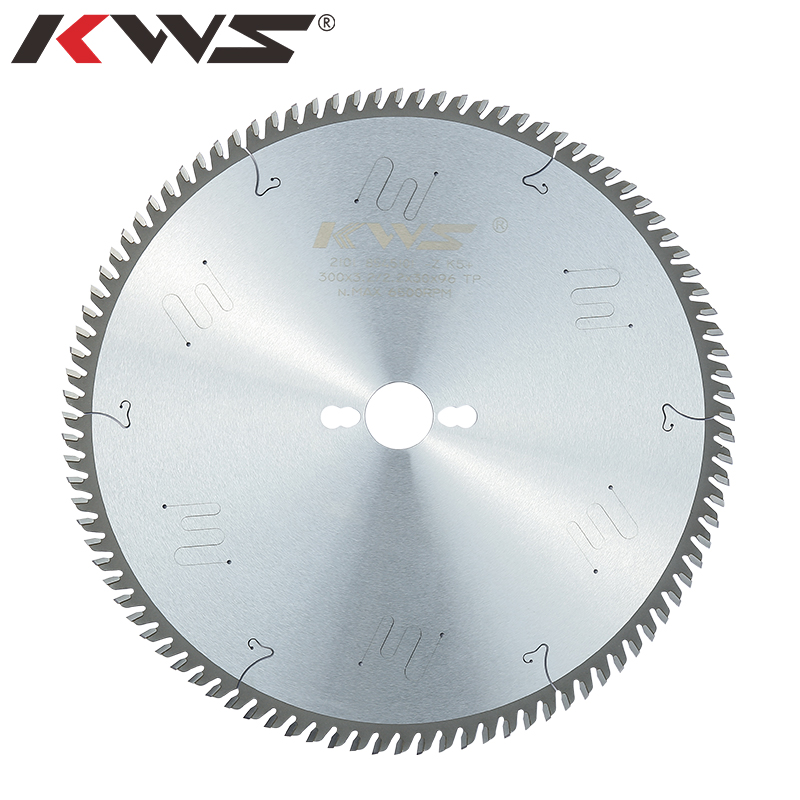
Factory managers in East Africa who adopt diamond tooling eliminate the mid-shift bottlenecks caused by frequent blade changes. These managers maintain higher feed rates and optimise daily throughput on high-volume melamine and MDF production lines.
| Tooling Specification | Standard TCT Blade | KWS PCD Saw Blade |
|---|---|---|
| Material Composition | Tungsten Carbide | Polycrystalline Diamond |
| Service Life (Linear Metres) | 800 – 1,200 | 25,000 – 40,000 |
| Feed Rate Capability | Moderate | High (Optimised) |
| Sharpening Interval | Weekly | Every 6-9 Months |
| Edge Finish Quality | Degrades rapidly | Consistent high precision |
Technical Compatibility of KWS PCD Saw Blades with Industrial Sliding Table Saws
Your sliding table saw requires precise alignment between motor power, arbor size, and blade kerf to prevent arbor runout. A kws pcd saw blade engineered with a triple-chip grind (TCG) profile excels at slicing through abrasive composite boards.
The TCG geometry prevents chipping on delicate laminate overlays. Matching the 300mm or 350mm main blade with a corresponding PCD scoring blade guarantees a clean bottom edge. This alignment drastically reduces the need for manual rework on the factory floor.
Durability Comparison Between KWS PCD and TCT Blades in Regional Joinery Plants
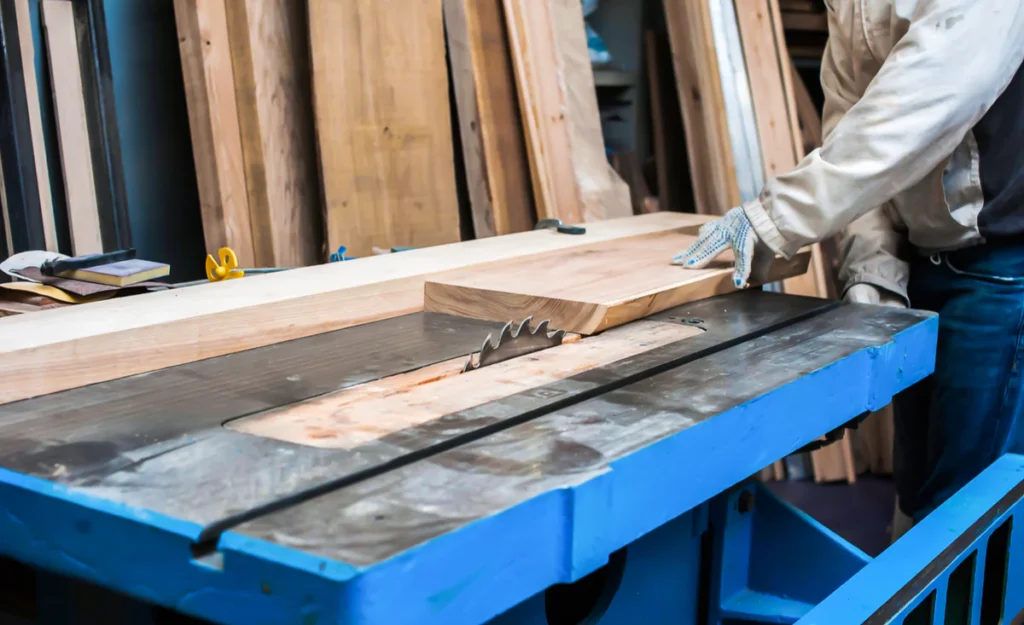
Standard Tungsten Carbide Tipped (TCT) blades dull rapidly when cutting high-density MDF and particleboard common in East African workshops.
Upgrading to a kws pcd saw blade provides a working life 30 times longer than standard alternatives. This durability reduces factory downtime for tool changes.
Production engineers run continuous shifts without stopping machines to swap out blunted tooling. Consistent tool performance stabilises production schedules and helps meet strict client deadlines in Nairobi and Kampala.
Financial Return on Investment for Polycrystalline Diamond Tooling
Factory owners evaluate tooling investments based on the cost per linear metre cut instead of the initial purchase price. The upfront expenditure for diamond tooling yields rapid returns.
This investment eliminates weekly sharpening costs and minimises the volume of rejected panels. Workshop accountants tracking machine availability find that fewer tool changes translate into higher billable machine hours.
Eliminating the logistics of transporting blades to sharpening centres reduces hidden operational expenses for the business.
Maintenance Protocols to Extend the Service Life of Polycrystalline Diamond Tips
Polycrystalline diamond tips offer extreme hardness but remain susceptible to impact damage from staples or foreign metal objects. Operators must implement strict material inspection protocols before processing boards.
Maintaining the dust extraction system prevents resin buildup on the blade body. Proper extraction ensures the blade runs cool during high-speed operations.
Operators should follow specific handling procedures to protect the industrial investment.
- Arbor runout must remain below 0.02mm before mounting to prevent vibration damage.
- Cleaning processes should use dedicated resin-dissolving solvents instead of wire brushes.
- Custom wooden crates provide the necessary protection for storing idle blades to prevent tooth chipping.
- Flanges must be cleaned with a soft cloth to ensure a flush fit against the blade body.
Service Support and Technical Training for Machinery Tooling in East Africa

AOE technicians provide on-site calibration for your sliding table saw to ensure the machine is ready for diamond tooling. Sourcing industrial cutting tools within Kenya, Uganda, and Tanzania requires partners who understand regional workshop conditions.
Comprehensive operator training reduces the risk of accidental damage during blade installation. This training protects your machinery and ensures the longevity of the tooling from the first day of use.
High-quality edge banding machine performance also relies on the precision of the initial cut provided by these blades.
Integration of Precision Tooling with Furniture Design and Optimisation Software
Modern panel sizing operations rely on furniture CAD CAM Kenya systems to generate efficient cutting maps. A rigid kws pcd saw blade maintains true tracking through the cut without deflection.
This stability allows programmers to specify tighter nesting margins on the board. Factories processing expensive imported laminates recover significant material costs by combining precise digital layouts with diamond cutting technology.
Similar precision is required when preparing components for a CNC nesting router to ensure perfect assembly fits.
Technical Assessment for Integrating KWS PCD Blades into Production Lines
Transitioning your panel sizing operations to diamond tooling requires a systematic audit of your current sliding table saw mechanics. Workshop managers should verify arbor bearing integrity and upgrade dust extraction capacities before installing high-performance blades.
AOE provides manufacturing insights through our production tips Africa resources to help factories scale their output. We recommend scheduling a technical assessment to match the exact tooth configuration to your primary material.
You can request demo sessions or technical consultations to evaluate how diamond tooling will improve your specific manufacturing workflow.